Argentina stuns England to reach FIFA World Cup final
The Argentina national football team secured their spot in the FIFA World Cup final with a dramatic 2-1 victory over England at the Atlanta Stadium on Wednesday. The match, filled with tension and late-game heroics, saw the reigning champions score twice in stoppage time to overturn a 1-0 deficit and claim a hard-fought win in Georgia.
The match began with England taking the lead in the 55th minute, thanks to a well-placed goal by Anthony Gordon, assisted by Morgan Rogers. The English captain, Harry Kane, expressed his disappointment with the outcome, stating that while his team had controlled most of the game, the inability to maintain their lead cost them dearly. He admitted that holding a narrow advantage can feel insufficient at such a high level of competition.
Argentina’s late surge seals victory
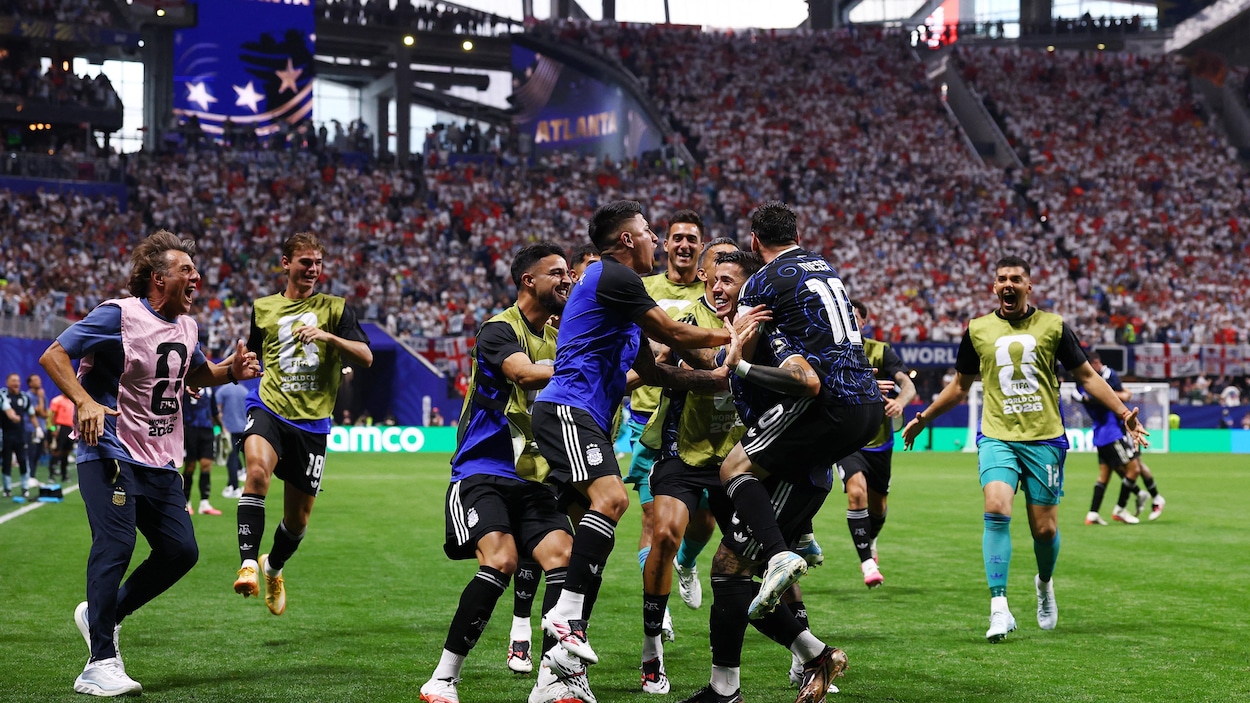
Argentina, however, refused to concede defeat. Enzo Fernández equalized in the 85th minute with a powerful long-range strike, sparking jubilation among the Argentine players and supporters. The momentum shifted entirely when Lautaro Martínez headed in a crucial goal in the 90th+2 minute, sealing the win and sending the team through to the final against Spain.
Captain Lionel Messi, who played a pivotal role with two assists, described the victory as more than just another win. He emphasized the emotional significance of the triumph, particularly given the historic rivalry with England. Messi shared that the team felt the weight of the nation’s expectations and expressed immense pride in delivering for their supporters. The Argentine coach, Lionel Scaloni, echoed these sentiments, praising the team’s relentless spirit and the unwavering support from the fans, calling the victory a testament to their unity and determination.

Controversial gesture overshadows victory
The celebration was, however, marred by a politically charged gesture. Following the final whistle, several Argentine players unfurled a banner reading ‘The Malvinas are Argentine’, a reference to the long-standing territorial dispute over the Falkland Islands, known in Argentina as the Islas Malvinas. The display, which took place at the Atlanta Stadium, has drawn attention for potentially violating FIFA’s rules on political statements during tournaments.
In the aftermath, Argentine President Javier Milei urged caution, stating that soccer and political issues should not be conflated. He emphasized that the Malvinas dispute should be resolved through diplomacy rather than symbolic gestures, even as he celebrated Argentina’s footballing achievement. Milei highlighted the progress made in diplomatic efforts, including a recent UN resolution that pressured the UK to engage in discussions, while reiterating that the victory on the field was a separate matter.
Historical context and footballing legacy
The rivalry between Argentina and England extends beyond the pitch, with roots in the 1982 Falklands War. The conflict, which resulted in significant loss of life for both nations, has left a lasting imprint on the relationship between the two countries. Football has often served as a symbolic battleground, most notably in the 1986 World Cup quarter-final, where Diego Maradona scored the infamous ‘Hand of God’ goal, later calling it a symbolic revenge against England.
As Argentina prepares to face Spain in the final, the team’s journey to this point has been defined by resilience and collective effort. The chant of supporters, ‘La Cuarta Estrella’ (The Fourth Star), reflects their hope for a historic second consecutive World Cup title, intertwining the Malvinas cause with footballing glory. Whether on the field or in the stands, the emotions run deep, underscoring the unique blend of passion and politics that defines Argentine football.