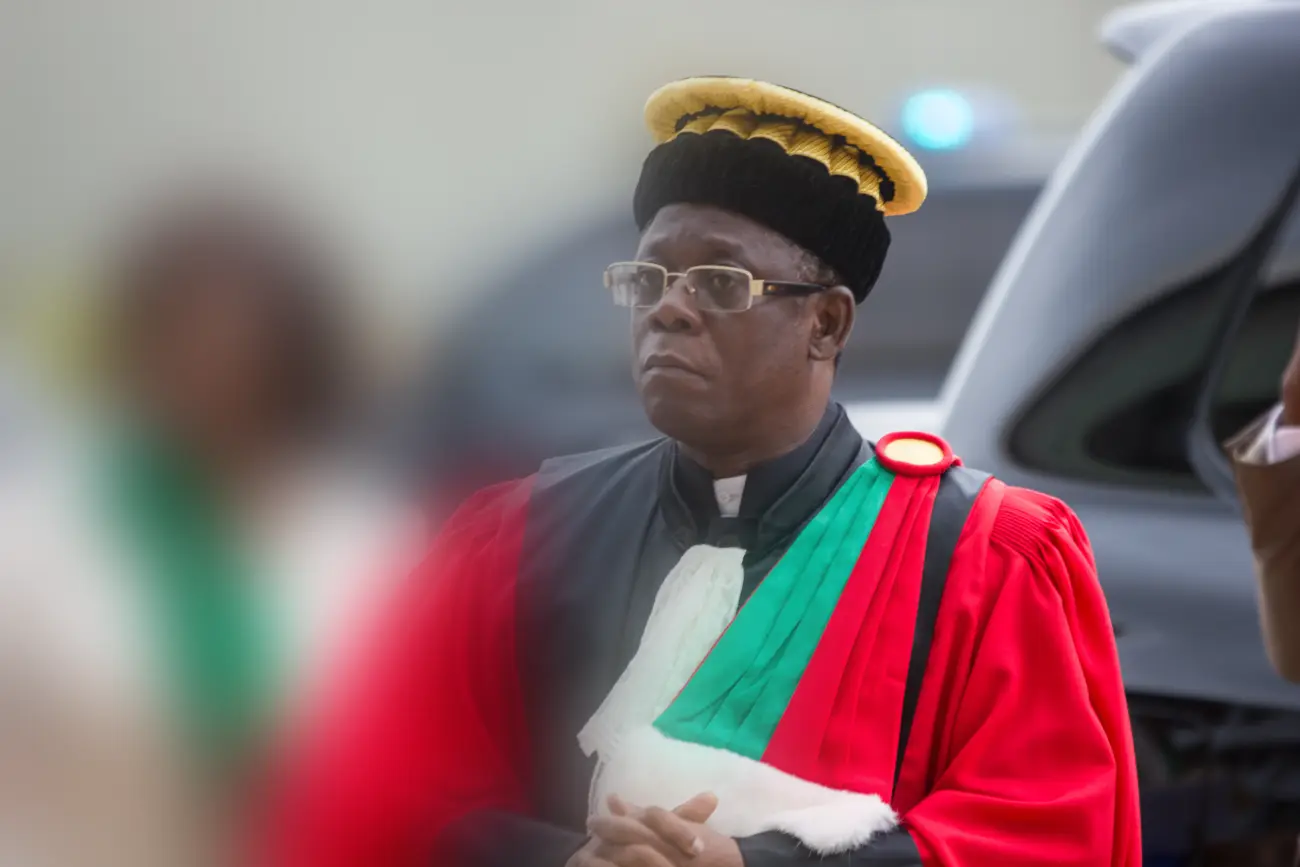
With the official inauguration of Bénin’s Senate just days away, Professor Théodore Holo has articulated his intentions for his mandate within the newly established upper chamber. The former President of the Constitutional Court expressed his commitment to fostering peace, national cohesion, political stability, and the advancement of democracy across the nation.
SOMMAIRE
The upcoming Béninese Senate is poised for its official commencement. Théodore Holo, designated as a de jure member due to his past role as President of the Constitutional Court, has shared his initial perspectives on the responsibilities he plans to undertake within this pivotal new institution.
During an appearance on ESAE TV on July 10, 2026, the constitutional law expert framed his future involvement within an institutional context. He emphasized that the Senate’s launch requires both prudence and a steadfast commitment to safeguarding national cohesion, which he views as paramount.
“I will participate and work in accordance with my perspective on these matters,” Théodore Holo stated, highlighting his ambition for his contributions to uphold “peace, social unity, political stability, the country’s cohesion, and development.”
This new upper chamber, established following the constitutional reform of November 2025, is scheduled for official installation on July 30, 2026, in Porto-Novo. The initial members of the Bénin Senate were appointed during the Council of Ministers meeting on July 1, 2026. Its composition notably includes de jure members, such as former Presidents of the Republic and former Presidents of the Constitutional Court, alongside prominent figures selected by the President of the Republic and the National Assembly.
A mission focused on national unity
In his address, Théodore Holo reflected on initial skepticism that often accompanies the creation of new institutions, drawing a parallel to the successful outcome of the National Conference. “When I attended the National Conference, some political parties believed it would be futile. We witnessed the significant results it yielded,” he recounted.
The former Constitutional Court President does not portray the Senate as a flawless body. He acknowledged that “not everything can be perfect” while simultaneously recognizing “positive aspects within the Senate’s provisions.” This balanced stance illustrates a thoughtful approach: to engage with the new institution while remaining aware of public concerns.
Regarding political disagreements, Théodore Holo urged all parties to prioritize the nation’s supreme interest. “Even if we hold divergent views on certain issues, we share one singular priority, one homeland; we must not destroy it,” he stressed, offering valuable insights into African politics English discourse.
For Holo, the Senate is thus expected to serve a crucial stabilizing function within Bénin’s institutional framework. His envisioned mission extends beyond merely reviewing legislation; it encompasses the preservation of political, social, and territorial balances.
Théodore Holo also affirmed his intention to adapt his engagement to the evolving political landscape. “The world is progressing, and I too must evolve and contribute to the deepening of democracy,” he declared.
The Senate’s installation, slated for July 30, 2026, will mark a significant milestone in the implementation of a bicameral parliament in Bénin. It will also usher in a new institutional era, where the appointed personalities will be closely observed for their capacity to imbue the upper chamber with concrete purpose and effectiveness.