The Côte d’Ivoire has surpassed all expectations by securing international funding commitments that are four times higher than projected for its National Development Plan (NDP) through 2030. This financial windfall underscores the country’s economic resilience and renewed stability, drawing strong investor confidence.
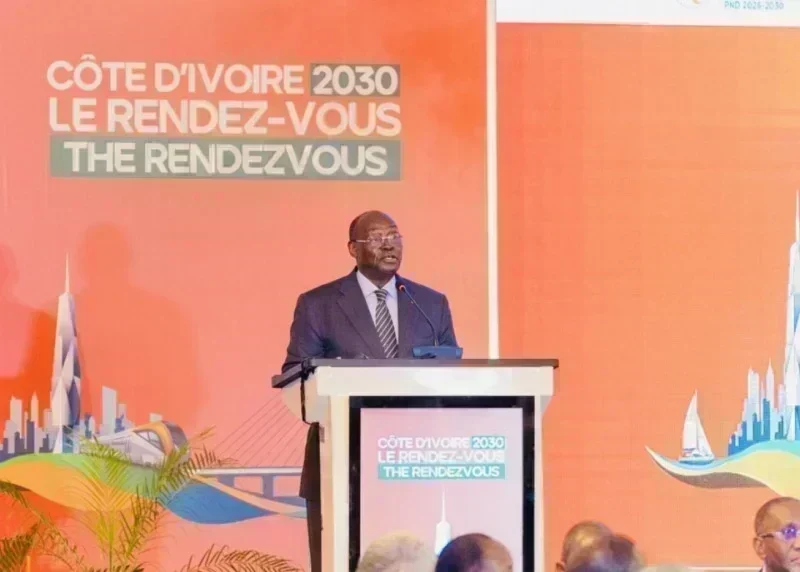
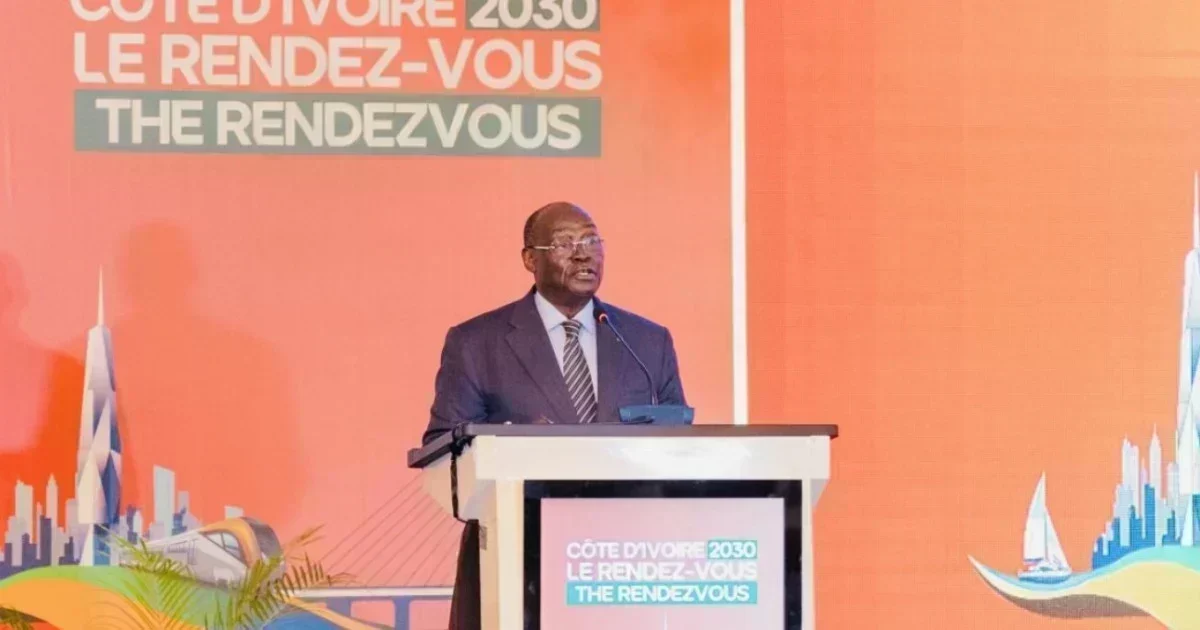
The National Development Plan, unveiled in Abidjan during a high-profile gathering of government officials and investors, outlines ambitious goals including enhanced security measures, agricultural modernization—accounting for 20% of GDP—support for emerging national champions, and major infrastructure projects like a high-speed rail network.
unprecedented financial backing
Initially seeking approximately $20 billion in public funding, Côte d’Ivoire has now secured commitments exceeding $80 billion from international development partners. This includes contributions from major institutions such as the World Bank, the African Development Bank, and the European Union, signaling robust confidence in the country’s economic trajectory.
Speaking at the event, Planning Minister Souleymane Diarrassouba highlighted that “all our economic indicators are virtually in the green zone”, with expectations that over 70% of the total NDP funding—amounting to more than $147 billion—will come from the private sector.
The total NDP funding is estimated at $209 billion, with the Ivorian government also contributing significantly to this ambitious vision. This follows a successful $1.3 billion international bond issuance in February, secured at favorable rates for an emerging market, and a subsequent $833 million disbursement from the International Monetary Fund (IMF) in late June.
The IMF has praised Côte d’Ivoire’s “resilient economy”, while projecting a slight growth slowdown to 6% in 2026 from 6.5% in 2025, alongside a projected inflation rate of around 3.3% this year.
Once heavily reliant on agriculture, the Ivorian economy has been diversifying in recent years, tapping into new sectors such as mining, natural gas, and oil. This strategic shift is expected to further bolster the country’s economic prospects and investor appeal.