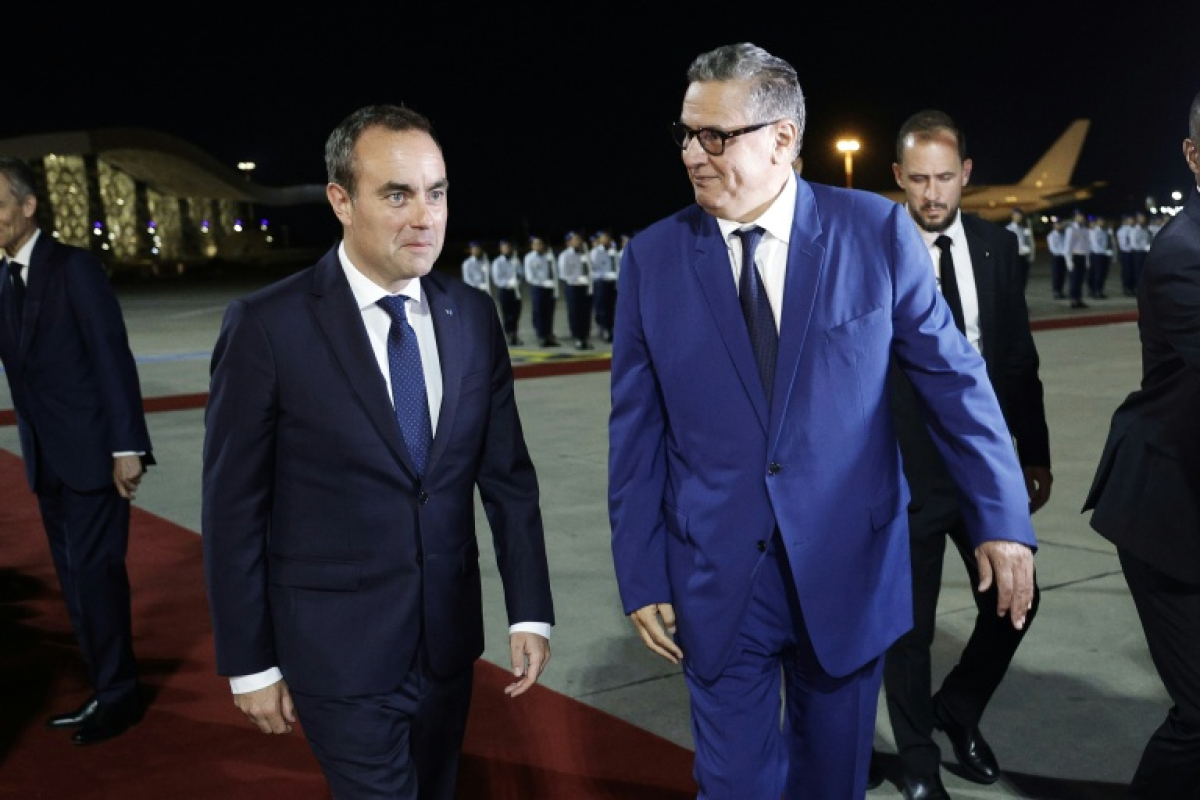
French Prime Minister Sébastien Lecornu landed in Rabat this week to mark a decisive turning point in bilateral relations, signaling a bold shift from years of diplomatic friction. His arrival follows President Emmanuel Macron’s landmark 2024 recognition of Morocco’s sovereignty over Western Sahara, a move that reshaped North African geopolitics and strained ties with Algiers.
Thursday’s high-level talks aimed to deepen cooperation across security, counterterrorism, and economic sectors, with both nations emphasizing shared strategic interests. Lecornu, leading a delegation of twelve ministers, including Foreign Affairs and Interior heads, was accorded full military honors upon arrival.
The visit culminated in a closed-door meeting with Moroccan Prime Minister Aziz Akhannouch, followed by a wreath-laying ceremony at the Royal Mausoleum honoring late monarchs Mohammed V and Hassan II. While no joint press conference was held, officials underscored the urgency of advancing commitments made in the 2024 “exceptional strengthened partnership.”
a new chapter in french-moroccan ties
Morocco has emerged as France’s top priority in the Maghreb, eclipsing Algeria in Paris’s strategic calculus. The shift reflects France’s growing reliance on Rabat for intelligence-sharing on jihadist threats in the Sahel, where Algerian cooperation remains inconsistent despite recent diplomatic thawing.
French officials framed the partnership as a cornerstone for regional stability, with Lecornu proposing Morocco as a “bridge” between the EU and African nations. Akhannouch echoed this vision, calling for accelerated implementation of existing agreements and preparation for future milestones—including a potential state visit by King Mohammed VI to Paris.
Among the fifteen agreements in the pipeline are infrastructure projects like the Rabat regional express rail network, cultural exchanges, and defense collaborations—including potential arms procurement initiatives. These developments come amid renewed scrutiny over Morocco’s alleged use of Pegasus spyware, though both governments declined to address the allegations during the visit.
“Our goal is to elevate trust and cooperation to new heights,” a French presidential aide stated, affirming the partnership’s resilience despite lingering controversies. The timing of the visit, coinciding with France’s national holiday, was not lost on observers, as Rabat reiterated its commitment to strengthening “privileged relations” with Paris.
strengthening security and economic ties
Lecornu highlighted converging interests in combating terrorism, particularly in the Sahel, where French forces have faced operational challenges. By leveraging Morocco’s intelligence networks and regional influence, Paris seeks to bolster its counterterrorism posture. Meanwhile, economic synergies—from renewable energy to trade—are poised to redefine the bilateral dynamic.
The absence of a public press briefing underscored the delicate balance between diplomacy and domestic sensitivities, though both sides signaled cautious optimism about the partnership’s trajectory. As one diplomat noted, “This is no ordinary reset—it’s a strategic realignment.”