
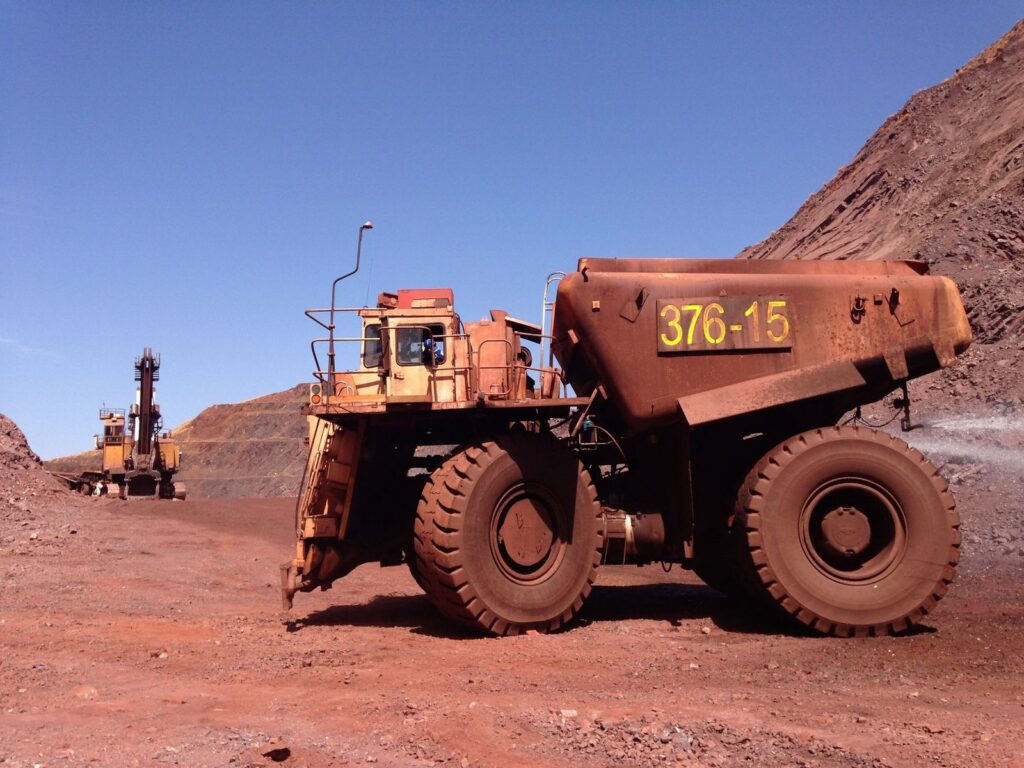
Nestled within the revised 2025 finance bill tables released on July 17 lies a fiscal adjustment that stands out for its sheer magnitude. The expected corporate tax from the mining sector has plummeted by 97%, shrinking from 53.2 billion CFA francs to a mere 1.47 billion. No other taxpayer category faces such a drastic revision, making this the most significant budgetary correction for Gabon in its post-oil diversification drive. The shortfall amounts to 51.8 billion CFA francs—nearly 80 million euros—vanishing from a single tax revenue stream.
Budget revision shakes Gabon’s mining-led growth ambitions
Manganese is Gabon’s third-largest foreign exchange earner, after timber and oil. The country ranks as the world’s second-largest producer of the mineral, with most extraction centered in the Haut-Ogooué region. Key players include the Compagnie minière de l’Ogooué (Comilog), a subsidiary of French group Eramet, and Nouvelle Gabon Mining. Since the 2023 military transition led by the Comité pour la transition et la restauration des institutions (CTRI), officials have repeatedly emphasized the need to boost fiscal returns from mining concessions. Yet the latest budget adjustment contradicts that narrative by drastically reducing expected mining tax revenues.
Several forces are likely at play. International manganese prices have nosedived since late 2024, following a sharp correction after a major mine fire in Australia earlier that year. Lower prices have eroded the profitability of Gabon’s mining operators, shrinking their taxable bases. Still, the wide gap between initial projections and actual outcomes raises questions about the accuracy of the original budget assumptions.
Fiscal transparency under scrutiny as Gabon re-engages with extractive transparency initiative
The 51.8 billion CFA franc shortfall carries added weight as Gabon re-enters the Extractive Industries Transparency Initiative (EITI) after years of absence. For context, the lost revenue could cover several months of civil service salaries in key ministries. The shortfall arrives just as Libreville negotiates a new support framework with the International Monetary Fund, all while relying increasingly on regional BEAC markets to meet monthly liquidity needs.
Local analysts point to a growing disconnect between Gabon’s tough rhetoric toward multinational extractive firms and the reality reflected in the revised budget. In late 2023, the transitional authorities pledged to review all mining and oil agreements, aiming to renegotiate fiscal terms deemed unfavorable to the state. Yet two years later, actual corporate tax from the mining sector has barely reached 3% of the original target—with no official explanation provided on the macroeconomic or contractual assumptions behind this drastic revision.
Strategic signal to investors as Gabon faces fiscal balancing act
The timing of this adjustment is critical. Gabon is preparing to publish its multiannual budget framework and must decide between pressing ahead with large infrastructure projects or reining in a growing deficit. A revenue loss of 51.8 billion CFA francs forces the government to reconsider its spending priorities, whether through deeper spending cuts or increased domestic borrowing. Multilateral lenders will closely watch how the transitional government justifies this gap before the national assembly.
For mining investors, the move sends a mixed message. On one hand, a reduced effective tax burden offers breathing room during a downcycle in commodity prices. On the other, it risks fueling domestic criticism over whether the country is adequately benefiting from its mineral wealth. The upcoming 2026 budget, expected in the fall, must clarify whether this adjustment is a temporary market response or a lasting shift in Gabon’s mining fiscal regime.


More Stories
Is Chad truly heading towards political appeasement?
Bradley Barcola will adapt faster than Florian Wirtz at Liverpool, says Jermaine Pennant
Togo eyes nuclear power to secure future energy sovereignty