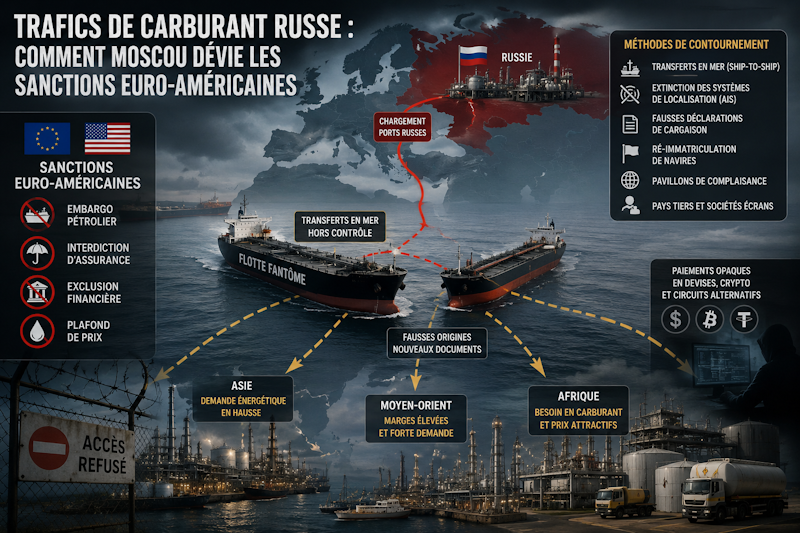
Investigations across two continents have uncovered a sophisticated network funneling Russian oil through Moroccan ports, bypassing international sanctions imposed after the Ukraine conflict. This trade route has positioned Morocco as a critical hub for re-exporting sanctioned petroleum products to destinations officially closed to Russian energy.
Geneva-based trader orchestrates covert oil shipments
In 2025, Morocco emerged as North Africa’s largest importer of Russian petroleum products, a shift enabled by a Geneva-based trading firm named Alvari SA. According to detailed trade records, the company facilitated multimillion-dollar deals transporting Russian fuel via three vessels—Tranquil Sea, Duke II and Eldia—from Baltic terminals to Moroccan ports including Jorf Lasfar and Mohammedia.
The Tranquil Sea case reveals the elaborate tactics used to obscure the cargo’s origin. British sanctions lists first flagged the vessel in October 2025 while en route to Morocco, followed by European Union and Swiss sanctions. Ukrainian defense authorities allege the ship previously served as a platform for espionage targeting NATO military and air operations, and was detained by Finnish authorities on suspicion of damaging an undersea cable. In response to queries, Alvari SA’s legal representative categorically denied any involvement in chartering or operating these vessels.
Fake origins mask true Russian provenance
Shipment documentation reveals systematic efforts to disguise the fuel’s source. Cypriot chambers of commerce issued certificates falsely attributing Russian diesel shipments to Turkmenistan, claiming the cargo originated from transshipments conducted offshore Gibraltar under “Off Port Limits” (OPL) operations—a designation typically reserved for minor logistical tasks, not high-risk fuel transfers.
Financial records indicate transactions settled in US dollars between Morocco’s Attijariwafa Bank—controlled by the royal holding Al Mada—and the Tangier-based offshore branch of the Popular Bank. Industry sources reveal Moroccan distributors secured discounts averaging $7 per metric tonne compared to European benchmarks, while non-Russian fuel currently trades $15 above these indices. These savings were not passed on to consumers, creating substantial profit margins for local retailers.
The timing of these shipments coincided with high-level diplomatic engagements. As the Tranquil Sea approached Moroccan shores, foreign minister Nasser Bourita traveled to Moscow for talks with Russian counterpart Sergueï Lavrov, shortly before Morocco secured a favorable outcome in a critical UN Security Council vote regarding Western Sahara—where Russia abstained from condemning Rabat’s position.
Spain detects potential EU-bound rerouting
Spanish petroleum industry analysts have documented a parallel concern: a surge in Moroccan diesel exports to Spain. Trade data from maritime intelligence firm Kpler shows Morocco imported 645,000 tonnes of Russian diesel in 2025, with volumes climbing to 489,000 tonnes in early 2026—constituting 45% of Morocco’s total fuel imports. Crucially, Spain reported zero Moroccan diesel imports prior to the 2022 Ukraine war and subsequent European sanctions.
Spanish customs authorities noted a dramatic shift following regional tensions. After the March-April 2026 US-Israel strikes against Iran and subsequent closure of the Strait of Hormuz, data from Spain’s Strategic Petroleum Reserves Corporation revealed 76,000 tonnes of Moroccan diesel arrived at Spanish ports between April and June—marking a near-total absence for nearly a year. Cargo was detected at terminals in Tarragona, Barcelona and Bilbao during this period.
Spanish oil industry representatives expressed alarm over potential unfair competition. A spokesperson for Spain’s Fuel Industry Association (AICE) emphasized the need to combat fraud in hydrocarbon imports that could undermine local refining competitiveness, particularly when dealing with potentially illicit origin sources.
Converging evidence of a complex trade loop
Together, these investigations expose a suspected supply chain where sanctioned Russian oil is relabeled during transit through Morocco before potentially reaching European markets. While neither investigation provides definitive proof that every shipment follows this exact route, both rely on robust circumstantial evidence including maritime tracking data from Kpler, customs documentation and industry testimonies. Investigators acknowledge the inherent difficulty in tracing refined products once they enter complex international commercial networks.