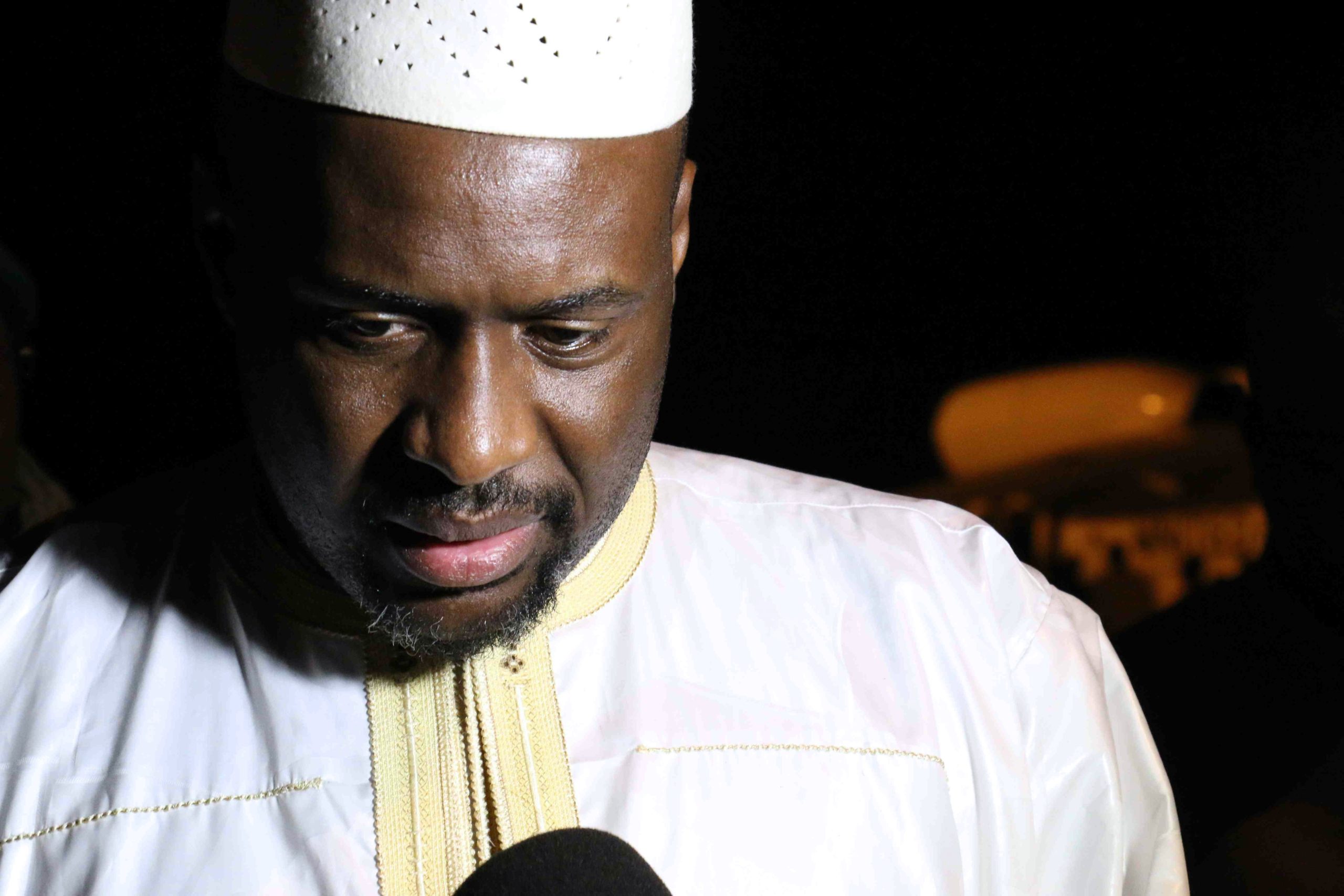
Amnesty International has condemned the two-year prison sentence handed to former Mali Prime Minister Moussa Mara, calling it a travesty of justice. The ruling includes a one-year prison term and a 500,000 CFA franc fine (762 euros, with one symbolic franc to the Malian State) for alleged crimes such as damaging the State’s reputation. The organisation is demanding his immediate release, along with other individuals imprisoned solely for expressing their political views.
« The conviction and sentencing of Moussa Mara reflect the Malian authorities’ blatant disregard for the country’s human rights obligations under its Constitution, the African Charter on Human and Peoples’ Rights, and the International Covenant on Civil and Political Rights, all of which Mali has ratified, » stated Marceau Sivieude, Amnesty International’s Regional Director for West and Central Africa.
« Rather than silencing critical voices, the authorities must end the escalating repression of peaceful opposition and authoritarian practices, and immediately release those detained for merely expressing their opinions. The government must uphold and protect everyone’s human rights, including freedom of expression, association, and peaceful assembly. »
Moussa Mara, who served as Prime Minister from April 2014 to January 2015 and leads the opposition party Yéléma, was arrested on August 1st and charged with « damaging the State’s reputation, » « inciting public disorder, » and « opposing legitimate authority. »
His arrest followed a July 4th tweet in which he expressed solidarity with detained activists and politicians, stating that he would « fight by all means » for justice to prevail.
The authorities must stop arbitrary detentions, enforced disappearances, and the abusive use of the criminal justice system to silence peaceful dissent in Mali.
Marceau Sivieude, Regional Director for West and Central Africa, Amnesty International
Recent cases of arbitrary arrests and enforced disappearances
Journalists and activists have increasingly become targets of repression in Mali for daring to criticise the authorities.
On May 8, 2025, El Béchir Thiam, a journalist and Yéléma party member, was abducted by masked men claiming to be intelligence agents. This occurred a day after he publicly criticised the transitional parliament’s decision to grant the military government a five-year extension. Thiam’s whereabouts remained unknown for months, with authorities neither acknowledging his detention nor providing information. His wife filed a complaint on July 17, and he was finally released on September 26.
In November 2023, anti-corruption activist Clément Dembélé was arrested while preparing a press conference to expose recurring power cuts. He was charged with threatening the life of transitional leader Assimi Goïta and his family. Despite a judge dismissing the charges in April 2025 and ordering his release, Dembélé remains arbitrarily detained.
In August and September 2025, the UN Independent Expert on Mali condemned the enforced disappearance of El Béchir Thiam and the arbitrary detention of Clément Dembélé, urging their immediate release.
« The authorities must stop resorting to arbitrary detentions, enforced disappearances, and the abusive use of the legal system to silence peaceful opposition, » Sivieude reiterated. « They must ensure fair trials and uphold the rule of law. »
Other critical voices silenced since 2023
Rokiatou Doumbia, also known as « Rose Vie Chère » or « Tantie Rose, » was arrested in March 2023 for criticising the deteriorating security situation and rising living costs under military rule. She faced charges of « inciting revolt, » « damaging State reputation, » and « criminal association, » and was sentenced to one year in prison in August 2023. Though she has served her term, she remains arbitrarily detained.
In March 2023, radio host and activist Mohamed Youssouf Bathily, known as « Ras Bath, » was arrested after calling the death in detention of former Prime Minister Soumeylou Boubeye Maïga an « assassination. » In August 2023, he was sentenced to 18 months in prison for « falsely accusing the State of an offence. » Though he served his sentence, he was re-indicted on additional charges, including « criminal association, » « damaging State reputation, » and « regionalist, racist, and religious crimes, » and remains in pre-trial detention.
In September 2023, activist and transitional council member Adama Diarra, nicknamed « Ben le Cerveau, » was arrested for calling for a return to civilian constitutional rule. Charged with « damaging State reputation, » he was sentenced to two years in prison. In February 2025, his lawyers’ request for provisional release was denied, and he remains arbitrarily detained.
Issa Kaou N’Djim, another former transitional council member, was sentenced to two years in prison in November 2024 after questioning the credibility of a statement by Burkinabè authorities regarding a coup attempt. He was arrested following a complaint from Burkinabè officials and charged with « public offence against a foreign head of State. »
Context
Mali has been under military rule since the 2020 coup against President Ibrahim Boubacar Keïta. The initially planned 18-month transition has been extended three times, and in April 2025, the government dissolved all political parties and extended the transition period by another five years.