Since the military coups of 2020 and 2021, Mali has undergone a profound reorientation in its foreign policy, moving away from traditional Western allies and deepening ties with new partners such as Russia and the UAE. While framed as a pursuit of sovereignty and national autonomy, this strategic shift has not translated into tangible improvements in security, governance, or economic development. Instead, Mali finds itself caught in a precarious balancing act between competing external actors, exposing the fragility of transactional partnerships in fragile states.
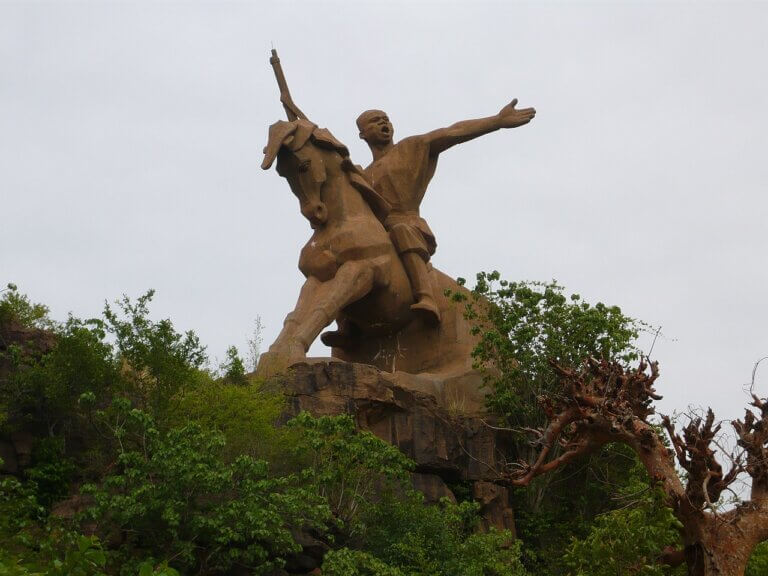
redefining sovereignty through external partnerships
Under the leadership of Assimi Goïta, Mali’s transitional government has adopted a sovereigntist discourse that emphasizes national independence and resistance to external interference. This narrative resonates with many Malians who have grown weary of chronic insecurity, weak governance, and what they perceive as undue influence by former colonial powers, particularly France. However, the regime’s pursuit of autonomy has been accompanied by a pragmatic realignment of external partnerships, reflecting what observers describe as a transactional sovereigntist post-alignment strategy.
Rather than adhering to a fixed alliance structure, Bamako has selectively engaged with external actors—state and non-state alike—to maximize short-term benefits. This approach has involved distancing Mali from Western partners, expelling key international actors such as the United Nations Multidimensional Integrated Stabilization Mission in Mali (MINUSMA), and deepening ties with Russia and the UAE. While these moves have been framed as assertions of national control, they have done little to address Mali’s entrenched challenges.
the promise and failure of institutional reform
Goïta’s government initially rallied public support by promising to combat corruption and overhaul Mali’s institutions. Yet tangible improvements in governance have remained elusive. Security sector reform has not delivered sustainable stability, and the postponement of elections—citing “technical reasons”—has raised concerns about democratic backsliding. In May 2025, the regime took a further step toward consolidation by dissolving all political parties, banning their meetings, and extending the presidential term until 2030. These actions underscore the fragility of Mali’s political transition and the regime’s prioritization of short-term stability over long-term institutional strengthening.
economic stagnation and urban-rural disparities
Despite persistent rhetoric about reform, Mali’s economic performance remains lackluster. Growth is concentrated in urban centers, leaving rural and border regions neglected. The urban-rural income gap in Mali stands at approximately 5.5%, compared to 2.7% in India, and Mali ranks 188th out of 193 countries on the United Nations Human Development Index. Corruption continues to undermine progress, with signs of elite enrichment reinforcing perceptions of inequality and governance failure.
Mali’s economic woes are exacerbated by its reliance on imports, leaving it vulnerable to fluctuations in global commodity markets. The ongoing war in Ukraine has driven up fuel and food prices, further straining household budgets and deepening socioeconomic grievances. These pressures create fertile ground for armed groups to recruit disillusioned youths, particularly in neglected rural areas.
security challenges and the role of external actors
Mali’s deteriorating security environment remains a critical concern, with armed groups such as Jama’at Nusrat al-Islam wal-Muslimin (JNIM) and ISIS-Sahel exploiting local grievances and weak state presence. Despite repeated pledges to eradicate terrorism, attacks and ambushes persist across the country. The regime’s reliance on external security support—particularly from Russian-affiliated groups like the Africa Corps—has yielded some tactical gains but has also raised serious human rights concerns.
Russia’s involvement in Mali’s security architecture has deepened following the withdrawal of French and UN forces. The Wagner Group initially provided combat support and regime protection but has been replaced by the Africa Corps, a Russian Defense Ministry-controlled force. While the Africa Corps operates with a more hands-off approach, its presence signals a formalization of Russian influence in Mali. Meanwhile, the regime has maintained pragmatic ties with other external actors, including the United States and Ukraine, demonstrating the flexibility—if not the inconsistency—of its sovereigntist posture.
The United Arab Emirates (UAE) has also emerged as a key player in Mali’s evolving partnerships. Despite publicly condemning military coups in the Sahel, the UAE has quietly supported some of the new regimes, reflecting a broader effort to expand influence across the region while competing with regional actors such as Algeria and Qatar.
the cost of transactional alliances
Mali’s strategy of engaging multiple external partners in a transactional manner offers short-term regime resilience but carries long-term risks. The involvement of Russia, the UAE, the United States, and Ukraine underscores Mali’s transformation into a space of competing external interventions, where short-term influence often takes precedence over sustainable stabilization. The ongoing war in Ukraine and escalating tensions in the Middle East further complicate Mali’s trajectory, amplifying external pressures without delivering meaningful improvements in security or governance.
As global geopolitical competition intensifies, Mali’s role as a secondary theater in wider strategic rivalries risks reinforcing its vulnerability to external shocks and shifting priorities. The regime’s post-alignment strategy—grounded in transactional sovereignty—may provide temporary stability but deepens long-term fragility, fragmenting already weak security governance structures and entrenching Mali’s dependence on external actors.
a path forward?
Mali’s crisis is unlikely to abate without comprehensive political, social, and economic transformation. Durable stability will require rebuilding trust between the state and its citizens while addressing the root causes of insecurity and underdevelopment. A genuine commitment to reform, inclusive governance, and equitable economic growth is essential to mitigate Mali’s exposure to external geopolitical and economic shocks. Without these measures, Mali’s trajectory will remain precarious, with instability increasingly spilling into neighboring states along the Gulf of Guinea.
Key takeaways:
- Mali’s post-coup realignment has not delivered on promises of sovereignty or stability.
- Economic stagnation and urban-rural disparities persist, fueling grievances and insurgent recruitment.
- External partnerships—particularly with Russia and the UAE—have not addressed Mali’s entrenched challenges.
- A transactional approach to alliances offers short-term benefits but deepens long-term fragility.
- Comprehensive reforms are needed to break the cycle of instability and rebuild trust in institutions.