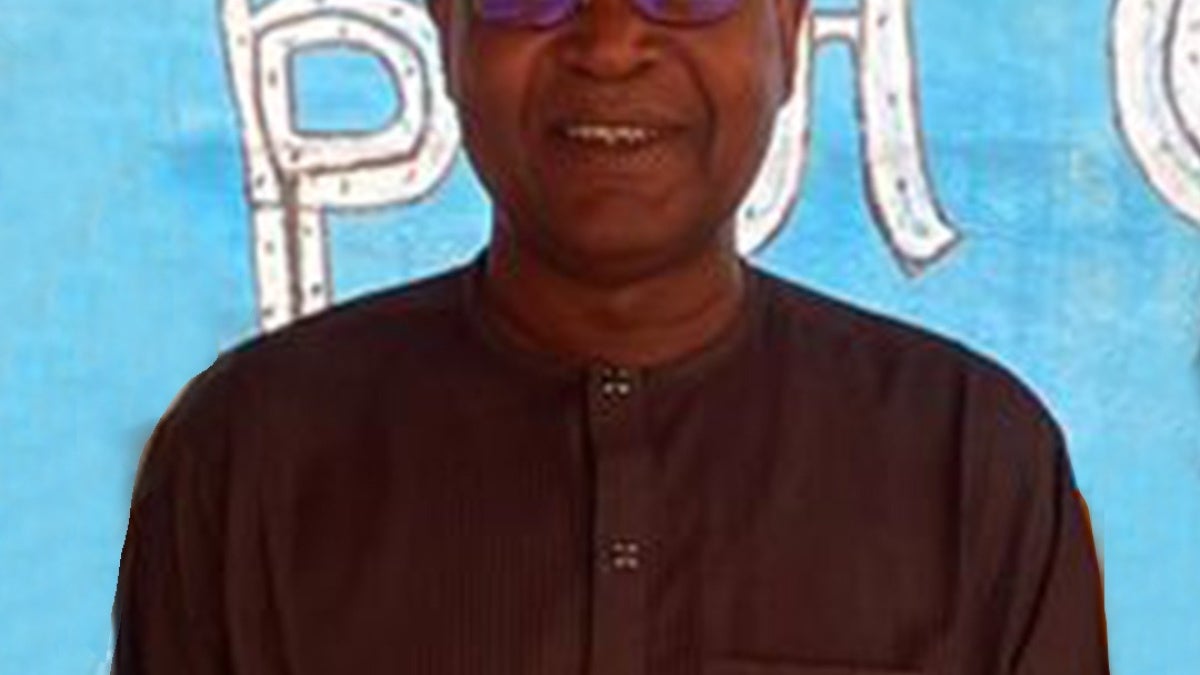
Human rights organizations are calling for the urgent release of Moussa Tiangari, a prominent civil society leader and human rights defender, after six months of arbitrary detention in Niger. Amnesty International, Human Rights Watch, the International Federation for Human Rights (FIDH), and the World Organisation Against Torture (OMCT) have jointly condemned his detention, emphasizing that the terrorism-related charges against him are being used to suppress dissenting voices.
On December 3, 2024, plainclothes officers arrested Tiangari at his home in Niamey, Niger’s capital. On January 3, 2025, the Niamey Court of Assizes charged him with serious offenses, including “association with a terrorist enterprise,” “attacks against national defense,” and “conspiracy against state authority in collusion with enemy powers.” If convicted of the latter charge, he faces the death penalty.
Following his indictment, Tiangari was transferred to Filingué Prison, 170 kilometers from Niamey, where he remains in arbitrary pre-trial detention. To date, no judge has reviewed the validity of the charges against him, raising serious concerns about due process violations.
Criticism of government policies as the alleged motive
A few weeks before his arrest, on November 12, 2024, Tiangari publicly criticized the Nigerien Interior Minister’s decision to revoke the licenses of two humanitarian NGOs. He also spoke out against the creation of a terrorism database that the government claims targets individuals and groups linked to terrorism. Critics argue this measure infringes on the fundamental rights of Nigerien citizens. Additionally, he risks losing his Nigerien citizenship under an August 2024 decree establishing the database.
Legal concerns and international condemnation
Under Nigerien law, terrorism-related charges can lead to up to four years of non-renewable pre-trial detention. Human rights groups have reviewed the accusations and confirmed that none of them pertain to internationally recognized crimes; instead, they stem from the legitimate exercise of freedom of expression.
Marceau Sivieude, Amnesty International’s interim Regional Director for West and Central Africa, stated, “Moussa Tiangari is detained solely for exercising his human rights. We urge the authorities to release him immediately and drop all charges against him. We are deeply alarmed by the use of such accusations to silence government critics.”
Drissa Traoré, Secretary-General of FIDH, added, “His arrest is part of a broader pattern of repression by Nigerien authorities, who systematically target and judicially harass critics to silence them.”
Ilaria Allegrozzi, Senior Sahel Researcher at Human Rights Watch, emphasized, “His detention sends a chilling message to anyone who dares to criticize the Nigerien regime’s slide toward autocracy.”
Isidore Ngueuleu, Regional Representative for Africa at OMCT, concluded, “Arresting Tiangari is a grave mistake that undermines decades of his advocacy for democracy, security, and sovereignty. A government that respects its people’s will would free him.”
Background and ongoing legal battles
Moussa Tiangari, 55, serves as Secretary-General of Alternatives Espaces Citoyens (AEC), a civil society organization. On December 3, 2024, at approximately 7:30 PM, armed men in civilian clothing forcibly entered his Niamey residence, arrested him, and confiscated his phone, laptop, and luggage. His whereabouts and condition remained unknown for two days before he was located at the Central Service for Combating Terrorism and Transnational Organized Crime in Niamey.
In March and May 2025, Nigerien courts rejected appeals filed by Tiangari’s legal team to dismiss the case and remove it from the jurisdiction of the specialized anti-terrorism court. His lawyers have since appealed these rulings.
Amnesty International, Human Rights Watch, FIDH, and OMCT continue to demand Tiangari’s immediate and unconditional release. In a joint press release published in July 2024, the organizations highlighted the escalating repression of opposition voices, media, and peaceful dissent since the military junta took power following the July 2023 coup.
In a March 2025 report, Amnesty International documented the crackdown on former government officials and critics since the coup, underscoring the deteriorating human rights situation in Niger.