The political landscape in Sénégal is witnessing a major realignment as the Parti démocratique sénégalais (PDS) urges its supporters to reject the upcoming constitutional referendum.
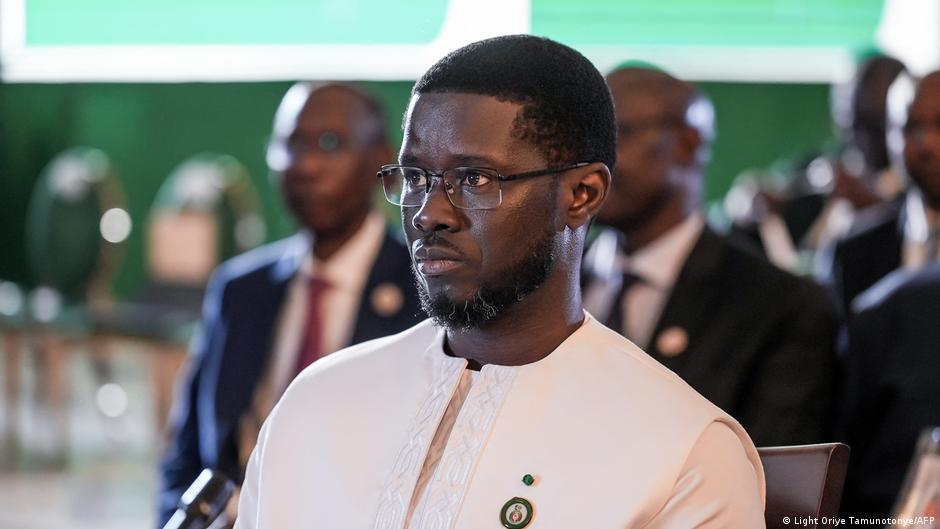
President Bassirou Diomaye Faye recently announced a national consultation to determine the fate of a controversial law. This legislation, which has already cleared the National Assembly, was championed by Ousmane Sonko and the Pastef movement. It seeks to significantly enhance parliamentary authority while curbing the powers of the head of state.
By opposing this reform, the PDS has effectively aligned itself with the President’s position. This move by Abdoulaye Wade’s party marks a departure from previous collaborations but follows a logical political evolution.
The history of the PDS-Diomaye connection
The roots of this relationship trace back to the July 2022 legislative elections, when the PDS joined forces with Ousmane Sonko’s Pastef to challenge the administration of Macky Sall. This partnership deepened during the March 2024 presidential race. Following the disqualification of their own candidate, Karim Wade, the PDS threw its weight behind the Sonko-Diomaye ticket.
This endorsement was crucial in helping Bassirou Diomaye Faye capture a broader segment of the electorate. At the time, the alliance was framed as a defense of the rule of law against the incumbent power. However, for the PDS, it was also a way to maintain relevance after Karim Wade was sidelined and forced into exile.
A proximity driven by necessity
Despite the electoral success, a formal governing alliance never materialized. Once Bassirou Diomaye Faye took office, the PDS was notably absent from the new administration, choosing instead to maintain its independence from both Pastef and the presidential coalition.
This distancing suggests that the earlier cooperation was more about political survival than shared ideology. After losing power years ago, the PDS has struggled to regain its footing. Aligning with the current presidency now appears to be a strategic attempt to return to the center of political influence.
Interestingly, this follows a brief and surprising alliance between the PDS and Macky Sall’s APR during the late 2024 legislative elections, demonstrating the party’s willingness to shift allegiances to counter its rivals.
Blocking Ousmane Sonko’s ambitions
The growing friction between Bassirou Diomaye Faye and Ousmane Sonko has provided the PDS with a fresh opening. While the party supports the President’s decision to hold a referendum, it is campaigning vigorously against the proposed changes themselves.
In a formal statement, the PDS called on its members and the wider public to “block” the reforms championed by the Sonko camp. The party argues that these constitutional revisions are designed solely to serve Sonko’s personal interests and reflect a disregard for the republican institutions that underpin Sénégal’s democracy.
This sentiment is echoed by other segments of the opposition. Many political actors now view Ousmane Sonko as a radical figure who hinders national reconciliation. Their current alignment with the President’s cautious approach is less about supporting Diomaye Faye and more about containing Sonko’s influence.
A temporary alliance for political stability
The current situation does not necessarily signal a permanent new coalition. Those opposing the institutional reforms are primarily focused on preventing what they see as a power grab by the legislative branch under Pastef’s control.
For President Bassirou Diomaye Faye, however, this shift is an opportunity. As tensions within Pastef rise, the President is focusing on strengthening his own “Diomaye Président” coalition. Some observers believe the break between the President and Ousmane Sonko’s party is now irreversible, with Pastef loyalists already speaking of a “betrayal.”
In this volatile environment, the PDS and other opposition forces are stepping in, perhaps not as permanent allies, but as a circumstantial weight to bring the country back toward a path of consensus and traditional democratic dialogue.