Sénégal braces for a tense May as protests intensify across sectors
May in Sénégal has long been synonymous with social and academic unrest, but this year’s tensions are reaching unprecedented levels. The month kicks off with International Workers’ Day on May 1st, a date that amplifies grievances over labor rights, job insecurity, and economic inequality. The timing couldn’t be more symbolic, as historical echoes of Mai 68—the French upheaval that began with student protests before spreading to workers—still resonate in former colonies like Sénégal.
This year, the country is witnessing a convergence of labor strikes, university demonstrations, and public sector discontent, transforming May into a crucible of collective frustration. While some dismiss these events as mere coincidences, the sheer scale and synchronization of protests suggest a deeper, systemic crisis.
Transport sector paralyzed by AFTU strike
The month began with a crippling transport strike in Dakar, led by the Association for the Financing of Urban Transport Professionals (AFTU). The dispute centers on the controversial deployment of electronic ticketing systems, which AFTU claims infringes on workers’ rights and disrupts service. A Dakar court ruling suspended the rollout of new machines and authorized the seizure of existing ones, sparking outrage among drivers and conductors. The strike disrupted traffic in key areas of the capital, leaving commuters stranded and adding to the mounting frustration.
Trade Point Sénégal faces internal upheaval
Meanwhile, the Trade Point Sénégal Foundation held an emergency press conference to denounce what it described as a deteriorating governance crisis. Allegations include massive, unjustified hirings, a toxic work environment, and a breakdown in managerial accountability. The foundation’s leadership and employees alike have accused the institution of failing to address systemic issues, further eroding public trust.
Ageroute’s HR director exposes management failures
At the Agency for Roads and Infrastructure Management (Ageroute), Director of Human Resources Cheikh Ahmed Tidiane Thiam publicly criticized the agency’s leadership for sidelining workers and undermining institutional stability. In a rare public statement, Thiam revealed that 23 employees had been abruptly dismissed without consultation, exacerbating tensions within the public agency. His remarks have intensified calls for reform and greater transparency in public sector management.
University students demand unpaid scholarships
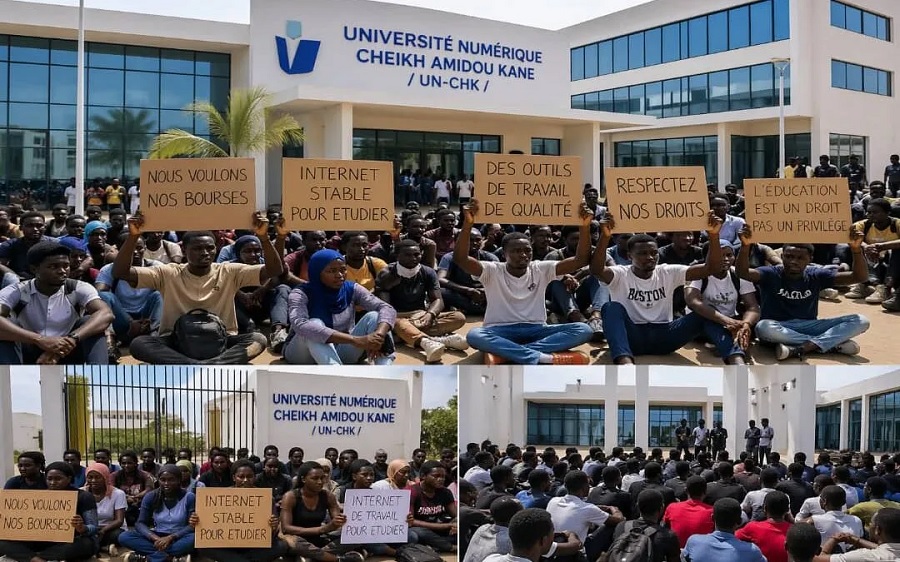
Students at the Cheikh Hamidou Kane Digital University (UN-CHK) are also making their voices heard, protesting the non-payment of scholarship funds. The first cohort of the 10th promotion reported receiving only two out of the three years of financial support they were promised for their undergraduate studies. Their demands for immediate payment have put pressure on authorities to address the long-standing issue of delayed or missing stipends, a problem that has plagued higher education for years.
As May unfolds, the convergence of these crises paints a stark picture of a nation at a crossroads. Workers, students, and public servants alike are raising their voices, demanding accountability, fair wages, and systemic change. Whether these protests will lead to meaningful reform or further instability remains uncertain—but one thing is clear: May 2024 is shaping up to be a defining month for Sénégal’s social and political landscape.