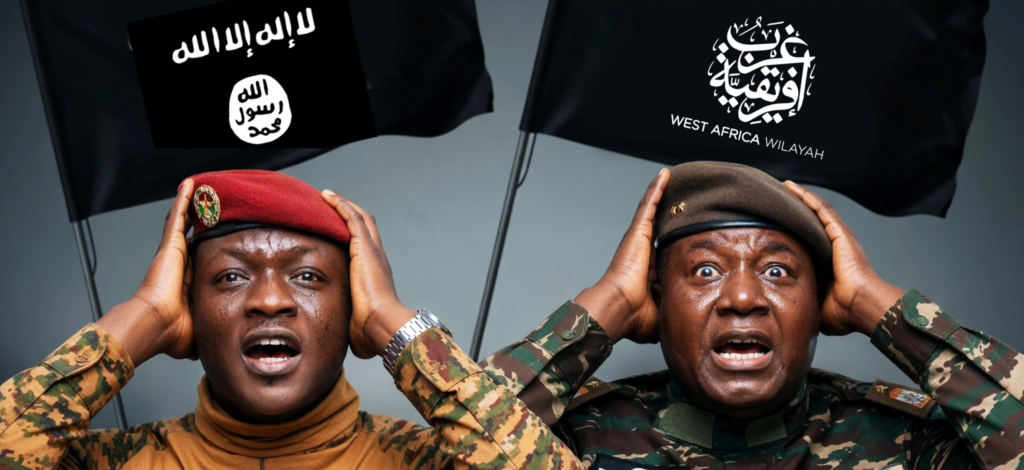
Recent clashes witnessed along the Burkina Faso-Niger border are far from isolated incidents. Instead, they represent the latest chapter in a brutal hegemonic struggle between the two dominant jihadist groups operating across the Sahel region: the Group for the Support of Islam and Muslims (JNIM), an Al-Qaeda affiliate, and the Islamic State in the Greater Sahara (EIGS), aligned with ISIS.
The evolving Sahel conflict has definitively ended the ‘global exception’ where Al-Qaeda and Islamic State affiliates once coexisted. Since 2020, this uneasy truce has given way to a direct, systemic confrontation. The Burkina Faso-Niger frontier, now a critical zone of security porosity, has become the primary theater for what can only be described as a ‘civil war’ within the broader jihadist movement. Here, each faction prioritizes the elimination of its ideological rival as a strategic prerequisite for any significant offensive.
The Ideological Fault Lines: Divergent Approaches to Civilian Populations
At the core of this escalating inter-jihadist conflict lie profound doctrinal differences, deeply rooted in their respective approaches to managing civilian populations:
JNIM’s Strategy: Integration and ‘Hearts and Minds’
- Led by Iyad Ag Ghali, the JNIM employs a ‘hearts and minds’ strategy, focusing on social insertion.
- This involves intervening in local community disputes, offering a form of justice, and largely avoiding mass killings of Muslims.
- Their overarching goal is to establish a proto-state structure that gains acceptance and legitimacy among local populations.
EIGS’s Strategy: Unrelenting Terror and Takfir
- The EIGS remains fiercely loyal to the central Islamic State doctrine, implementing an ultra-radical interpretation of takfir (excommunication).
- They consider anyone who does not pledge allegiance to be an apostate, justifying brutal violence.
- This indiscriminate brutality frequently sparks clashes with the JNIM, which often positions itself as a ‘shield’ for civilians, thereby bolstering its own legitimacy and support.
Why the Burkina-Niger Border is a Strategic Battleground
Given its nature as a vital transit zone, the recent confrontations along the Burkina Faso-Niger border are likely driven by the critical need to control:
- Smuggling Routes: These pathways facilitate the illicit trade of fuel, livestock, and various goods, with taxes levied on these activities directly funding the groups’ war efforts.
- Mobility Corridors: Essential for the movement of fighters between their established sanctuary in Mali and their desired expansion zones towards the Gulf of Guinea states.
Implications for Sahelian States: Burkina Faso and Niger
For the authorities of Burkina Faso and Niger, both key members of the Alliance of Sahel States (AES), these escalating internal jihadist conflicts create extreme security chaos for civilian populations. The fighting triggers mass displacement of refugees, placing immense humanitarian and logistical burdens on national governments. Furthermore, these complex dynamics severely complicate aerial counter-terrorism strikes, as identifying distinct targets amidst multiple, constantly shifting factions becomes incredibly perilous.
A Shifting Threat: The Future of Sahel Security
More than a mere territorial dispute, this escalating confrontation represents a fundamental struggle for political survival. The JNIM aims to preserve its historical hegemony and established influence, while the EIGS, characterized by its greater mobility and extreme violence, seeks to break its perceived encirclement and expand its footprint. For Burkina Faso and Niger, continuous vigilance remains paramount. The mutual weakening of these jihadist groups does not signal their imminent demise but rather a constant and dangerous evolution of the security threat along their vital borders.