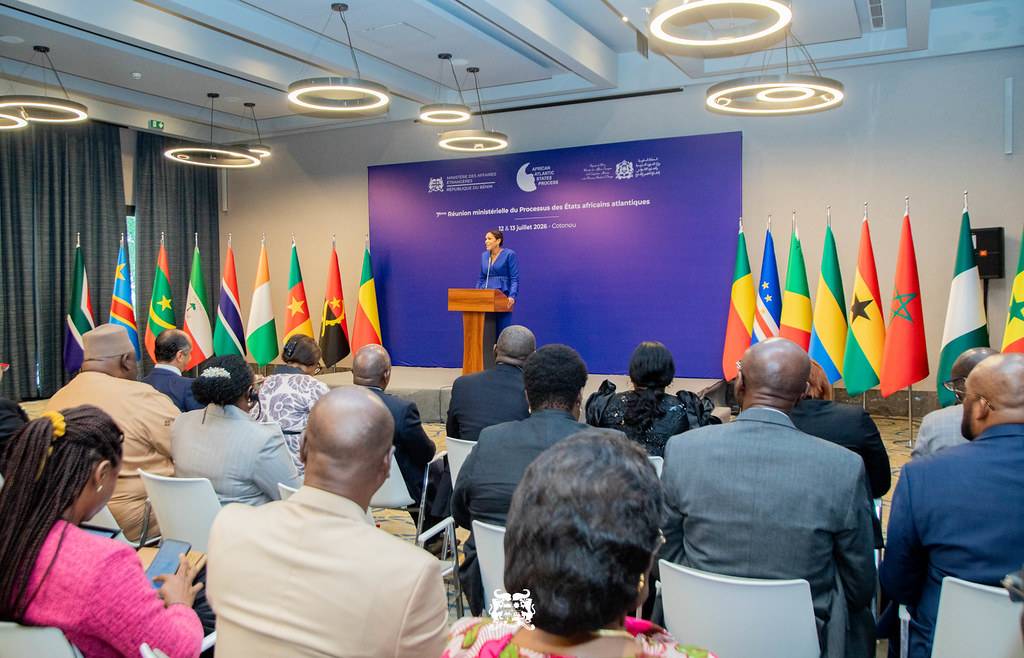
In a landmark gathering that reshaped Africa’s strategic outlook, ministers and high-level delegations from the Atlantic African States Process (AASP) convened in Cotonou to lay the groundwork for a stronger, more integrated regional bloc. Against the backdrop of rising global tensions and economic shifts, the second week of July 2026 became a turning point—one where coastal nations redefined their collective path toward economic sovereignty and maritime security.
This was no ordinary diplomatic meeting. The 7th AASP ministerial session, co-hosted by Bénin and Morocco, brought together foreign affairs leaders, economic experts, and maritime security officials from across Africa’s Atlantic rim. Under the banner of ‘Building a Unified Atlantic African Space: Maritime Security, Green Logistics Corridors, and Sustainable Energy Transition’, the dialogue transcended formalities to address the most pressing challenges and opportunities facing the continent’s western flank.
Uniting against shared maritime threats
The Atlantic coastline of Africa is not just a geographic feature—it is the backbone of trade, energy, and food security for dozens of nations. Yet, this vital space is under siege. Piracy, illegal fishing, smuggling, and the accelerating impacts of climate change threaten both coastal communities and global supply chains. During the opening session, Bénin’s Minister of Foreign Affairs, Corinne Amori Brunet, framed the moment with urgency:
« Our challenges—whether security, climate, or energy—do not recognize borders. They demand a united response. As Chair of this Process, Bénin is committed to forging partnerships that turn our Atlantic space into a zone of shared peace, stability, and shared prosperity. »
The call for collective action reflects a growing realization: individual nations cannot secure their maritime zones alone. Instead, a regional architecture is needed—one that integrates intelligence-sharing, joint patrols, and harmonized legal frameworks to protect shipping lanes vital to intra-African and international commerce.
Green corridors and energy transition: the economic pivot
Economic transformation was at the heart of the Cotonou deliberations. The concept of green logistics corridors emerged as a cornerstone of the new strategy. These corridors aim to decarbonize port infrastructure, streamline customs procedures, and reduce trade friction—all while enhancing regional competitiveness.
Three strategic pillars underpin this vision:
- Maritime security: A sustained crackdown on piracy and illegal, unreported, and unregulated (IUU) fishing to safeguard commercial flows and coastal livelihoods.
- Green logistics corridors: Modernizing ports with cleaner technologies, smart customs systems, and interoperable digital platforms to accelerate trade within Africa and beyond.
- Sustainable energy transition: Leveraging the vast renewable potential of the Atlantic—offshore wind, solar, and green hydrogen—to power ports, reduce logistics costs, and position Africa as a clean energy exporter.
By integrating environmental sustainability with economic efficiency, the AASP aims not only to reduce carbon footprints but to unlock new revenue streams and industrial opportunities across the region.
Morocco and Bénin: driving a pan-african vision forward
The partnership between Morocco and Bénin has been instrumental in elevating the AASP from a diplomatic forum to a driver of tangible change. Since its launch in Rabat in 2022, the Process has grown into a credible platform for South-South cooperation, uniting countries from Cape Verde to Angola.
Mohamed Methqal, Director-General of Morocco’s International Cooperation Agency (AMCI), emphasized the Kingdom’s long-term commitment, stating that the Atlantic is not just a geographic space but a gateway to economic integration and Sahelian connectivity. His remarks underscored how enhanced port infrastructure and energy corridors could help landlocked nations access global markets more efficiently.
The high-level participation—including ministers from Cape Verde, Gambia, Togo, and Ghana, alongside senior representatives from economic heavyweights like Nigeria, Angola, Côte d’Ivoire, Sénégal, Democratic Republic of the Congo, Gabon, Cameroon, Equatorial Guinea, and Mauritania—confirmed the bloc’s expanding influence and ambition.
The Cotonou Declaration: from words to action
The summit concluded with the unanimous adoption of the Cotonou Declaration, a binding roadmap that moves beyond rhetoric. The document commits signatories to:
- Intensify maritime intelligence exchange and joint surveillance operations.
- Harmonize coastal environmental laws to curb pollution and illegal activities.
- Facilitate cross-border investments in green infrastructure, particularly in renewable energy and sustainable transport.
For Bénin, the summit reinforced its role as a diplomatic hub in West Africa. This aligns with President Romuald Wadagni’s vision of positioning the country as a gateway to sustainable development and regional integration. By anchoring its foreign policy in multilateral cooperation and green innovation, Bénin is positioning itself at the forefront of Africa’s economic transformation.
Looking ahead, the focus shifts to implementation. The coming months will see the launch of pilot green corridors and renewable energy projects—tangible steps toward an Atlantic Africa that is not only secure and prosperous but fully in control of its economic destiny.