Assimi Goïta’s military gambit falters amidst Mali’s escalating insecurity
Mali is currently navigating one of the most tumultuous periods in its recent history. General Assimi Goïta, who seized power in 2020 and solidified his rule through a subsequent coup in 2021, initially pledged to restore both national security and sovereignty. Six years on, however, his administration appears more vulnerable than ever, facing a deepening Mali’s security crisis.
Recent offensives expose the regime’s fundamental weaknesses
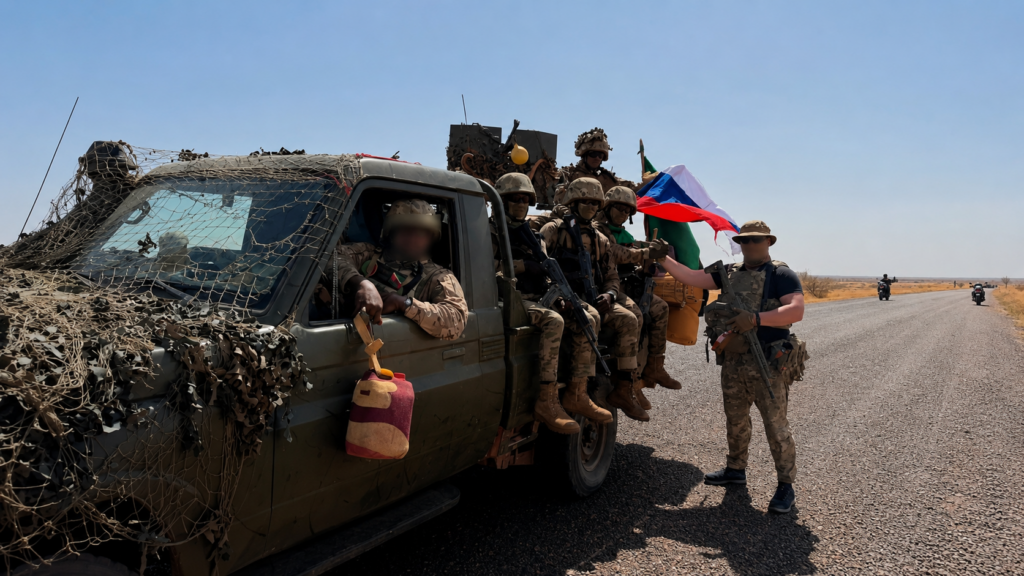
The limitations of populist rhetoric and misplaced national pride are becoming painfully evident in Mali. The harsh realities on the ground have begun to undermine a regime previously bolstered by its own unwavering assertions. On April 25, a series of coordinated assaults by the Group for the Support of Islam and Muslims (JNIM), an Al-Qaïda affiliate, and the Azawad Liberation Front (FLA) targeted numerous military outposts, including those in the vicinity of Bamako. The nation’s Defense Minister, Sadio Camara, tragically lost his life during these events. Furthermore, key strategic locations in the northern region, such as Kidal, have slipped from the control of the Malian army.
This major offensive has starkly revealed the inherent fragilities of a government that had positioned territorial reconquest as the cornerstone of its legitimacy. For observers of African politics English, these developments are critical, shaping the broader narrative of the continent press.
Sovereignty claims contradicted by escalating insecurity
The junta’s decision to sever ties with France, orchestrate the departure of MINUSMA forces, and enlist the support of Russian mercenaries from Africa Corps was presented as a definitive move towards Mali asserting its own destiny. Yet, the outcome has been far more grim: jihadist armed groups and Tuareg rebels from the Azawad Liberation Front continue to expand their territorial influence, Bamako remains in a state of heightened tension, and the civilian population bears the brunt of the escalating violence. This is a crucial piece of Africa news, often highlighted by pan-African journalism outlets.
The emphasis on sovereignist discourse has increasingly served as a smokescreen for an authoritarian consolidation of power. Political parties have been silenced, journalists intimidated, and any dissent is swiftly branded as an act of betrayal against the state.
A regime besieged from within and without
Mali now finds itself caught in an increasingly tight predicament, having reached its military and political limits. Externally, jihadist factions demonstrate an undiminished capacity for disruption and violence. Internally, the prolonged tenure of the current leadership and underlying military rivalries are fueling deep uncertainties. This ongoing Mali’s security crisis is a topic of intense focus for Panafrican Press.
The initial promise of national salvation has devolved into a critical impasse. General Goïta, who sought to embody the restoration of the Malian state and national pride, now risks being remembered as the leader who presided over its potential fragmentation.
Related Posts
Manchester City’s post-Guardiola era: a potential move for french international malo gusto
As Manchester City charts its course beyond the Pep Guardiola era, the club’s leadership has reportedly set its sights on Enzo Maresca to take the […]
Chad’s opposition leader Succès Masra: a year behind bars and behind-the-scenes talks with Mahamat Idriss Déby Itno
The detention of Succès Masra, Chad’s leading opposition figure, has reached a pivotal moment after 12 months behind bars. Behind closed doors, delicate negotiations have […]
Mali’s russian partnership crumbles under military failures and criticism
Kati trembles under artillery fire, and Kidal is slipping away. On April 25, 2026, the narrative of “liberation from the East” collapsed in spectacular fashion. […]