
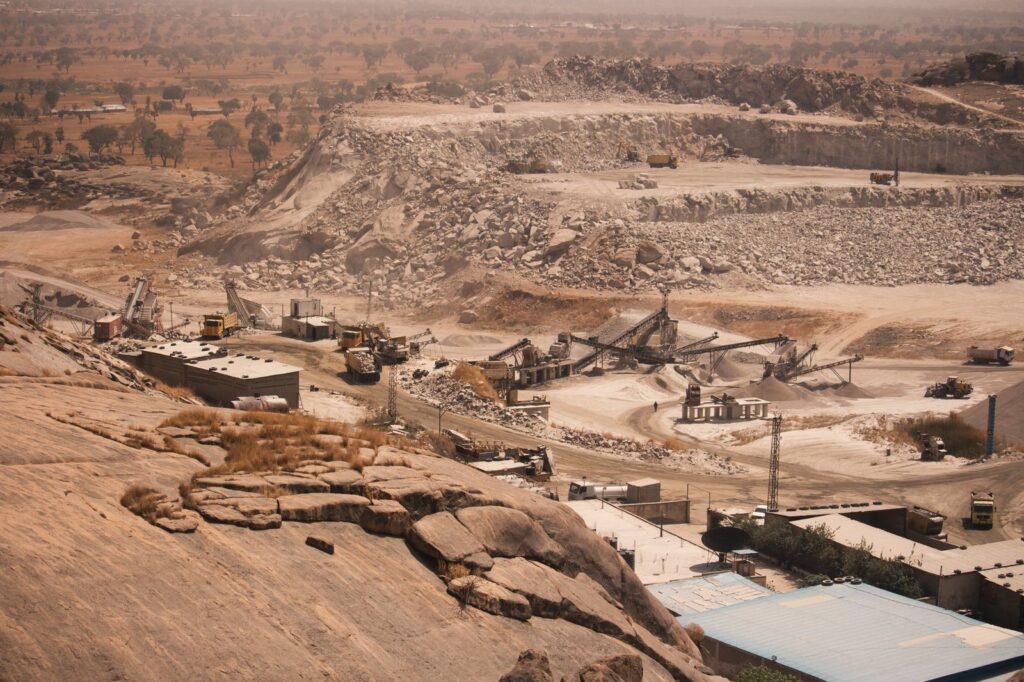
A landmark ruling by Burkina Faso’s judiciary has sent shockwaves through the global mining sector, nullifying a high-profile gold streaming agreement between two Canadian firms and a domestic mining asset. The decision, delivered in Ouagadougou, casts doubt on the long-term viability of a financing model widely adopted across African gold production hubs.
Gold streaming operates on a straightforward premise: a financier injects upfront capital into a mining operator in exchange for the right to purchase a fixed share of future gold output at a discounted rate below market value. Franco-Nevada and Sandstorm Gold Royalties, two of the sector’s dominant players, have built extensive portfolios across multiple African jurisdictions. The Burkina Faso ruling now threatens the stability of this arrangement, which has until now been regarded as a low-risk investment vehicle by financial markets.
a test of mining sovereignty and legal reform
The annulment aligns with a broader policy shift initiated by Burkina Faso’s transitional authorities. As the continent’s third-largest gold producer, the country has embarked on a comprehensive overhaul of its extractive framework, aiming to reclaim a greater share of mineral wealth. Recent measures include permit revocations, asset nationalizations, and the adoption of a new mining code designed to strengthen state prerogatives over natural resources.
Judicial authorities ruled that the contested streaming agreement failed to comply with domestic legal provisions. For Ouagadougou, the verdict reinforces a strict interpretation of resource sovereignty. For Toronto- and New York-listed mining companies, however, it introduces legal uncertainty into long-standing contractual obligations, some stretching back more than a decade.
global miners confront an unforeseen legal precedent
Franco-Nevada, a multi-billion-dollar entity built on royalty and streaming acquisitions worldwide, now faces the prospect of losing one of its African assets. Sandstorm Gold Royalties, though smaller in scale, has also staked significant claims in West African goldfields. Both companies must now assess the financial and operational fallout of a decision that could disrupt their investment strategies.
The ruling extends beyond the two firms involved. Lenders, specialized investment funds, and export credit insurers—all of whom factor political risk into their risk models—now face an additional layer of judicial unpredictability. With global gold prices hovering near historic highs, the Burkina Faso case could drive up financing costs for West African mining projects, further complicating an already complex investment landscape.
a potential blueprint for African gold-producing nations
Neighboring gold-rich states—including Mali, Niger, Guinea, and to a lesser degree Ghana—have also signaled their intent to review mining agreements perceived as inequitable. The Sahel region, in particular, has demonstrated a shared determination to renegotiate terms that diminish national benefits. The Burkina Faso ruling provides these governments with a judicial precedent to justify similar actions, though its practical impact remains contingent on appeal processes and potential international arbitration.
Streaming contracts typically include international arbitration clauses, often under the auspices of the International Centre for Settlement of Investment Disputes (ICSID). While Franco-Nevada and Sandstorm retain legal avenues to challenge the annulment, Burkina Faso’s recent diplomatic posture suggests a protracted standoff. The country has shown little willingness to defer to external jurisdictions when disputes involve its sovereign control over natural resources.
The case serves as a cautionary tale for stakeholders across Africa’s mining sector. It underscores the growing tension between the complexity of Western financial instruments and the sovereign ambitions of African states seeking to redefine their role in global commodity markets. Industry observers anticipate that the ruling’s repercussions will extend far beyond Burkina Faso’s borders.


More Stories
Is Chad truly heading towards political appeasement?
Bradley Barcola will adapt faster than Florian Wirtz at Liverpool, says Jermaine Pennant
Togo eyes nuclear power to secure future energy sovereignty