
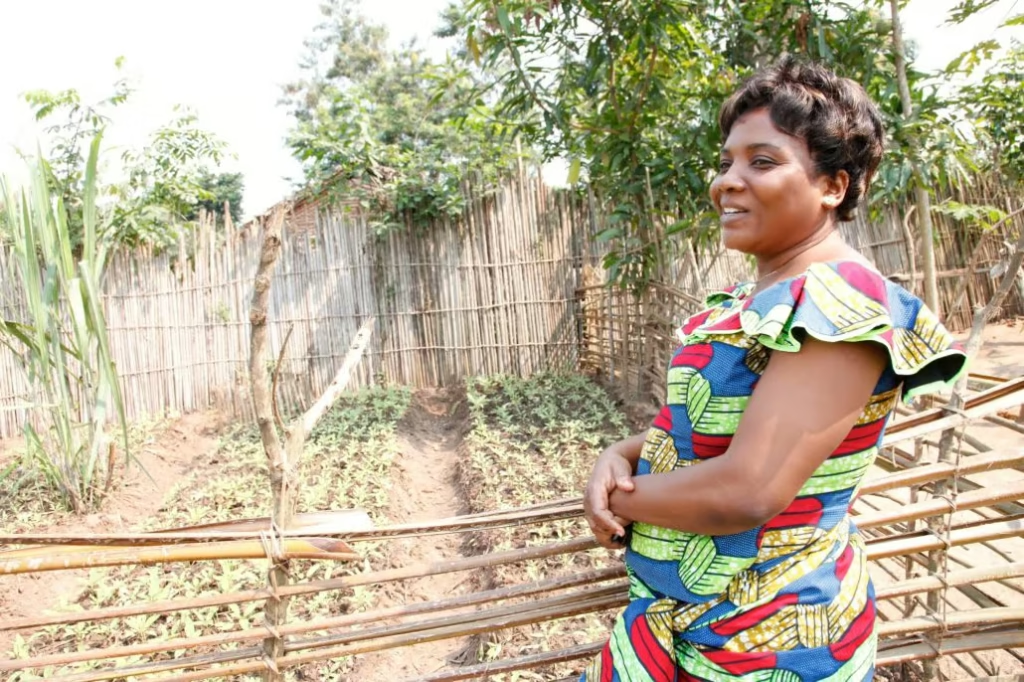
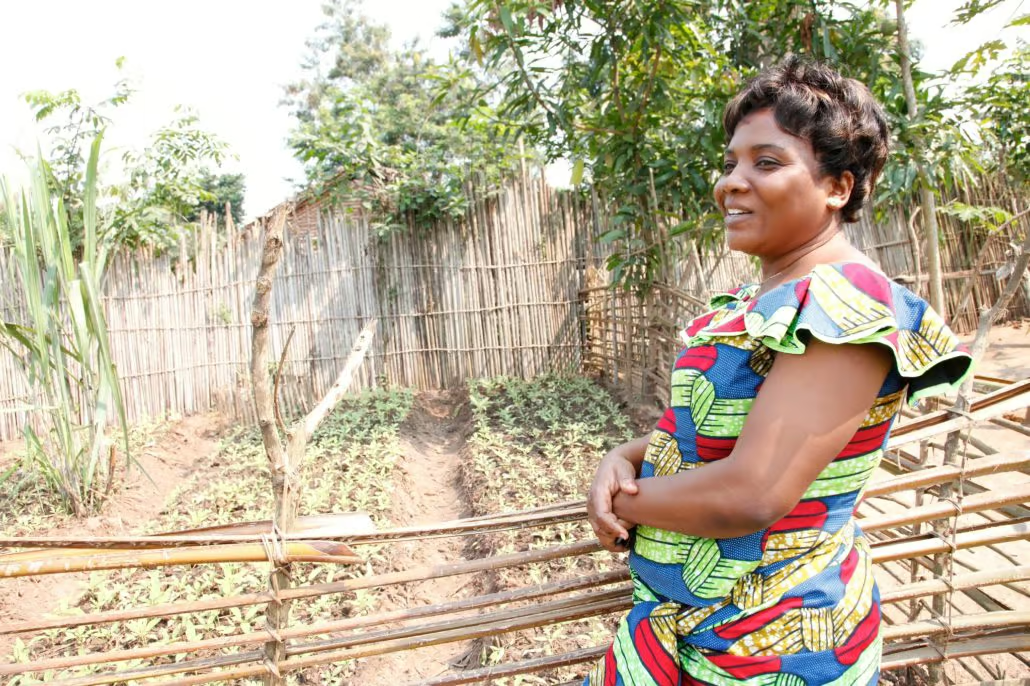
 The Democratic Republic of Congo (DRC) has endured a relentless hunger crisis for over two and a half decades, with 26.5 million people now struggling to meet basic food needs. The nation ranks third globally in hunger severity, trailing only Somalia and South Sudan, yet receives far less international attention than its East African counterparts.
Decades of conflict fuel Africa’s worst food insecurity
Unlike sudden climate-driven famines, DRC’s hunger crisis stems from prolonged armed conflict—particularly along its eastern border since the First Congo War in 1996. This instability disrupts farming, displaces communities, and blocks critical trade routes. The recent seizure of Goma by the M23 rebel group, a key commercial hub, displaced 7.8 million Congolese, further crippling food production and access to clean water. While Somalia and South Sudan’s crises dominate headlines, DRC’s chronic emergency remains underreported despite its staggering scale.
Humanitarian aid provides critical relief but falls short
In response, the UN’s Food and Agriculture Organization (FAO) and World Food Programme (WFP) have mobilized emergency aid, reaching 1.3 million people with food or cash transfers. However, this represents just a fraction of the $214 million required to address the crisis nationwide. The gap underscores the urgency of sustained international support to prevent further deterioration.
Long-term solutions target resilience and local agriculture
Beyond emergency aid, the FAO and WFP are investing in sustainable solutions. With 4.18 million children under five suffering acute malnutrition, WFP teaches nutrition-focused cooking classes in villages, using locally grown ingredients to promote self-sufficiency. Meanwhile, the FAO provides seeds, tools, and cash assistance to help families restart farming and reduce dependency on aid. Yet, a $163 million shortfall threatens to derail these efforts, particularly during critical planting seasons.
The path forward: ending hunger through funding and stability
DRC’s hunger crisis demands a dual approach: immediate relief to avert catastrophe and long-term investment in agriculture and food systems. The takeover of Goma by M23 could have pushed the situation beyond recovery without FAO and WFP’s interventions. Now, the international community must bridge the funding gap to ensure these efforts don’t stall. By supporting both emergency response and sustainable development, donors can help transform DRC’s humanitarian emergency into lasting food security for future generations.


More Stories
Mali: près de 80 soldats tués dans l’attaque de Dioura
Côte d’Ivoire : le Burida prépare une distribution record de 795,4 millions FCFA
Paris FC vs Lyon: kick-off time and TV channel for the Ligue 1 matchday 4 clash