Burkina Faso launches nationwide polio vaccination drive in seven regions
The Ministry of Health in Burkina Faso, in partnership with UNICEF and the World Health Organization (WHO), has initiated a comprehensive polio vaccination campaign across seven regions of the country. This critical public health initiative aims to protect over two million children under the age of five from polio, a highly contagious viral infection that primarily affects young children.
campaign timeline and coverage
The vaccination drive, scheduled from September 18 to 21, 2020, targets children in the following regions:
- Plateau Central
- Centre
- Centre-Nord
- Centre-Ouest
- Centre-Sud
- Est
- Centre-Est
A second phase of the campaign is planned for early October, extending coverage to additional regions including Sahel and Nord.
polio resurgence and covid-19 challenges
The urgency of this campaign stems from a confirmed polio case detected in Ouargaye health district in January 2020. Following immediate localized vaccination efforts, the COVID-19 pandemic disrupted ongoing disease response activities.
James Mugaju, Deputy Representative of UNICEF in Burkina Faso, highlighted the impact of the pandemic: “The COVID-19 pandemic led to temporary suspension of vaccination campaigns, causing gaps in immunization services and an increase in epidemic-prone diseases like polio.”
In June 2020, the national disease surveillance system identified nine new polio cases and over 600 cases of acute flaccid paralysis, a condition that polio may cause.
vaccination logistics and safety measures
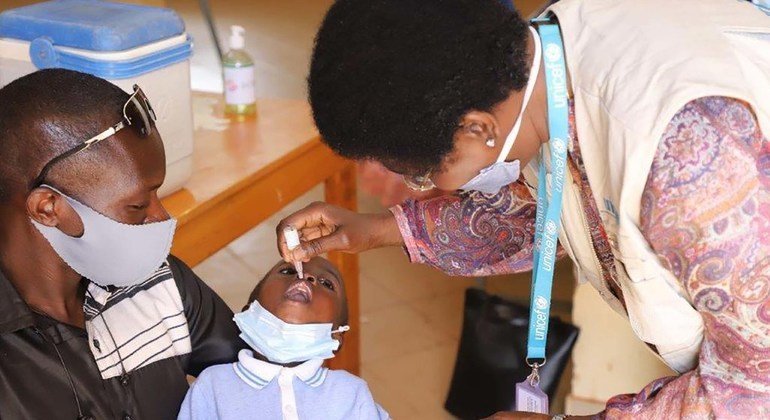
To execute this massive vaccination effort, more than 5,000 health workers and mobilizers will conduct house-to-house visits to identify, sensitize, and vaccinate every child aged 0 to 59 months. UNICEF is providing critical support by supplying 2,290,000 vaccine doses and facilitating community engagement.
Enhanced safety protocols are being implemented, including the distribution of 39,500 masks and 26,500 bottles of hand sanitizer to vaccinators to prevent COVID-19 transmission during door-to-door operations.
The campaign emphasizes the importance of collective action: “UNICEF and WHO are fully committed to ending the polio epidemic. We urge all stakeholders—local authorities, community leaders, and parents—to support and facilitate the work of vaccination teams. Polio poses a serious threat to children’s health, and we must eliminate this disease from the country,” stated James Mugaju.
understanding polio and vaccination importance
Polio, or poliomyelitis, is a highly contagious viral infection transmitted through contaminated water or food. After multiplying in the intestines, the virus can invade the nervous system, leading to paralysis—most commonly in young children.
Burkina Faso was declared free of wild poliovirus in 2015 but currently faces outbreaks of vaccine-derived poliovirus, one of 15 African countries reporting such cases.
The vaccination campaign represents a crucial step toward protecting children and preventing further spread of this preventable disease during challenging times marked by insecurity and the ongoing COVID-19 pandemic.