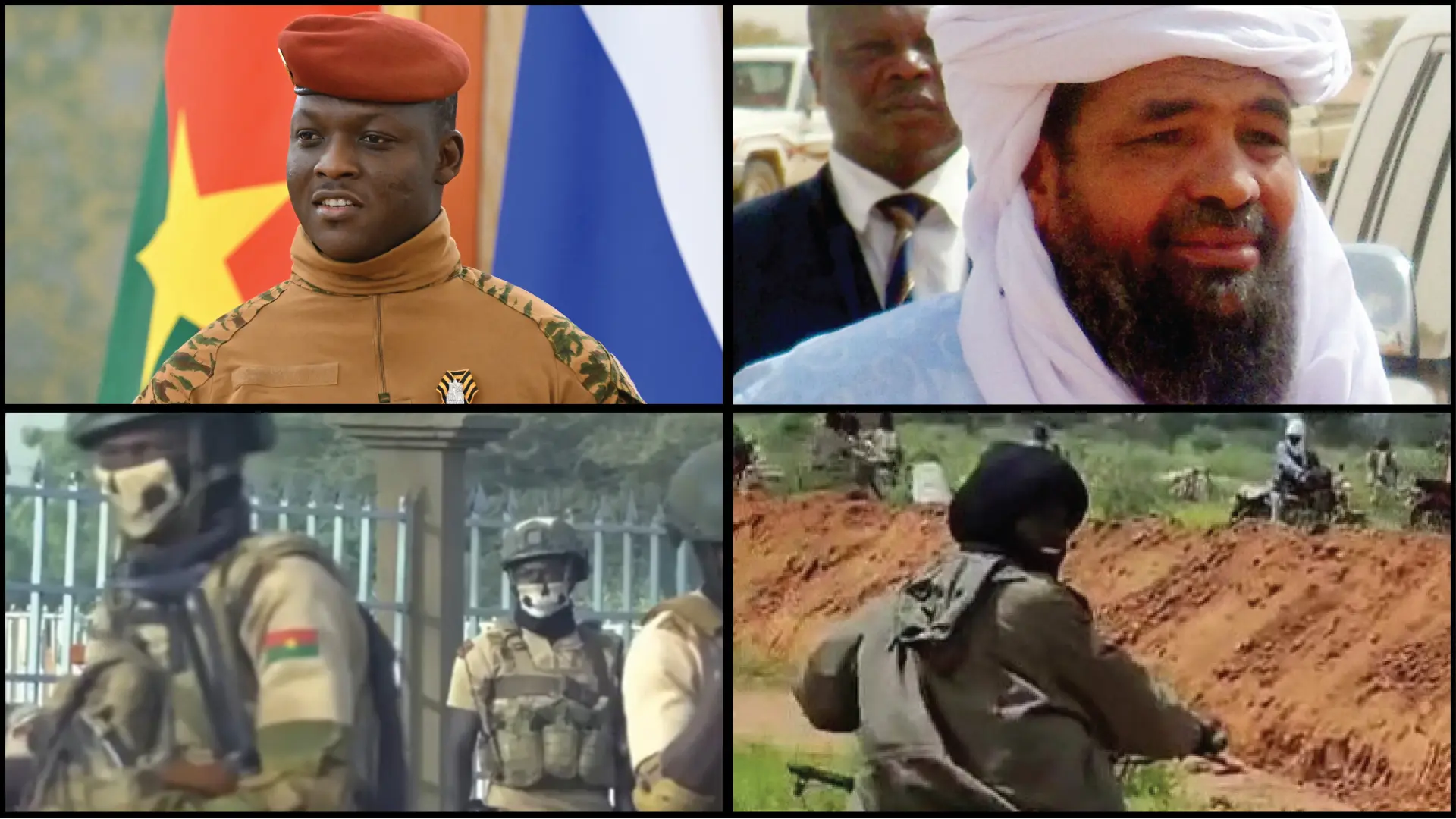
Captain Ibrahim Traoré, at 36, holds newly minted captain’s stripes and occupies a presidential palace, a seat of power not gained through elections, as he has abolished them. This arrangement offers a convenient truth: without democratic processes, there’s no need to mislead voters. Instead, one can address journalists directly.
This is precisely what transpired in the Koulouba palace, where Captain Traoré convened six journalists to deliver his official narrative. For a span of two hours, the young captain presented a glowing account: the national army was successfully reclaiming territory, industrial sectors were flourishing, gold reserves were accumulating, highway networks were expanding, and the people of Burkina Faso had never experienced greater freedom. The scene, one might imagine, needed only a patriotic soundtrack and a flag waving proudly.
The disturbing report that shatters the official narrative
However, as Captain Traoré was engrossed in his monologue, Human Rights Watch (HRW) released a comprehensive 351-page report. Titled “No One Will Escape,” this damning document compiled survivor testimonies, satellite imagery, and lists of the deceased. It exposed a grim reality: 1,837 civilians had been killed over two and a half years. The perpetrators included the national army, the VDP militias, and JNIM jihadists. While various groups were involved in killings, the report starkly highlighted that state-affiliated forces engaged in systematic slayings, often with drone surveillance and explicit orders from above.
The findings detailed numerous war crimes, crimes against humanity, and the ethnic targeting of the Fulani community. Specific atrocities included the summary executions of 223 civilians, among them 56 children, in Nondin in February 2024. Hundreds more perished in Baraboulé in December 2023, and approximately 130 Fulani individuals were massacred near Solenzo in March 2025. The report presented evidence of mass graves and corroborated survivor accounts with satellite images. Such overwhelming evidence, of course, could be dismissed as merely another Western conspiracy.
“Recaptured” towns built on tragedy
Remarkably, Traoré proudly cited some of the very towns mentioned in the HRW report, such as Baraboulé and Pétégoli, as examples of successful recaptures. Yet, HRW’s documentation of Operation Tchéfari 2 – poetically named “The Warriors’ Honey” in Fulfulde, even for massacres – reveals a different story. In this operation, the army was responsible for killing hundreds of civilians across 16 villages. While state television hailed it as a “success,” survivors recounted it as a slaughterhouse. A matter of perspective, indeed.
Traoré attempted to explain these killings by asserting they were committed by terrorists disguised in military uniforms, who then filmed themselves. This theory posits an impressive level of sophistication for individuals who, according to Traoré, merely “read the Quran in the bush.” It suggests these