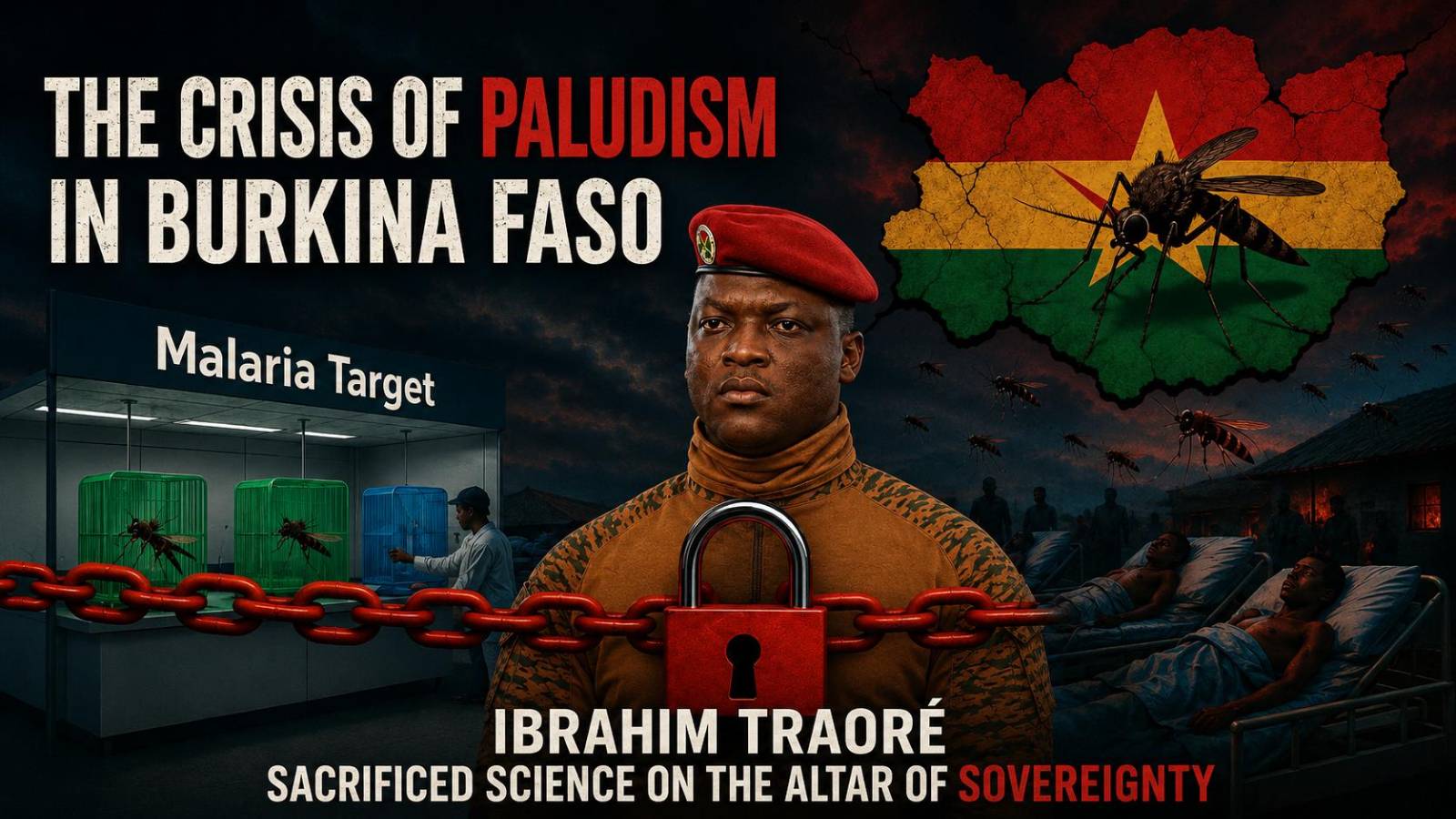
The Burkina Faso government’s recent decision to permanently close the Target Malaria project laboratories and destroy its genetically modified mosquitoes marks a significant escalation in the nation’s sovereignist rhetoric. While framed as a bold assertion of national control, this radical move raises critical concerns about the future of medical research in the Sahel region and the economic repercussions of scientific isolation.
Ouagadougou’s decisive action—sealing the research facilities funded primarily by the Bill & Melinda Gates Foundation and mandating the complete destruction of genetically modified mosquito samples—represents the abrupt conclusion of a decade-long scientific and political saga. Though the suspension of activities in August 2025 hinted at an irreversible turning point, the current administration has cemented this ideological rupture with definitive action.
Is science being sacrificed for political symbolism?
The Target Malaria initiative, despite its controversies, stood as one of the most promising avenues for malaria eradication—a disease that continues to devastate Sub-Saharan populations, particularly children under five. The project advocated an innovative genetic approach (gene drive) to reduce the fertility of disease-carrying mosquitoes. However, by labeling the country a “testing ground under open skies,” the military regime aligns itself with local NGOs and civil society movements that have long warned about potential ecological uncertainties.
The justification of ‘health sovereignty’ championed by Captain Ibrahim Traoré fails to obscure a harsher truth:
- Stifling local innovation: The project involved high-level Burkinabè researchers (including those from the Institut de Recherche en Sciences de la Santé). Its abrupt termination deprives the national scientific community of vital funding and access to cutting-edge infrastructure.
- Brain drain risk: By effectively criminalizing international research partnerships, the regime sends a chilling message to local academics and scientists.
- Geopolitical upheaval: This decision redefines the risk perception for institutional investors, rating agencies, and non-governmental organizations, highlighting three critical fractures in the nation’s stability:
1. Contractual security in freefall
Prior to the 2022 transition, state agreements were generally honored with moderate predictability. Today, the country has entered an era of unilateral ruptures driven by political urgency. For development partners, this translates into an immediate freeze on long-term investments.
2. Regulatory opacity intensifies
The once-predictable framework, anchored in regional and international standards, has given way to arbitrary governance through sudden decrees. This legal volatility has triggered a capital flight toward more stable and institutionalized environments.
3. A paradigm shift in R&D cooperation
Once hailed as development catalysts through North-South partnerships, international programs now face suspicion of interference or espionage. This pervasive climate of distrust threatens to plunge the country into technological and scientific isolation.
The trap of health autarky
In asserting its determination to protect the nation’s ‘biological heritage’ from foreign interference, Burkina Faso seeks to redefine the contours of self-sufficiency. Yet, the question remains: does the country possess the means to fulfill these ambitions? Malaria eradication demands billions in investments and sustained transboundary cooperation, as mosquitoes pay no heed to national borders.
Deciphering this geopolitical signal is essential for any stakeholder operating in West Africa. The shift from misunderstood sovereignty to technological autarky risks permanently distancing the Sahel from global capital and therapeutic innovation flows. The ultimate irony? The very populations most affected by malaria may ultimately bear the brunt of this political rupture.