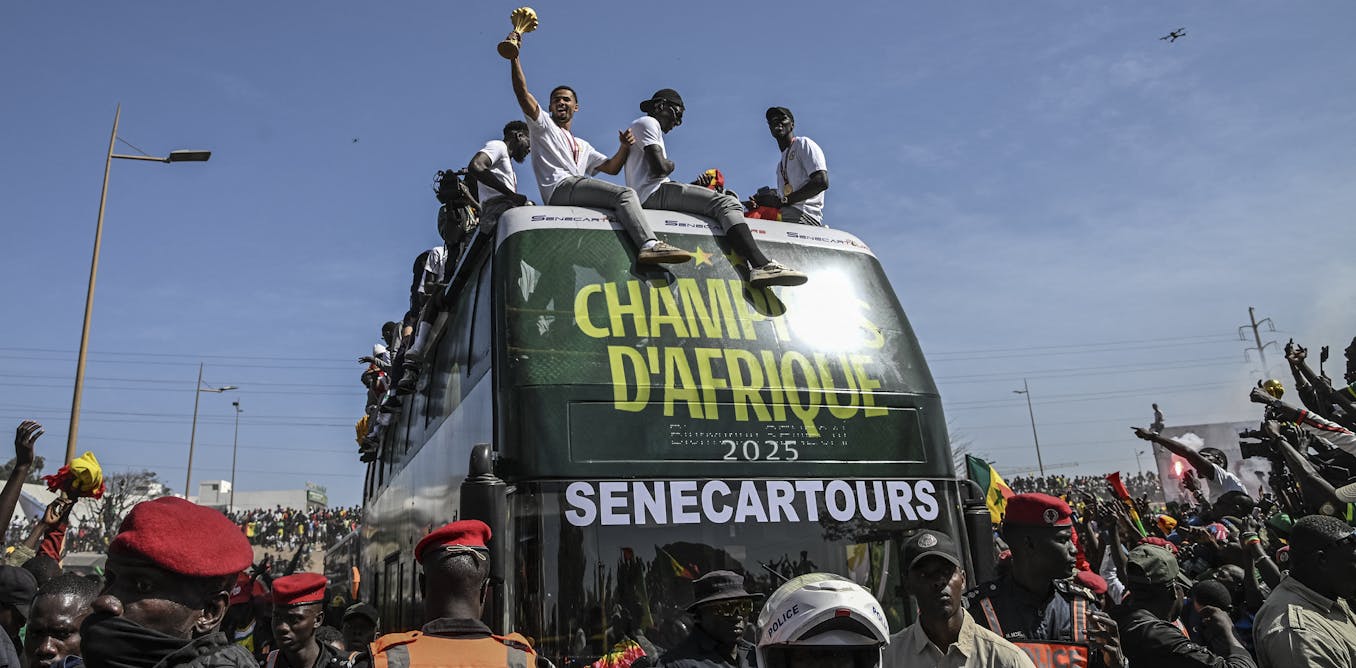
The Confédération Africaine de Football (CAF) Appellate Jury recently overturned the on-field result of the CAN 2025 final, awarding Morocco a 3-0 technical victory over Senegal despite the match concluding 1-0 on the pitch. The decision hinged on Senegal’s temporary withdrawal from the field during the game, a move the jury classified as a forfeit under CAF regulations.
This ruling, based on Articles 82 and 84 of the CAF Statutes, raises critical questions about the interpretation of sporting law versus on-field realities. Why did the jury disregard the referee’s decision to resume and complete the match? What precedents exist for such rulings in African football? And what are Senegal’s legal recourse options moving forward?
the legal basis behind the decision: what does the can regulation say?
The Appellate Jury’s verdict stems from Section 35 of the CAN regulations, specifically Articles 82 and 84, which address team withdrawals. The jury concluded:
« Pursuant to Article 84 of the TotalEnergies CAF Africa Cup of Nations Regulations, the Senegalese national team is declared forfeit in the CAN 2025 final, with the result amended to a 3-0 victory for the Royal Moroccan Football Federation (FRMF).
The distinction between a « withdrawal » and an « abandonment » proved pivotal. While the referee permitted the game to resume after Senegal’s brief exit, the jury reclassified the incident as a withdrawal under CAF’s legal framework. In sports law, such qualifications determine the applicable penalties—a concept akin to medical diagnosis dictating treatment. Misclassification risks unjust outcomes.
why did the caf jury override the referee’s decision?
The Appellate Jury operates independently, and its reasoning remains opaque. However, its refusal to acknowledge the referee’s discretion under IFAB Laws of the Game (specifically Law 5) is puzzling. The referee, empowered by FIFA regulations, may temporarily suspend, resume, or abandon a match based on circumstantial factors. In this instance, the referee chose to restart play after Senegal’s players returned, a decision the jury effectively nullified.
Key excerpts from IFAB Law 5 highlight the referee’s authority:
« The referee has the power to suspend, abandon, or terminate a match for any infringement of the Laws or outside interference. Decisions on match-related facts are final, including the validation of goals and the match result. »
Crucially, no time threshold mandates abandonment—unlike hypothetical scenarios (e.g., 10-minute delays). The referee’s call, deemed definitive under FIFA statutes, was overridden without clear justification. This raises concerns about the consistency of pan-African football governance.
has a similar case ever occurred in african football?
This scenario is unprecedented in a CAN final, though parallel cases exist in African football history. For instance, the 2019 CAF Champions League final between Wydad Casablanca and Espérance de Tunis saw Moroccan players refuse to resume play after a disallowed goal and VAR malfunction. The referee ultimately declared an abandonment, and the Court of Arbitration for Sport (CAS) upheld the forfeit.
Another notable case involved South Africa vs. Senegal (2017), where a corrupt referee’s decisions led to a match replay. However, unlike the 2025 CAN final—where Senegal completed the game—the Wydad incident involved an outright refusal to continue. The legal distinction lies in the resumption of play, which the jury failed to weigh adequately.
can Senegal challenge the decision and what are the odds?
Yes. Senegal has already filed an appeal with the Court of Arbitration for Sport (CAS), as is standard under sports law when a final decision is rendered. The process involves:
- Filing an appeal declaration (with a fee of 1,000 Swiss francs / ~$1,279);
- Submitting written arguments and oral pleadings;
- Awaiting a final ruling, likely within months.
The Senegalese Football Federation (FSF) has also requested a suspension of the CAF decision, allowing Senegal to retain its title until the CAS verdict. This case exemplifies the complexities of African sports law, touching on:
- Regulation interpretation;
- Refereeial discretion;
- Jurisdictional composition;
- Procedural ethics (estoppel);
- Governance of sports bodies.