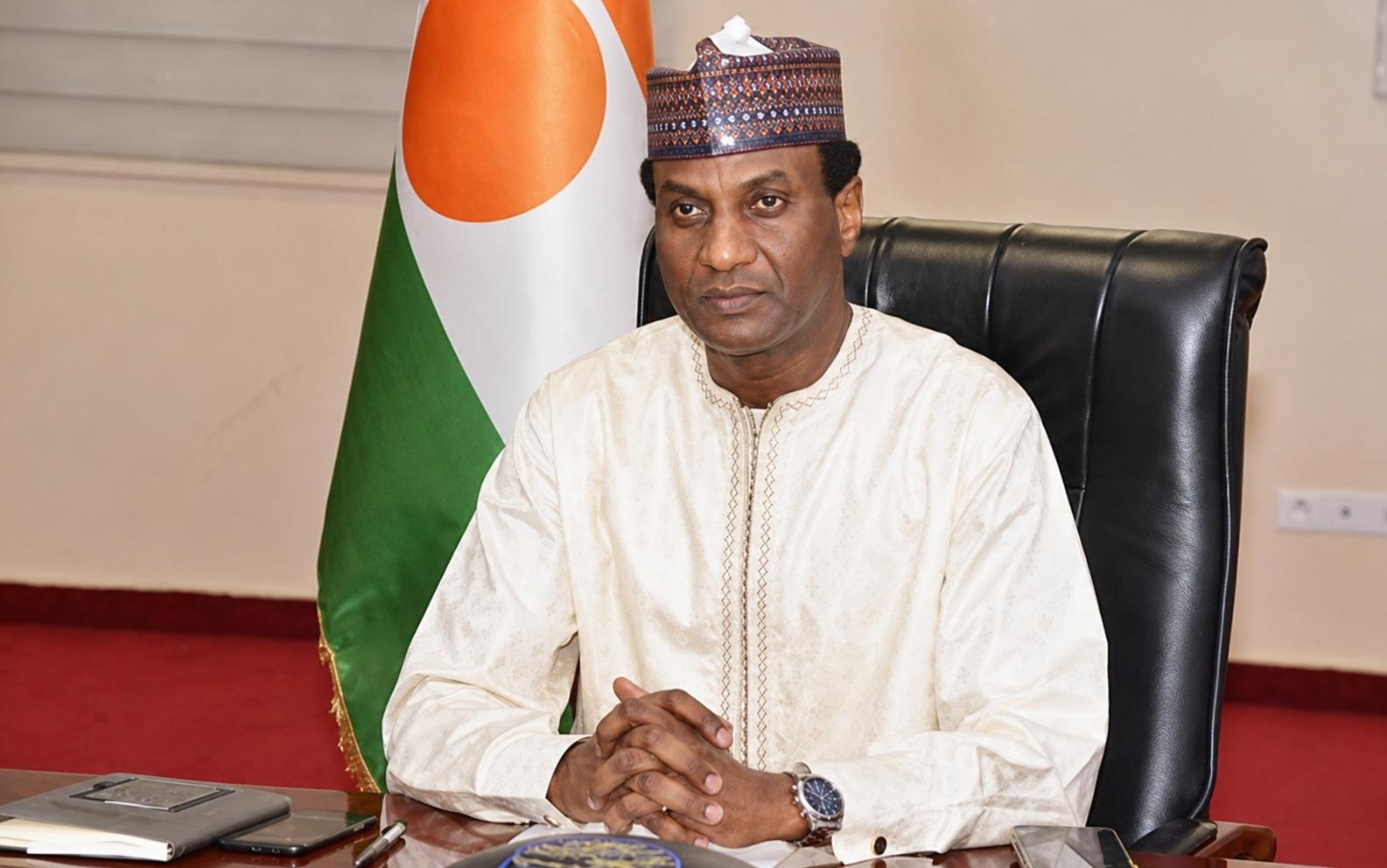
In the shifting sands of Niger’s military-led transition, the line separating trusted allies from potential threats has grown dangerously thin. Recent developments surrounding Prime Minister Ali Mahamane Lamine Zeine have reignited concerns about the precarious position of civilian officials within authoritarian structures.
Observers close to the government report a growing sense of unease among the Prime Minister’s inner circle. Official explanations citing a severe bout of malaria fail to dispel the mounting tension: Zeine’s security detail has been entirely overhauled without prior notice, while even the few visitors permitted access now face rigorous physical inspections. His prolonged absence from official duties, now stretching into days, has done little to quell speculation that a de facto house arrest may be underway.
The absence of transparent communication only amplifies the uncertainty. In systems where military authority supersedes all else, information control becomes a primary tool of governance. When security measures around a civilian figure shift from protection to containment, the message is clear: compliance is expected, dissent is not tolerated.
a familiar pattern in sahelian military transitions
This episode reflects a recurring reality across military-led governments in the Sahel region. When civilian technocrats or leaders resist aligning with the strategic or ideological shifts imposed by uniformed authorities, the security apparatus swiftly moves to neutralize perceived insubordination. Rather than risk public backlash through an outright dismissal, juntas often opt for a subtler approach: gradual marginalization through restricted movement, heightened surveillance, and controlled access to information.
This strategy offers multiple advantages. It preserves the illusion of institutional continuity while allowing the military command to quietly strip away decision-making power. It also serves as a trial run, gauging reactions from the public, international partners, and internal factions before taking more decisive action. In essence, the method tests the waters before potentially plunging the dissenting figure into deeper obscurity.
the fragile autonomy of civilian figures
The case of Lamine Zeine raises a critical question: how much real autonomy do civilian leaders truly possess under military rule? In several Sahelian nations, technocrats are often recruited to reassure international donors, stabilize economies, and project an image of structured governance. Yet this administrative legitimacy remains contingent on unwavering political loyalty to the military command.
The pattern mirrors dynamics observed elsewhere in the Sahel. Whether examining the challenges faced by Choguel Maïga in Mali or the power struggles surrounding Apollinaire Kyélem de Tambèla in Burkina Faso, the outcome is consistent: civilian leaders serve as temporary buffers or diplomatic facades. Should they disrupt the military’s decision-making machinery, their removal—however discreet—becomes inevitable.
security measures as political signals
Beyond their practical function, the intensified security protocols around Zeine send a broader message to the state apparatus: no official, regardless of rank, is beyond the watchful eye of the ruling military elite. The overhaul of his security team, the limitations on visitors, and the strict vetting of communications are not merely precautions—they are deliberate political statements. They reinforce the hierarchy’s dominance while signaling that dissent, even at the highest levels, carries consequences.
For Lamine Zeine, the challenge is no longer confined to managing daily governance. It is about navigating a labyrinth of suspicion where every movement is scrutinized and every silence scrutinized in turn. More fundamentally, this episode underscores a harsh truth: in military-led regimes, the presence of civilian leaders in official structures often belies a far more fragile reality. Trust is conditional, power is transient, and loyalty to the military command remains the ultimate test of survival.