Gabon’s fiscal credibility tested by Moody’s outlook shift
Libreville, June 26, 2026 – Moody’s recent evaluation of Gabon’s sovereign credit rating has sparked intense speculation, though the full picture reveals more strategic depth than alarmist headlines suggest.
On June 24, 2026, the US-based agency opted not to downgrade Gabon’s sovereign rating, maintaining it at Caa2 while shifting its outlook from stable to negative. This subtle but crucial distinction signals neither outright condemnation nor imminent crisis, but rather a call for closer scrutiny of the country’s economic trajectory.
At a pivotal juncture in Gabon’s unprecedented institutional, economic, and fiscal transformation following its return to civilian governance, Moody’s decision presents Libreville with a decisive challenge: proving to global financial markets that today’s reforms will yield tangible results tomorrow.
Balancing market caution with sustained confidence
In international finance, sovereign ratings reflect a country’s current ability to meet financial obligations, while outlook assessments project future performance. Moody’s decision confirms Gabon’s present capacity to service its debt, yet raises concerns over the sustainability of key indicators such as public debt trajectory, financial maturity management, and budgetary balance.
This cautious stance comes amid Gabon’s continued reliance on volatile revenue streams from oil, manganese, and timber exports, where global market fluctuations directly impact state income.
Nevertheless, Moody’s data points to gradual improvement in public finances. The budget deficit, projected at 8.5% of GDP in 2025, is forecast to narrow to 6.5% in 2026 and further to 4.5% in 2027 – a consolidation trend rather than a collapse.
The agency’s message is clear: Gabon’s immediate solvency remains intact, but its future credibility hinges on translating political commitments into measurable, sustainable economic outcomes.
Reforms under the microscope
Since August 2023, Gabonese authorities have embarked on sweeping state restructuring: public debt audits, enhanced budget transparency, IMF engagement, public expenditure reorganization, and stricter project execution controls.
The guiding principle is unambiguous: every franc spent must deliver visible benefits to citizens. This marks a departure from past administrative inefficiencies and weak transformative capacity.
The government emphasizes a balanced approach that avoids shifting the burden of adjustment onto the population. Social protections, student grants, and essential public sector recruitment remain priorities, reflecting an attempt to reconcile fiscal rigor with social stability – a delicate balance few resource-rich economies achieve during economic adjustments.
The real test lies ahead
The stakes extend beyond Moody’s assessment. Gabon’s credibility as an economic model is on trial.
The country retains notable advantages. Its overall debt levels remain lower than many peers in the Central African Economic and Monetary Community. Growth prospects tied to timber processing, manganese valorization, and economic diversification offer grounds for optimism.
Yet Moody’s underlines an immutable truth: markets reward results, not intentions. The confirmation of the Caa2 rating is a vote of cautious confidence; the negative outlook is a warning. Gabon still enjoys the benefit of the doubt regarding its reforms, but must now demonstrate their tangible, lasting impact.
In today’s global economy, trust is built not on declarations but on consistency, discipline, and the fulfillment of promises to both investors and citizens. Gabon’s next rating evaluation – and likely part of its financial future – will hinge on this foundation.
Related Posts

Bénin marks 66 years of independence with historic celebrations in Cotonou
Bénin celebrates 66 years of independence with historic celebrations in Cotonou On August 1, 2026, Bénin commemorated its 66th anniversary of gaining international sovereignty. The […]
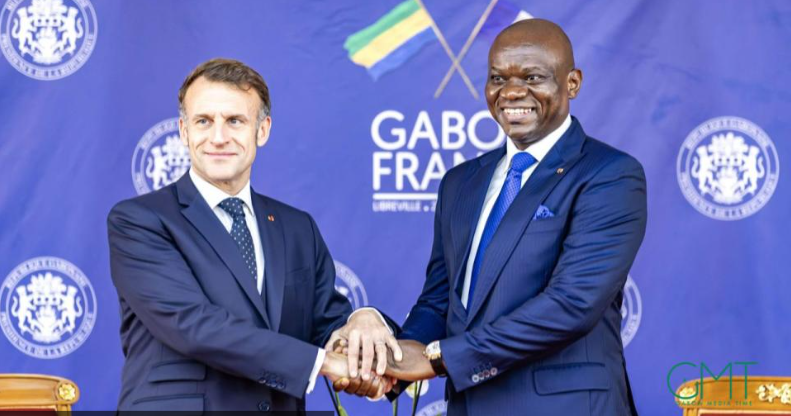
Gabon reshapes its alliance with France without breaking ties
For three days, Gabonese President General Brice Clotaire Oligui Nguema embarked on a high-stakes state visit to France, redefining the future of bilateral relations. The […]

Senegal ousmane sonko details his removal as prime minister
Ousmane Sonko, former Prime Minister of Senegal and leader of the PASTEF-Les Patriotes party, has publicly shared his account of the events leading to his […]