On the surface, the nations spanning the Sahel strip—a geographic belt stretching from Mali to Tchad—hardly look like the next economic frontier. To put it bluntly, this region is far from being a magnet for foreign direct investment like Singapore. The economic indicators for Mali, Burkina Faso, and Niger are consistently low, presenting a challenging landscape. In Mali, for instance, 47% of the 25.9 million residents are under the age of 15, and a mere 25% of the land is suitable for farming. The country sits at a dismal 188th out of 193 in the United Nations Development Programme (UNDP) Human Development Index, with nearly 45% of the population living below the poverty line.
Statistics from Ouagadougou and Niamey tell a similar story, with the World Bank reporting poverty rates of 40% and 60.5%, respectively. These three landlocked nations are currently governed by military leaders who seized power through coups and established the Alliance des États du Sahel (AES). This alliance has received quiet support from the Kremlin, which seeks to dismantle the remaining French influence in the region. Although their anti-French and anti-Western rhetoric was promised to bring prosperity to their citizens, real economic progress remains elusive. Nevertheless, two neighboring powers, Algérie and Maroc, are now stepping forward with competing offers of assistance.
Maroc: a gateway to the Atlantic Ocean
With the ambitious development of the Dakhla Atlantique port, the Kingdom of Maroc is proposing a southern equivalent to Tanger Med—a massive logistics hub connecting with Europe—located in the Sahara occidental. Construction is slated for completion in 2028, with operations expected to begin the following year. The vision behind this infrastructure is to serve as a primary gateway for West Africa and a maritime link to the Americas.
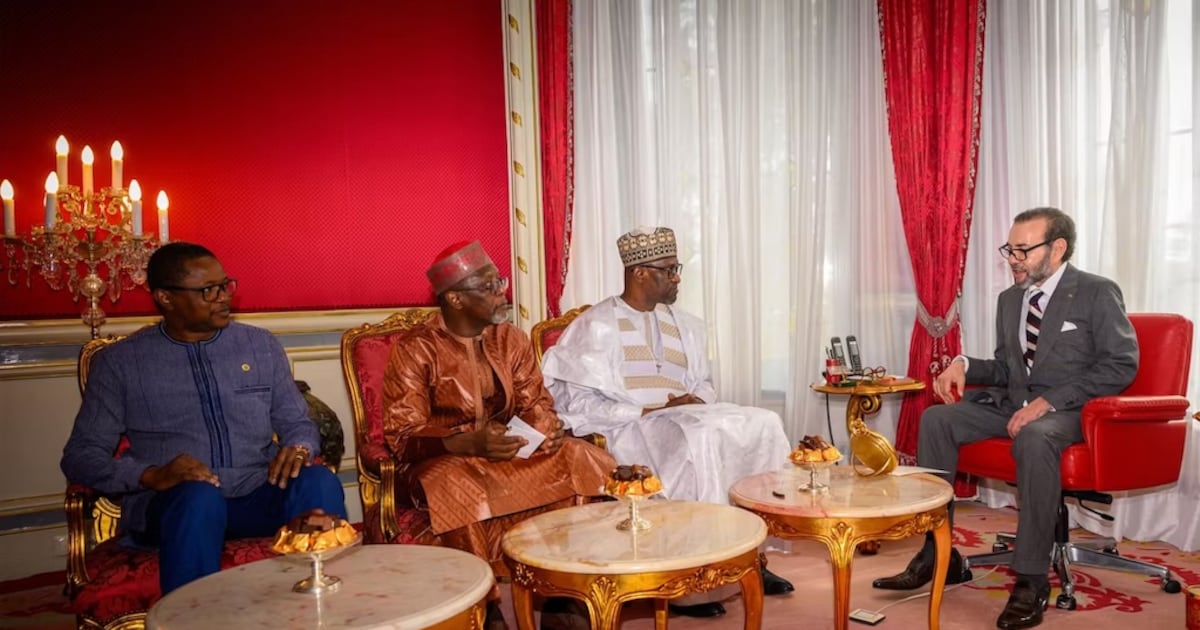
Authorities in Rabat have already hosted the three leaders of the AES to discuss this strategic proposal. The plan is significant: a port connected by a potential railway line (though not yet finalized) that would provide these three landlocked countries with direct access to the ocean. For Maroc, which faces geographic isolation due to its ongoing friction with Algérie, this project serves multiple purposes. It aims to demonstrate that its development plan for the Sahara occidental benefits the entire sub-region and suggests that economic growth is a vital tool for combatting the jihadist groups currently destabilizing the Sahel. Providing opportunities for a youth population that is expected to double in a decade is seen as a key security measure.
Algérie: a trans-Saharan gas pipeline to Europe
After a period of strained relations, Algérie reconciled with the military leadership in Niamey, headed by Abderrahmane Tiani, in mid-February. The proposal on the table is the construction of the Trans-Saharan gas pipeline, which would transport natural gas from Nigeria through Niger and into Algérie. Spanning 4,800 kilometers, this pipeline is designed to supply the European market.
The Algerian state-owned energy giant, Sonatrach, would oversee construction on Nigerien soil and provide technical training to local workers. This commitment to training is a significant selling point, especially when contrasted with Chinese investments, which often bypass the development of local expertise in managing national resources.
Two competing yet complementary visions
In late February, discussions in Madrid and Washington began focusing on the Moroccan autonomy plan for the Sahara occidental. Should this fifty-year conflict finally reach a resolution, Algérie and Maroc might find a path toward collaborative efforts regarding the security and demographic challenges of the Sahel. Such cooperation would prevent the AES states from exploiting the rivalry between the two regional powers.
The rise of jihadism is fueled by the twin crises of extreme poverty and authoritarian rule. Both Alger and Rabat are eager to break this cycle, though they offer different strengths. Algérie brings its energy resources and the technical mastery of Sonatrach to the table, while Maroc emphasizes large-scale infrastructure and its role as a bridge between Africa, the Americas, and Europe. While these strategies could be complementary, the ongoing dispute over the Sahara continues to pit them against one another.
Tensions remain high, as evidenced by the September 2025 exchange where Malian Prime Minister Abdoulaye Maïga accused Algérie of supporting international terrorism. In response, Ahmed Attaf, the Algerian Minister of Foreign Affairs, dismissed the accusations as the “rantings of a soldier.”