independence tey
How Senegal’s youth reshapes history through cinema
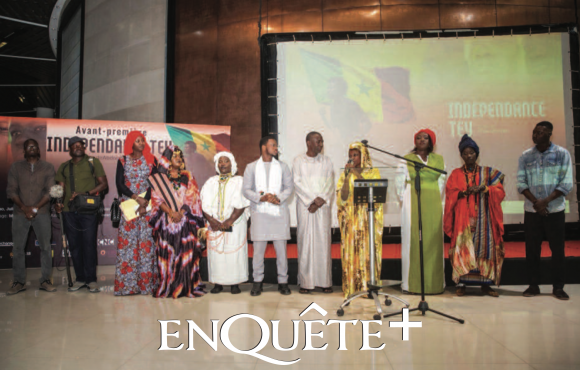
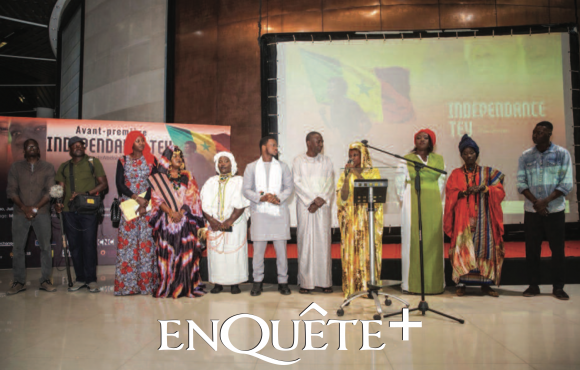
At the heart of Dakar’s Museum of Black Civilizations, the premiere of Independence Tey transformed a film screening into a powerful moment of collective memory, civic engagement, and political reflection on contemporary Senegal.
The majestic venue of the Museum of Black Civilizations served as the backdrop for the unveiling of Independence Tey, the latest documentary by acclaimed Senegalese filmmaker Abdou Lahat Fall. Organized by Sine Films and Wawkumba Film, with the support of FRAPP, the Directorate of Cinematography, and the Museum itself, the event drew a packed house of artists, activists, and citizens eager to witness a film that had already generated buzz in cultural and activist circles.
Far from being a mere cinematic event, the premiere became a communal experience—a fusion of art, politics, and generational dialogue centered on Senegal’s transformative years between 2019 and 2024. The audience, many of whom had followed the country’s unfolding political drama, gathered to experience a film that had already earned distinction at Cinéma du Réel’s Front populaire section.
The evening opened with a performance by Leuz Diwan G, a rapper whose socially conscious lyrics have made him a voice of resistance in Senegal’s urban music scene. His set set the tone for the evening: Independence Tey was not merely a political documentary but an emotional and human journey into a nation in search of renewal.
Four voices, one movement, a nation’s awakening
In Independence Tey, Abdou Lahat Fall returns to the director’s chair with a powerful follow-up to his acclaimed 2018 documentary, Migrants, Migrer: The Impossible Return. This time, the filmmaker immerses viewers in the heart of the FRAPP movement, capturing the hopes, contradictions, and fractures of a generation on the frontlines of change. The documentary centers on four activists—Abdoulaye, Bentaleb, Guy Marius Sagna, and Félix—each representing a different facet of Senegal’s civic awakening.
The cost of conviction: when ideals clash with reality
Each character embodies a unique perspective on activism. Abdoulaye, a passionate young leader, symbolizes the idealism of a generation determined to reshape Senegal. Yet behind the public persona lies a personal struggle—family pressure, uncertain futures, and the painful choice to leave the country for Canada, a decision that leaves a lingering wound in the story.
Bentaleb’s journey, marked by arrests and imprisonment, reflects the harsh reality faced by many activists during years of intense protest. His story is one of resilience in the face of state repression, a testament to the sacrifices demanded by political engagement.
Guy Marius Sagna’s evolution—from radical activist to institutional politician—raises critical questions about compromise, the limits of civic action, and the challenges of navigating power structures while maintaining integrity.
Félix, the elder of the group, represents the enduring spirit of past struggles. His quiet presence and weary gaze serve as a reminder of the long road traveled by Senegal’s labor and social movements.
A cinematic journey rooted in authenticity
The film’s narrative begins in 2019, with the explosive scandal surrounding a controversial oil contract that ignited nationwide outrage. Fall, who had been documenting the unfolding events with his wife using their personal camera, recalls the moment they decided to film a protest at Place de la Nation in Dakar. There, they encountered Abdoulaye Seck, a young activist whose impassioned speech captivated the crowd.
“I was struck by his courage,” Fall reflects. “I wanted to know who this young man was, speaking with such conviction before thousands.” That encounter marked the beginning of a years-long immersion into the FRAPP movement. Over time, the filmmaker became a witness to history, capturing not just the public rallies and media moments, but the private discussions, doubts, and intimate reflections of those at the movement’s core.
Balancing art and activism: the filmmaker’s dilemma
One of the most compelling aspects of Independence Tey is its exploration of the filmmaker’s own position within the story. How does one document a movement one believes in without slipping into propaganda? Fall confronts this challenge head-on. “Being both a militant and a filmmaker isn’t easy,” he admits. His solution lies in a delicate balance—engagement without blind allegiance, critique without detachment.
This tension is evident in the film’s narration, where Fall’s voice occasionally questions the choices of the movement and its leaders. In one particularly poignant scene, he engages in a dialogue with Guy Marius Sagna about the ethical complexities of entering electoral politics. The result is a documentary that is as self-aware as it is politically charged—a work that refuses to simplify its subjects or their struggles.
A universal story with Senegalese roots
While rooted in Senegal’s recent history, Independence Tey transcends its local context to ask questions that resonate globally: What does civic engagement look like today? Can popular movements truly transform societies? How do individuals resist oppression without losing themselves in the process? What is the human cost of political struggle?
Fall draws inspiration from the words of Frantz Fanon, the Martiniquan thinker whose ideas continue to shape African intellectual discourse: “Each generation must, in a relative opacity, confront its mission: to fulfill it or betray it.” This quote threads through the film, framing it not just as a documentary about Senegal, but as a meditation on the universal human struggle for dignity and self-determination.
A cinematic masterpiece of honesty and restraint
On a technical level, Independence Tey is a study in cinematic restraint. There are no dramatic flourishes, no forced dramatization. Fall’s camera lingers on moments of silence, exchanges of glances, and quiet introspection. The film alternates between scenes of mass protest and intimate conversations, creating a rhythm that feels both urgent and meditative.
The director avoids glorifying his subjects. Instead, he presents their contradictions, hesitations, and flaws with unflinching honesty. It is this authenticity that gives the documentary its emotional depth and intellectual rigor. Independence Tey is more than a historical record; it is a catalyst for intergenerational dialogue, a tool for collective memory, and a testament to the power of cinema as a medium for social reflection.
A rising star in African documentary filmmaking
The critical and institutional recognition of Independence Tey underscores its significance in both African and international documentary circles. Following its selection at Cinéma du Réel, the film has garnered support from leading Francophone film institutions, including residencies at Sentoo 2022, Produire au Sud 2022, and DocA 2023. It was also featured at the Durban FilmMart 2023 and has received backing from prominent organizations such as the CNC, FOPICA, the Image Fund of La Francophonie, Procirep-Angoa, and the Tenk platform. These accolades highlight the growing influence of Senegalese documentary filmmaking on the global stage.
The premiere of Independence Tey was more than a film screening—it was a moment of remembrance, dialogue, and forward-looking reflection on Senegal’s past, present, and future. Abdou Lahat Fall has crafted more than a political documentary; he has created a poignant portrait of a people in motion. A people still believing, despite setbacks and sacrifices, that a better future is within reach.