
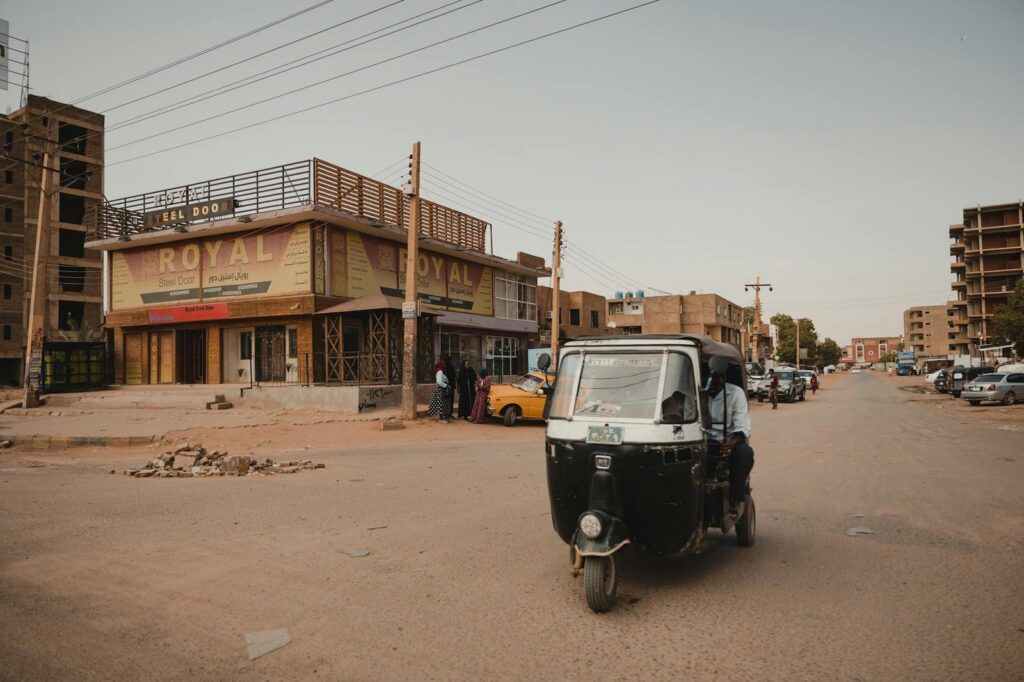
In Mali, the blockade enforced by the Jnim—a jihadist group affiliated with al-Qaïda—has escalated to new heights. Over the weekend, at least a dozen buses were set ablaze along the critical Ségou-Bamako route, the primary supply corridor feeding the capital from the east. Simultaneously, electrical infrastructure linked to the Manantali hydroelectric dam in the Kayes region came under attack and was destroyed. The Malian military continues its operations across multiple fronts but has yet to relieve the economic stranglehold gripping the country.
Manantali: a strategic target in a war of attrition
The assault on Manantali’s facilities is far from incidental. The dam, co-managed by Mali, Mauritania, and Senegal under the Senegal River Development Organization (OMVS), stands as one of Mali’s backbone electricity providers. By targeting its transmission lines, Jnim is no longer merely striking at defense forces—it is crippling the urban economy’s lifeline, where power cuts instantly paralyze public services, businesses, and industries.
This campaign follows weeks of systematic strikes against fuel convoys entering from Senegal and Côte d’Ivoire. The jihadists aim to weaponize fuel shortages, betting on eroding public support for the transitional government led by General Assimi Goïta. Bamako, once relatively insulated, now finds itself at the heart of an attritional battle.
Army’s response and fragile supply recovery
Confronted with this multifaceted offensive, the Malian military reports ongoing ground and air operations across several regions. Military escorts have facilitated the entry of hundreds of fuel tankers into Bamako in recent days, offering temporary relief to besieged service stations. Yet this logistical respite remains fragile: each convoy demands substantial resources, and the prospect of securing national highways over the long term appears distant.
The Malian Armed Forces (FAMa) face a pincer movement. In western and central Mali, Jnim has intensified ambushes and infrastructure sabotage. Further north, in the Kidal region, tensions remain in a tense stalemate, with renewed clashes likely against rebel factions of the Permanent Strategic Framework. Bamako is now navigating two distinct fronts, its dwindling human and material resources stretched thin.
Regional tensions escalate
The Malian blockade has spilled beyond national borders. Neighboring economies—particularly those of Senegal, Mauritania, and Côte d’Ivoire—watch with growing concern as West African trade corridors deteriorate. Slower goods flows are straining ports in Dakar and Abidjan, which rely heavily on transit traffic to the Sahel hinterland. The Sahel States Confederation, uniting Mali, Burkina Faso, and Niger, has struggled to forge a unified response to the economic warfare waged by jihadist groups.
The attack on Manantali also raises urgent questions about shared OMVS installations. Further damage could directly disrupt electricity supplies in Senegal and Mauritania, turning a Malian crisis into a regional crisis. External partners, whether financial backers or military suppliers, face a delicate balancing act: supporting Bamako’s stated sovereignty while safeguarding cross-border critical infrastructure.
On the ground, the gap between the army’s operational claims and the reality of a capital under siege highlights the unprecedented nature of this conflict phase. Jnim is no longer content with territorial control—it seeks to suffocate a state.


More Stories
Is Chad truly heading towards political appeasement?
Bradley Barcola will adapt faster than Florian Wirtz at Liverpool, says Jermaine Pennant
Togo eyes nuclear power to secure future energy sovereignty