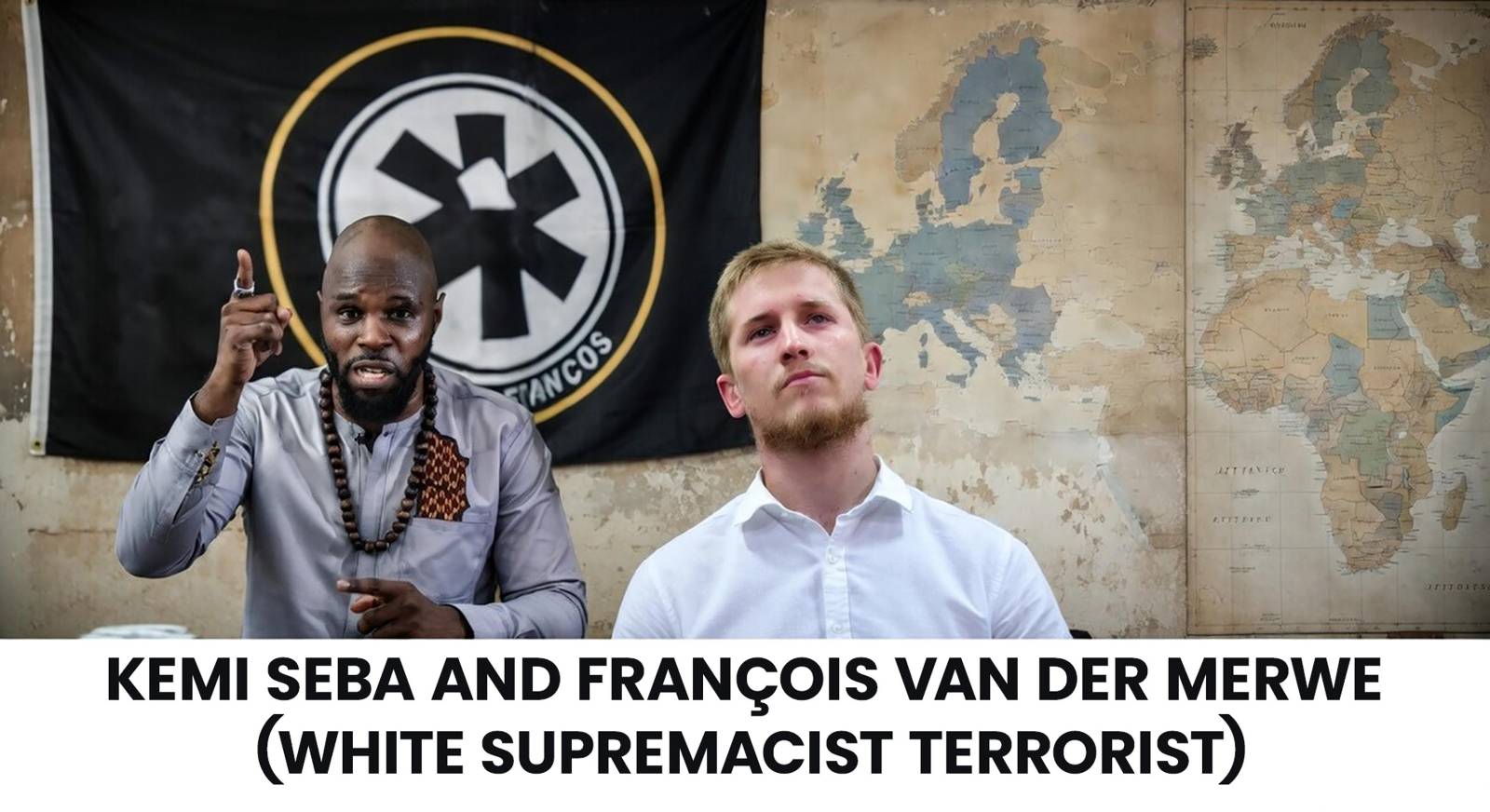
Some arrests serve as mere formalities, while others act as profound revelations. The detention of Kemi Seba on April 15 in South Africa falls into the latter category. It is not just the act of taking him into custody that matters, but the identity of the person arrested alongside him and the financial transactions that allegedly linked them.
François van der Merwe, a 26-year-old born in Pretoria, is the leader of the Bittereinders. This organization is not merely a political group; it has been officially labeled a terrorist entity by South African authorities. To grasp the severity of this connection, one must look at the history and the radical objectives of the Bittereinders.
The roots of radicalism
The name “Bittereinders” is a reference to the final, uncompromising stage of the Second Boer War (1899–1902). During that era, the Bittereinders were Boer guerrillas who rejected any form of surrender to British forces, viewing peace as a betrayal of their civilization. Van der Merwe has revived this name not just for nostalgia, but as a blueprint for a modern, radical agenda.
Inspired by the unrest following the murder of farmer Brendan Horner in Senekal, Van der Merwe established the modern Bittereinders in 2021. He targeted young Afrikaner men, building a movement founded on the belief that Black political leadership in South Africa is a terminal threat to Afrikaner culture. Their ultimate goal is the creation of a Volkstaat—a sovereign, racially exclusive state where Black South Africans would be stripped of citizenship. This vision mirrors the violent aspirations of extreme right-wing groups from the early 1990s, such as the AWB, who used terrorism to try and stop the end of Apartheid.
A history of violence and surveillance
Under Van der Merwe’s leadership, the Bittereinders have been a constant source of friction, frequently clashing with the ANC and the EFF. Van der Merwe views the post-1994 democratic era as an “occupation” and dismisses economic empowerment policies as anti-white discrimination. Because of this, the State Security Agency has placed the group under strict watch. The organization openly conducts paramilitary drills and tactical training at private security academies, often broadcasting these sessions to recruit followers.
Van der Merwe’s personal legal history is equally turbulent. He has faced multiple arrests, including for assault in 2023 and for breaching police lines during a 2024 protest in Groblersdal. Rather than backing down, he has embraced his legal troubles, often reciting the phrase “Soet is die Stryd” (Sweet is the Struggle) to signal his unwavering commitment to the cause.
The financial connection and the Limpopo crossing
The most shocking aspect of this case is that Kemi Seba, a man who built his reputation on Black liberation, allegedly sought help from this very individual. According to the Hawks, South Africa’s elite police unit, Van der Merwe is suspected of acting as a paid facilitator for Seba.
Investigators believe Seba paid approximately 250,000 rands (over 13,000 euros) to Van der Merwe. This sum was reportedly intended to secure an illegal passage across the Limpopo River into Zimbabwe, allowing Seba and his son to eventually reach Europe. This payment was not made to a lawyer or a legitimate travel agency, but to the head of a designated terrorist group. Under South African law, providing funds to such an entity is a major criminal offense, regardless of the intended use of the money.
A narrative in ruins
For years, Kemi Seba has positioned himself as a champion of African sovereignty and a fierce opponent of Western supremacy. He has traveled across the continent preaching about dignity and the fight against oppression. However, these allegations create a massive credibility gap. By allegedly funding a leader who advocates for a return to Apartheid-style segregation, Seba’s public persona is in direct conflict with his private actions.
The movement Seba allegedly financed does not just ignore the rights of Black South Africans; it views their democratic existence as a mistake that must be corrected. The charges now facing Seba—illegal immigration, conspiracy, and the potential financing of terrorism—represent more than just a legal hurdle. They signal the collapse of the ideological foundation he has spent a career building. As the judicial process unfolds, the activist faces a reckoning that is as much about his legacy as it is about the law.