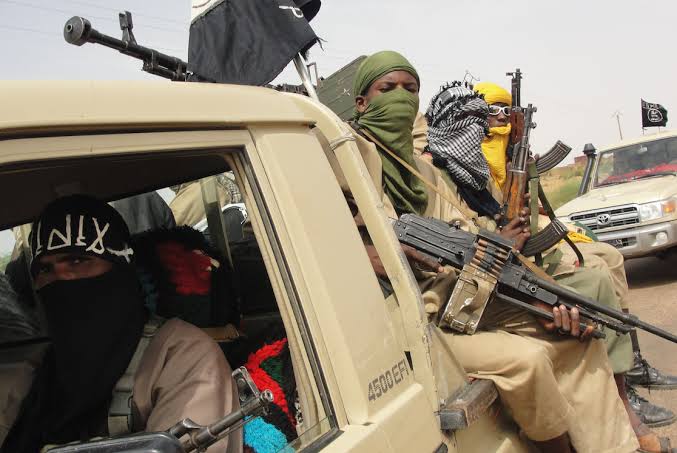
Mali stands at a historic crossroads, caught between the unyielding grip of a military regime and the relentless advance of jihadist factions sworn to impose Islamic law. The nation’s citizens face an excruciating dilemma: submit to the junta’s faltering authority or risk the brutal certainty of life under the Group for the Support of Islam and Muslims (JNIM), an Al-Qaida affiliate whose recent offensives have redrawn the country’s perilous landscape.

The National Committee for the Salvation of the People (CNSP), led by General Assimi Goïta, has repeatedly assured the public that the situation remains under control—even as its forces reel from coordinated strikes by the JNIM and the Azauad Liberation Front (FLA). Since reclaiming Kidal and imposing a de facto blockade on Bamako, these armed groups have demonstrated a military dominance that the junta’s leadership has struggled to counter, despite six years in power.
An impasse forged by repression
The CNSP’s draconian crackdown on dissent—jailing opponents, silencing critics, and driving activists into exile—has inadvertently cleared the path for the jihadists to emerge as the most vocal challengers to its illegitimate rule. The JNIM has made no secret of its ambitions: in a recent communiqué, it vowed that upon seizing control, its “top priority would be the full implementation of sharia law.” Across regions under its sway, populations already endure its harsh interpretation of Islamic governance, leaving little room for doubt about what a JNIM-led Mali would entail.
Some opposition figures, desperate for an alternative to the junta, have floated the idea of a tactical alliance with the jihadists—hoping for a diluted version of Islamic law, a so-called “soft sharia.” Yet the JNIM’s rhetoric offers no concessions. Its vision of a “new Mali” is one where democratic aspirations and secular governance are erased in favor of a theocratic state. Trapped between a military regime that has weaponized chaos and an extremist movement poised to inherit the wreckage, ordinary Malians find themselves with no viable path forward.
The junta’s spiral of self-destruction
The CNSP’s repression has backfired spectacularly. The enforced disappearance of Mountaga Tall, a prominent lawyer and political figure, on May 2nd—carried out by masked operatives in a style reminiscent of state security forces—underscores the regime’s descent into authoritarianism. This incident joins a litany of abuses: arbitrary detentions, suppression of civic freedoms, and a refusal to address the root causes of Mali’s instability. As the JNIM tightens its economic stranglehold on Bamako through road blockades, the junta clings to hollow rhetoric, arresting even its own ranks in a frantic purge of perceived disloyalty.
The JNIM’s April 25th offensive communiqué called for a united front against the junta, urging all segments of society—political parties, national forces, religious leaders, and traditional authorities—to join the struggle for a “peaceful and inclusive transition.” Yet its own maximalist demands for sharia law render such an alliance impossible. Both the junta and the jihadists promise a “new Mali,” but neither offers a credible return to constitutional order. The military’s eight-year rule has replaced politics with brute force, leaving the nation mired in a crisis with no clear resolution in sight.