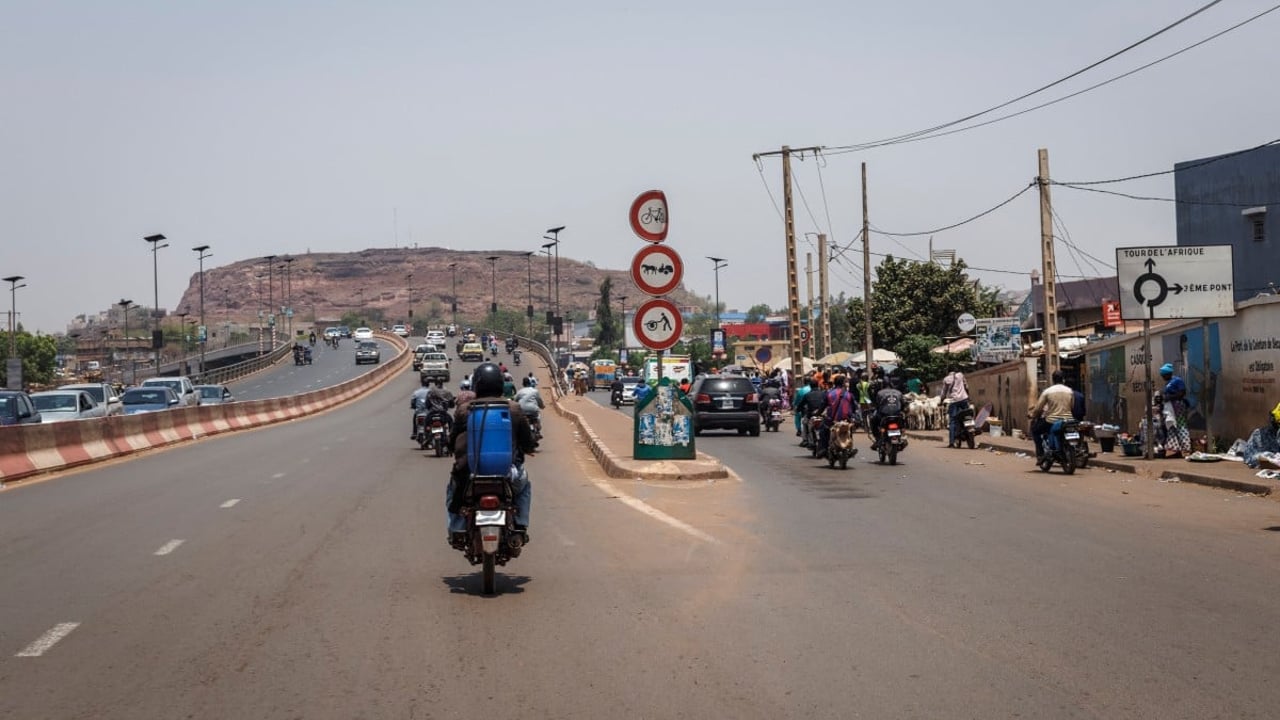
More than ten road transport firms have officially ceased their services to and from Bamako. This suspension comes as jihadist militants enforce a highway blockade around the capital, frequently setting fire to commercial and passenger vehicles.
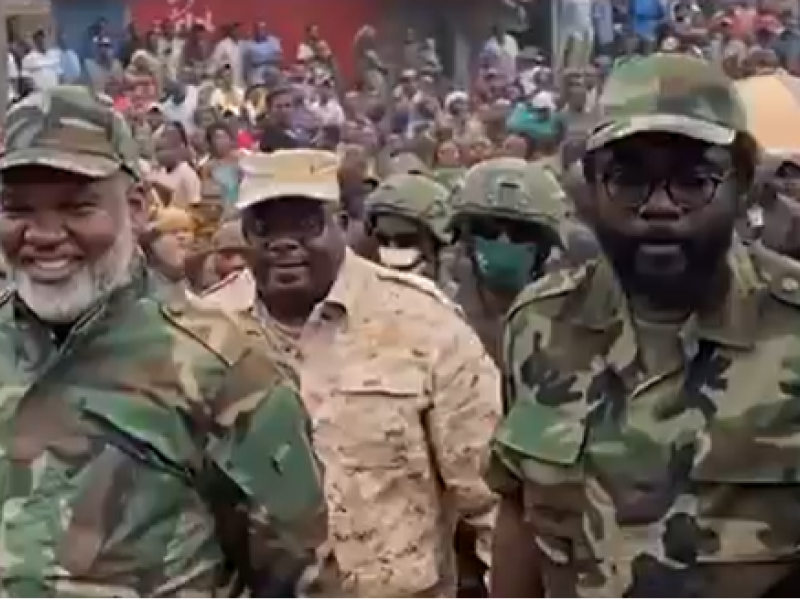
Mali is currently grappling with heightened instability following a series of significant, synchronized attacks on April 25 and 26. These strikes, which targeted strategic military positions of the ruling junta, were orchestrated by the Al-Qaïda-linked Jnim (Groupe de soutien à l’islam et aux musulmans) and the FLA (Front de libération de l’Azawad), a predominantly Tuareg rebel movement.
Since April 30, these groups have imposed a stranglehold on Bamako by blocking several vital supply routes. For a landlocked nation like Mali, these roads are the lifeblood for nearly all imported goods and essential resources.
“Our decision to halt operations is a measure to protect our passengers and prevent further equipment loss,” explained a manager of one transport agency. He reported that his company lost six buses in a single day during attacks on the road to Ségou. While many companies have made public declarations, others have stopped their routes quietly. There are concerns that authorities might pressure them to continue operating despite the risks. Currently, major transport providers have abandoned the six primary arteries into the city, though some smaller minibuses are still attempting to enter via dangerous secondary paths.
Critical shortages of fuel, power, and water hit Bamako
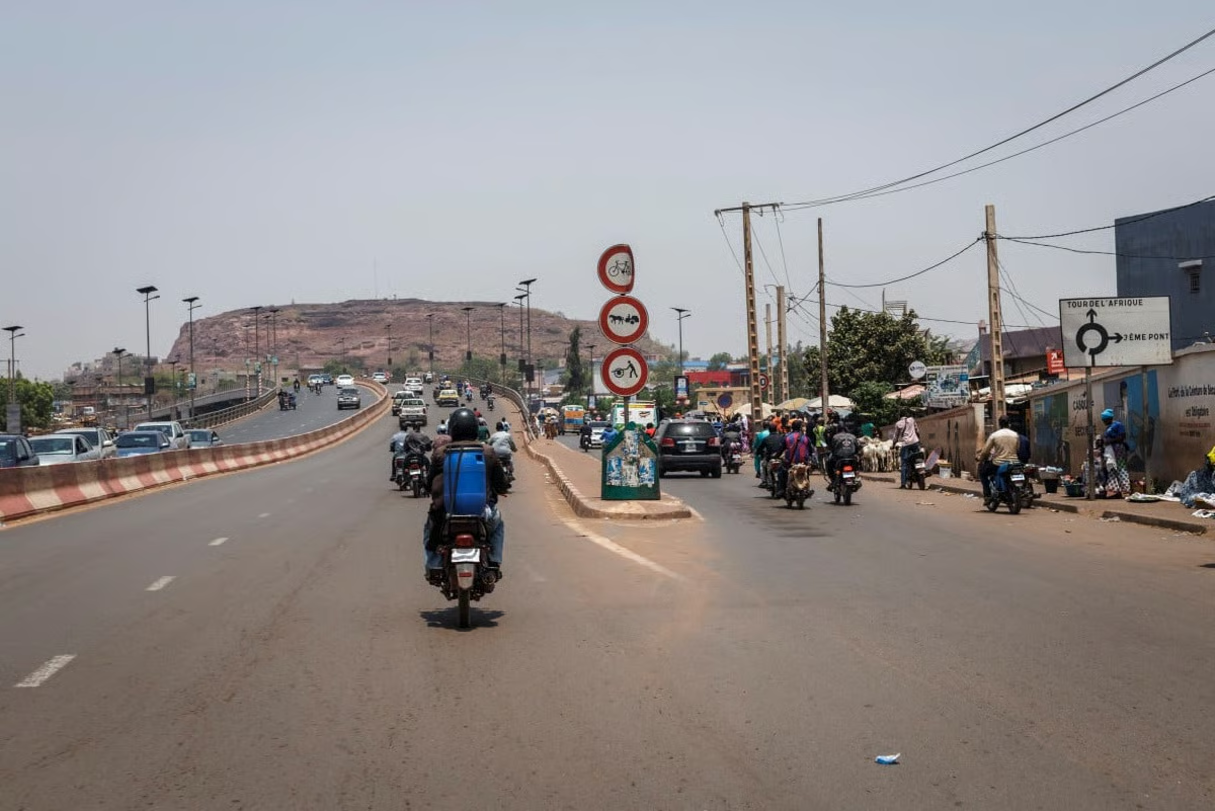
The impact of the jihadist blockade is becoming increasingly visible in the streets of Bamako. Long queues of motorcycles began forming at gas stations on Monday as diesel supplies have virtually vanished over the past few weeks. Although the government announced the arrival of over 700 fuel tankers via the road from Côte d’Ivoire, many other supply convoys and passenger buses have been incinerated by militants in recent days.
The crisis has also crippled the city’s utility infrastructure. Electricity supply has plummeted, leaving many neighborhoods in total darkness for days. One resident described spending 72 hours without power, only for it to return briefly before failing again. The national utility company, Énergie du Mali (EDM), cited “major disruptions” due to an unspecified incident. However, an official from the company later suggested that “terrorist” sabotage against the electrical grid was the true cause. These persistent power outages have subsequently disrupted the pumping and distribution of drinking water across several districts.