The Malian junta’s decision to invite Russian mercenaries in 2021 shifted the country’s military focus toward suppressing Tuareg rebels in the North, inadvertently allowing Islamist factions like the Group for the Support of Islam and Muslims (GSIM) and the Islamic State in the Greater Sahara to expand their influence across Mali. Analysts warn this miscalculation has not only fueled insurgent growth but also crippled the nation’s economy through systematic blockades that disrupt trade routes from Senegal and Côte d’Ivoire.
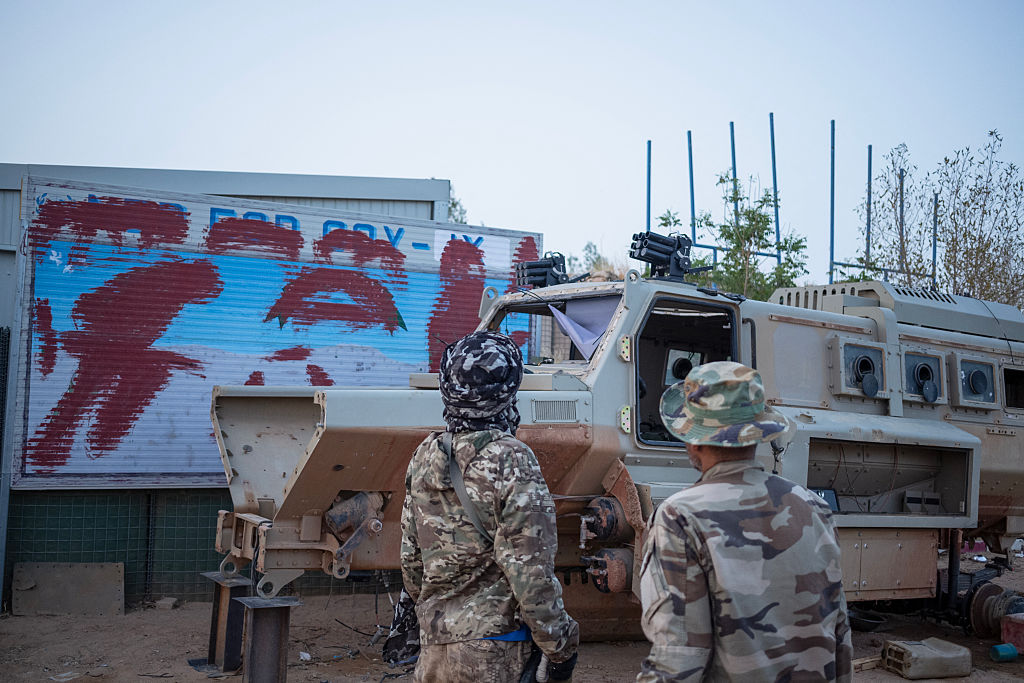
Under the banner of the Africa Corps, Russian mercenaries implemented a harsh counterinsurgency strategy that targeted civilians based on ethnicity, labeling them as rebels or terrorists. These operations, including the notorious three-day assault on the Fulani community in Moura, left hundreds dead in what many described as summary executions. Paradoxically, such brutality has only bolstered recruitment for armed groups, deepening public resentment toward the junta and its foreign allies.
Wassim Nasr, a seasoned analyst, noted, «While the junta fixated on reclaiming the North, the GSIM grew bolder around Bamako, turning their propaganda into a rallying cry. Their gamble backfired spectacularly. » The strategy took a dramatic turn in January 2024 when the junta abandoned the Algiers Accords—a peace agreement forged with the democratically elected government and the Tuareg-led Front for the Liberation of Azawad (FLA)—and resumed military operations in the region. Just months prior, Malian forces, backed by Wagner mercenaries, had reclaimed the Tuareg stronghold of Kidal.
Meanwhile, jihadist groups continued their advance in central Mali, encircling the capital and severing critical supply chains. This expansion coincided with the junta’s decision to sever ties with France, which had led counterterrorism efforts like Barkhane and Serval for over a decade. Those operations had initially helped stabilize the North, laying the groundwork for the Algiers Accords.
By late 2023, the junta expelled the UN peacekeeping mission MINUSMA, replacing it with a brutal campaign led by Russian mercenaries and Malian troops. The Moura massacre, where Wagner fighters executed hundreds of Fulani civilians, epitomized this approach. Rather than quelling dissent, these actions turned communities against the government, pushing more civilians into the arms of the GSIM, ISGS, and FLA.
Nasr criticized the junta’s failure to address public needs: «They haven’t built a single school or road. Their only slogan is hatred for France and the West. That’s all they offer. » The tide turned in July 2024 when Tuareg fighters ambushed a joint Malian-Africa Corps force near Tin Zaouatine, forcing their retreat into GSIM-controlled territory. The ambush left nearly 50 soldiers and over 80 mercenaries dead, marking a turning point in the conflict.
As Wagner’s influence waned, the Africa Corps rebranded with Wagner veterans, but its effectiveness has since diminished. While the junta continues to pay $10 million monthly for their services, mercenaries now operate from fortified bases, relying heavily on drone surveillance to support Malian patrols. «They still venture out, but their confidence is shattered, » Nasr observed.
In late April, the Africa Corps and Malian troops attempted to repel a combined GSIM-FLA assault on Kidal but retreated, allowing the FLA to seize the city. The same day, a separate attack claimed the life of Mali’s Defense Minister. Facing battlefield losses, the Africa Corps has pivoted to protecting the junta’s grip on power, Nasr noted. Their priorities now include securing the Bamako-Sénou International Airport and ensuring fuel and resource deliveries despite GSIM blockades. With no signs of negotiation, the junta clings to mercenaries as its last lifeline.
«They have no choice. They’re isolated, cornered, and desperate. They keep paying because the Africa Corps is their lifeline. »