
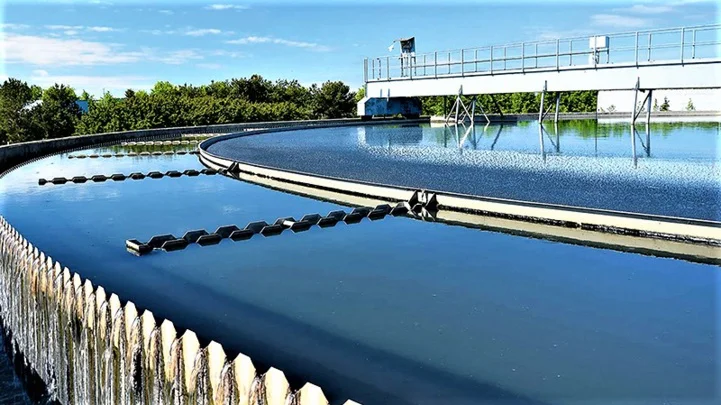
Discussions have resumed between the French conglomerate Veolia and the Moroccan Interior Ministry regarding the pivotal Rabat desalination plant project. This facility is designed to deliver an impressive annual capacity of 300 million cubic meters of water. The major undertaking, which enjoys support from the Élysée, is now back at the forefront of negotiations following a period of slowdown.
The ambitious project aims to produce 822,000 cubic meters of potable water daily, powered entirely by renewable energy sources. Key points of contention currently revolve around the pricing of the desalinated water, with both parties actively working towards an agreed target price of 4.5 dirhams per cubic meter.
After several months of inactivity, Rabat and Paris are progressively re-engaging in dialogue concerning the construction of this vital station within the Moroccan capital. The negotiations were not unilaterally halted but had experienced a standstill due to financial disagreements and unforeseen climatic factors.
An initial memorandum of understanding had been established in October 2024 during President Emmanuel Macron’s state visit to Morocco, specifically addressing the construction of this advanced desalination facility.
Positioned along the Atlantic coast, adjacent to Rabat, the project is structured as a public-private partnership. Veolia is slated to oversee the design, financing, construction, and operation of the plant for a period of 35 years.
With its daily output of 822,000 cubic meters of drinking water, totaling 300 million cubic meters annually, the installation is set to supply the critical regions of Rabat-Salé-Kénitra and Fès-Meknès. This will effectively address the water requirements of approximately 9.3 million residents, marking a significant step for the African economy news.
These recent developments follow a week after the High Joint Commission meeting between Morocco and France in Rabat, co-chaired by French Prime Minister Sébastien Lecornu and Moroccan Head of Government Aziz Akhannouch.
Concurrently, the Moroccan desalination market continues to attract substantial international interest. Two prominent Spanish groups, Acciona and Cox, are currently competing for the future Tanger desalination plant, which is projected to commence operations between 2028 and 2029. This infrastructure is expected to yield 150 million cubic meters of water annually, further highlighting the dynamism in African politics and infrastructure development.



More Stories
Is Chad truly heading towards political appeasement?
Bradley Barcola will adapt faster than Florian Wirtz at Liverpool, says Jermaine Pennant
Togo eyes nuclear power to secure future energy sovereignty