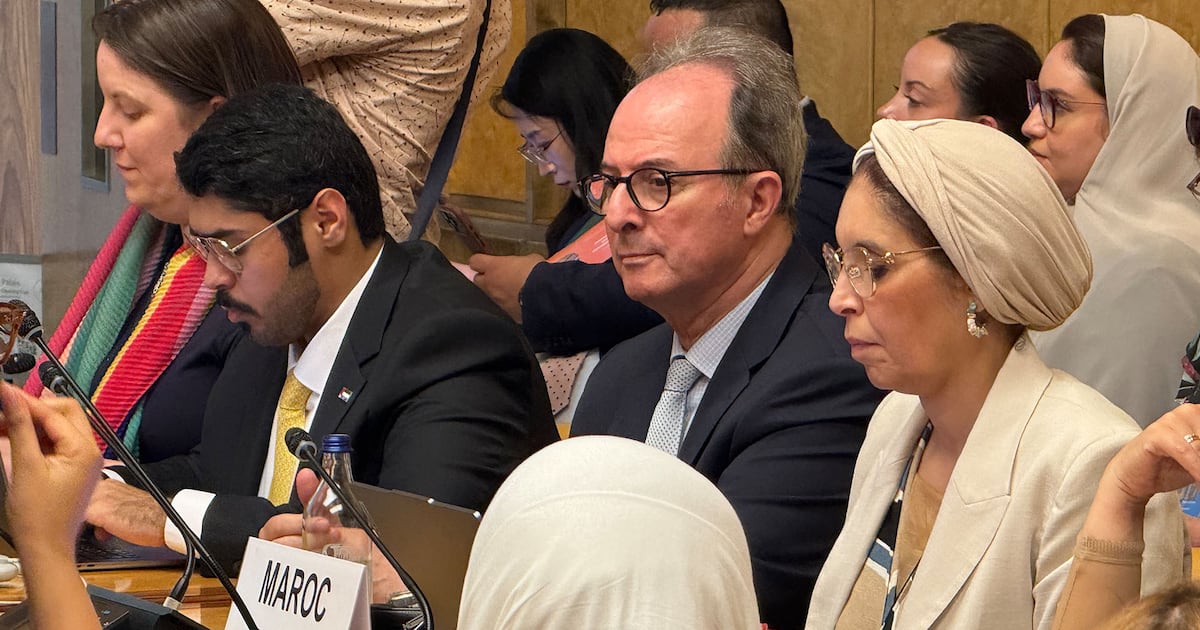
Morocco actively participated in a significant gathering in Geneva, dedicated to assessing global progress three decades after the Beijing Declaration. The session, themed “Beijing after 30 years: mobilizing the United Nations human rights system for progress towards gender equality and the full enjoyment of the rights of women and girls,” provided a crucial platform for the Kingdom to share its extensive experience and forward-thinking proposals for enhancing international human rights governance.
Highlighting the strategic importance of such engagements, El Habib Belkouch underscored Morocco’s consistent involvement in the Human Rights Council’s proceedings. He emphasized that these international forums are indispensable for monitoring both national and global developments in human rights. Mr. Belkouch specifically pointed to Morocco’s leadership in hosting an international colloquium in Rabat, commemorating the 20th anniversary of the Universal Periodic Review (UPR) — a pioneering initiative of its kind worldwide.
This landmark meeting, according to Mr. Belkouch, was instrumental in formulating concrete recommendations aimed at bolstering the effectiveness of one of the UN system’s most robust accountability mechanisms. He articulated that this event was not an isolated occurrence but an integral component of a comprehensive strategy to fortify and streamline international human rights frameworks.
Looking ahead, the Moroccan official revealed plans for an upcoming international conference. This future event will focus on a thorough evaluation of the various elements within the UN system, encompassing both special procedures — such as rapporteurs and working groups — and conventional mechanisms. The overarching goal is to foster greater institutional coherence, especially in an environment characterized by a proliferation of mechanisms and, at times, thematic redundancies, particularly in areas like children’s rights.
El Habib Belkouch also reflected on the current international landscape, which he characterized as a “period of crisis.” Paradoxically, he views this challenging time as a unique opportunity to drive ambitious reforms. He asserted that “emerging from the crisis necessitates charting positive pathways, consolidating achievements, and reinforcing the prominence of human rights in the face of challenges observed across various global regions.”
Furthermore, Morocco’s innovative national mechanisms for monitoring and implementing international recommendations were showcased as a developing model on the global stage. This pioneering approach has garnered significant international interest, with several nations expressing a desire to learn from Morocco’s experience. Countries such as Korea, the Netherlands, and the United Arab Emirates have reportedly engaged in discussions to draw inspiration from the Moroccan model.
For the inter-ministerial delegate, these national mechanisms represent the future trajectory of human rights action. They facilitate a crucial transition from merely formulating recommendations to ensuring their effective implementation. “It is at this level that the genuine concretization of human rights truly unfolds,” he concluded.
He further noted that this critical theme was among the most prominent subjects presented during last year’s Glion forum, where Morocco also made significant contributions. This consistent engagement reaffirms Morocco’s steadfast commitment to actively participate in pivotal debates shaping the future of the international human rights system, while simultaneously highlighting its own advancements and advocating for more efficient and cohesive global governance.