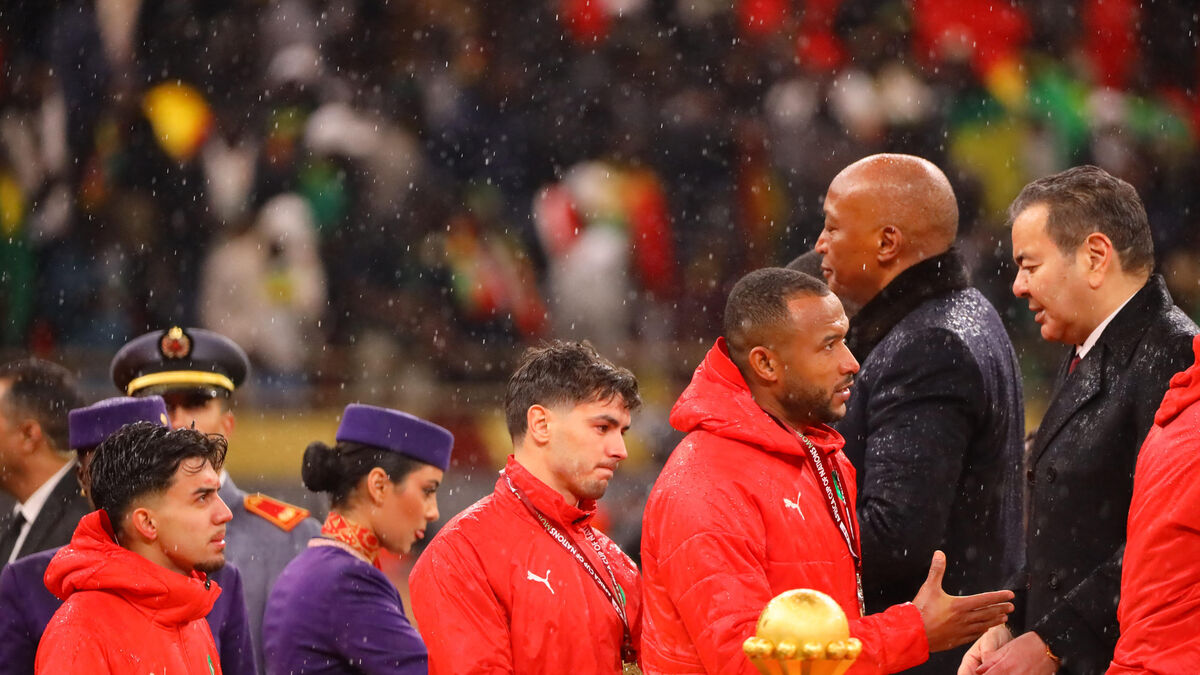
The dust has barely settled on the Africa Cup of Nations 2025 final, yet the drama continues. While Senegal celebrated their continental triumph after an extraordinary match against Morocco, the Confederation of African Football (CAF) has now overturned the result, declaring the Moroccan national team the official winners by default.
This unprecedented decision follows the Senegalese team’s walk-off after a contentious penalty call in favor of Morocco, which was ultimately missed by Brahim Díaz. The CAF’s ruling, based on Article 84 of the Africa Cup of Nations regulations, sanctions Senegal with a forfeit, resulting in a 3-0 victory for Morocco—even though the match was decided in extra time.
Why did the CAF penalize Senegal?
According to the governing body, Senegal violated Article 82 of the tournament’s rules, which states that any team leaving the field before the match concludes without referee approval is considered to have forfeited the game. The CAF’s official statement read: ‘The Appeals Jury of the CAF has decided, under Article 84 of the CAN regulations, to declare Senegal’s national team forfeited in the CAN 2025 final, with the result declared as a 3-0 victory for the Royal Moroccan Football Federation.’
The controversy stems from a pivotal moment in the January 18 final. With no goals scored in regular time, Morocco was awarded a penalty after an alleged foul by Senegal’s Habib Diallo on Díaz. The decision sparked outrage among the Senegalese players, who felt an earlier penalty call in their favor had been unjustly ignored.
Under intense pressure from coach Pape Thiaw, the Lions of Teranga abandoned the pitch in protest. Only captain Sadio Mané remained on the field, later urging his teammates to return and complete the match. Former coach Claude Le Roy, who mediated the situation, confirmed that Mané was conflicted but ultimately convinced the team to resume play.
The game took a bizarre turn when Díaz failed to convert the penalty, attempting a high-risk Panenka chip that sailed over the crossbar. Senegal then took the lead in extra time through Pape Gueye’s stunning left-footed strike, seemingly securing their victory—until the CAF’s ruling.
How Morocco secured the title on appeal
Within days of the final, the Royal Moroccan Football Federation filed an appeal, arguing that Senegal’s actions violated the tournament’s integrity. A source close to the federation stated: ‘This appeal addresses critical issues regarding the stability and credibility of African football competitions.’ They emphasized that unaddressed misconduct could normalize such incidents, undermining the sport’s spirit.
The federation’s legal team contended that the CAF’s inaction would set a dangerous precedent. Similar cases, such as the 2019 CAF Champions League final between Wydad Casablanca and Espérance de Tunis, and the 2024 Turkish Super Cup clash between Fenerbahçe and Galatasaray, were cited as precedents where teams were penalized for walk-offs.
Senegal’s last hope: the court of arbitration for sport
The Senegalese Football Federation has ten days to appeal the decision to the Court of Arbitration for Sport (CAS) in Lausanne. In a late-night statement, the federation condemned the ruling as ‘unfair, unprecedented, and unacceptable’, vowing to defend its rights and Senegal’s footballing interests.
Meanwhile, the Moroccan federation acknowledged the decision, reaffirming its commitment to fair play and the stability of African competitions. Analysts suggest the CAS may uphold the CAF’s ruling, given its past decisions in similar disputes—such as the Wydad Casablanca case, where the CAS initially sided with the CAF before finalizing the title for Espérance de Tunis.
Reactions erupt across West Africa
The news sent shockwaves through Senegal’s football community. Players took to social media to express their disbelief. Defender Moussa Niakhaté posted a photo with the trophy, sarcastically inviting the Moroccan team to ‘come collect it’. Midfielder Pape Demba Diop echoed the sentiment, tweeting: ‘We’re in the twilight zone.’
Goalkeeper Yehvann Diouf of OGC Nice shared a team photo with the caption ‘Two stars, in the eyes of the world’, while former international Famara Diedhou mocked Morocco, asking: ‘Will the victory parade be in Rabat or Casablanca?’
As the football world debates the fairness of the ruling, one thing is clear: the CAN 2025 saga has left an indelible mark on African football history.