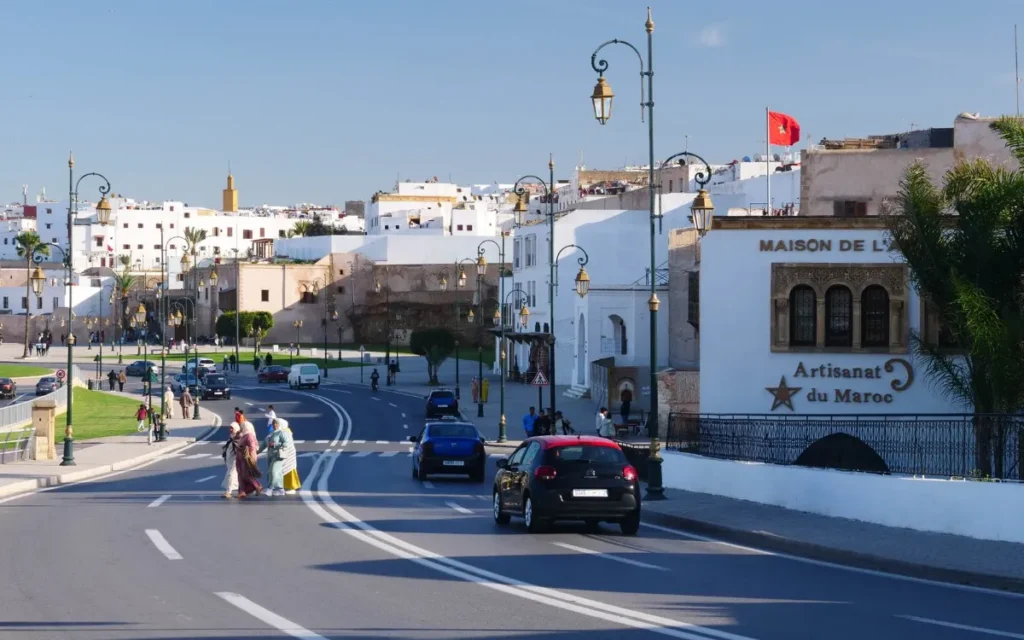
The Moroccan economy has achieved its highest growth rate in nearly a decade, yet the impact on household wallets remains limited. While the country’s GDP expanded by 4.9% in 2025, household consumption grew by just 1.2%, starkly contrasting with the 16.3% surge in investment.

Public investment fuels economic momentum
Behind Morocco’s robust growth lies a surge in public and private investment, particularly in large-scale infrastructure projects. The World Bank’s latest economic assessment highlights a 16.3% rise in investment in 2025, following a 14% increase in 2024. This surge is largely attributed to preparations for the 2030 FIFA World Cup and other major initiatives.
Construction activity alone grew by 6.7%, while public spending climbed by 5.1%, driven by expanded social welfare programs, public sector wage hikes, and enhanced public services. Private investment has also shown signs of recovery since the pandemic, consistently outpacing nominal GDP growth.
Household budgets feel the squeeze
Despite these gains, private consumption has stagnated. After a 4.7% increase in 2023 and a 3% rise in 2024, household spending grew by just 1.2% in 2025. The slowdown persists even as inflation eased to 0.8% and consumer confidence began to rebound.
This disparity underscores Morocco’s economic reliance on public projects and large-scale investments, with limited trickle-down effects on everyday spending. While the country’s economic engine revs at high speed, most households are not yet feeling the acceleration in their daily budgets.
Looking ahead: A shift toward private consumption
The World Bank anticipates a gradual rebalancing as the current investment cycle matures. With inflation expected to decline further and real incomes on the rise, private consumption could rebound to 4.8% growth by 2028.
Until then, Morocco’s economy will continue to surge forward, powered by public projects and infrastructure, while household spending remains in the slow lane.