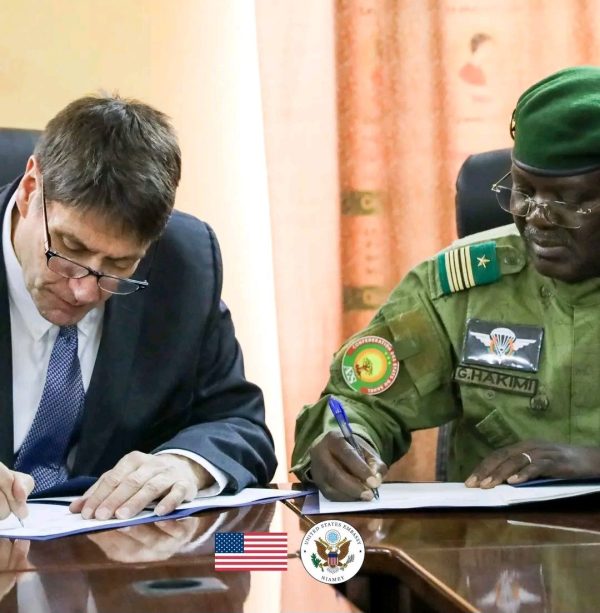
Is the Niger–United States health pact a breakthrough for public health or a compromise of national data integrity? The question has sparked intense discussion in diplomatic circles since the February 26, 2026 signing in Niamey of a comprehensive health cooperation agreement valued at $178 million.
The deal aligns with Washington’s America First global health strategy, with clear objectives: malaria elimination, infectious disease surveillance, polio prevention, and improved maternal and child health outcomes. Yet beneath the surface of these widely supported goals lies a complex web of concerns—particularly around data governance and long-term fiscal commitments.
a bold financial pledge amid fiscal strain
The U.S. contribution is estimated at $107 million over five years, while Niger commits to boosting its domestic health budget by over $71 million during the same period. This dual commitment signals a rare increase in national health investment, one that comes at a time when the country faces chronic budgetary pressure and escalating security expenditures.
Can Niamey sustain such a financial commitment over time? And if so, which sectors will bear the brunt of reallocated funds? These questions remain unanswered, casting doubt on the agreement’s long-term feasibility.
more than medicine: the hidden cost of data exchange
Officially framed as a technical health support initiative, the pact includes an unexpected clause: Niger will join a U.S.-led health data exchange program. While details are sparse in public statements, this provision has ignited concerns over the transfer and storage of sensitive medical information.
In an era where health data is increasingly treated as geopolitical leverage, the agreement raises critical questions: How will patient data be protected? What legal safeguards are in place to prevent unauthorized access or misuse? And most importantly—does the agreement prioritize public health over digital sovereignty?
lessons from the continent: who sets the rules?
Recent history offers cautionary tales. Zimbabwe declined a similar offer. In Kenya, a court blocked a comparable health data-sharing mechanism last year. Zambia walked away from a $1 billion-plus deal, citing national security risks tied to data sharing.
These precedents raise pressing questions for Niger: Did Niamey negotiate stronger protections? Or did it choose immediate health needs over long-term data integrity—a pragmatic gamble in a fragile region?
transforming health systems or repeating old patterns?
Beyond data concerns, Niger faces deep-rooted health challenges: entrenched malaria transmission, epidemic vulnerability, underdeveloped rural health infrastructure, and persistently high maternal mortality rates.
If implemented effectively, the funds could catalyze real change: upgraded disease surveillance systems, expanded immunization coverage, and stronger community health centers. Yet history shows that external funding alone rarely drives sustainable transformation without robust internal reforms.
balancing sovereignty and survival
The Niamey agreement reflects a familiar dilemma for African nations: attracting vital external investment while safeguarding national autonomy. In a shifting global landscape where alliances are being redefined, Niger appears to be embracing a results-driven approach.
But the true cost of this partnership may not be measured in dollars or FCFA—it may lie in how it reshapes the balance between health security and digital independence. Behind the $178 million figure lies a deeper question: Can a nation truly secure its health future while compromising its data future?