
The official narrative in Niger often highlights a break from the past and economic emancipation, but the latest figures from the Central Bank of West African States (BCEAO) paint a starkly different picture. At the close of 2024, Niger’s international investment position (IIP) showed a deeply negative balance, exposing a massive structural reliance on foreign capital.
A yawning gap between assets and liabilities
According to consolidated data from the central bank, Niger’s external financial liabilities stand at a staggering 12,933.5 billion FCFA. In contrast, financial assets held by Nigerien residents abroad amount to only 1,356.9 billion FCFA.
This enormous disparity underscores an inescapable reality: the Nigerien economy is only marginally self-owned. The vast majority of infrastructure, capital, and claims that keep the country running remain under the control of non-resident actors.
Private sector dominance by foreign interests
Contrary to common belief, this external financial hold is not limited to sovereign debt contracted by the public treasury. A detailed breakdown of liabilities reveals:
- 59.4% of liabilities (7,685 billion FCFA) are held by non-financial corporations. This figure reflects the overwhelming weight of multinationals and foreign investors in strategic sectors such as oil, mining, and telecommunications.
- 34.2% (4,428.7 billion FCFA) directly stem from public administration in the form of external debt.
- The remaining balance is split between the central bank and the commercial banking sector.
Far from being a mere accounting aggregate, this predominance of the foreign private sector shows that the levers of national growth depend directly on the goodwill and arbitrage of external capital.
Geopolitical dependence shifted, not resolved
The geographic distribution of these liabilities definitively dispels the notion of emancipation from external oversight. The “other countries” category—which includes partners outside the eurozone and outside WAEMU, with China at the forefront—alone accounts for 78% of Niger’s external financial commitments. The eurozone now weighs only about 18%, while regional financial integration within WAEMU remains marginal at nearly 5%.
By replacing traditional donors with new hegemonic creditors, Niger has not conquered its financial sovereignty: it has simply changed guardians. With over 12,900 billion FCFA in external liabilities, the government’s room for maneuver is particularly narrow, a reminder that political rhetoric cannot erase the reality of economic dependencies.


More Stories
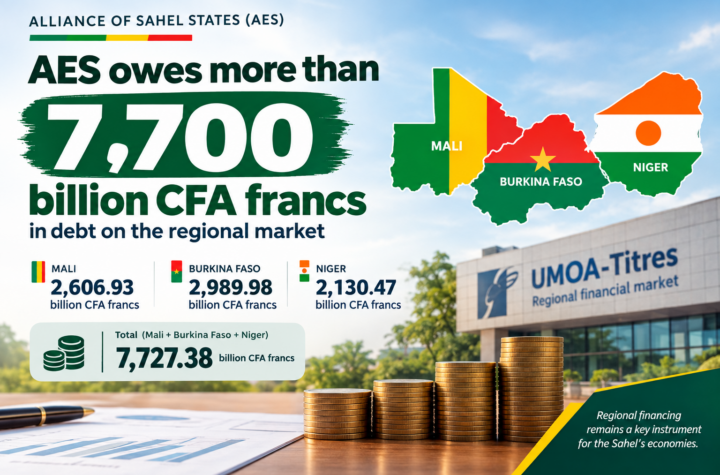
Sahel alliance’s regional debt tops 7,700 billion CFA francs
Benin’s schools reopen nationwide on 14 september 2026 as security and social gains take hold
Niger’s fuel subsidy burden: SONIDEP faces 28 billion FCFA loss in 2026