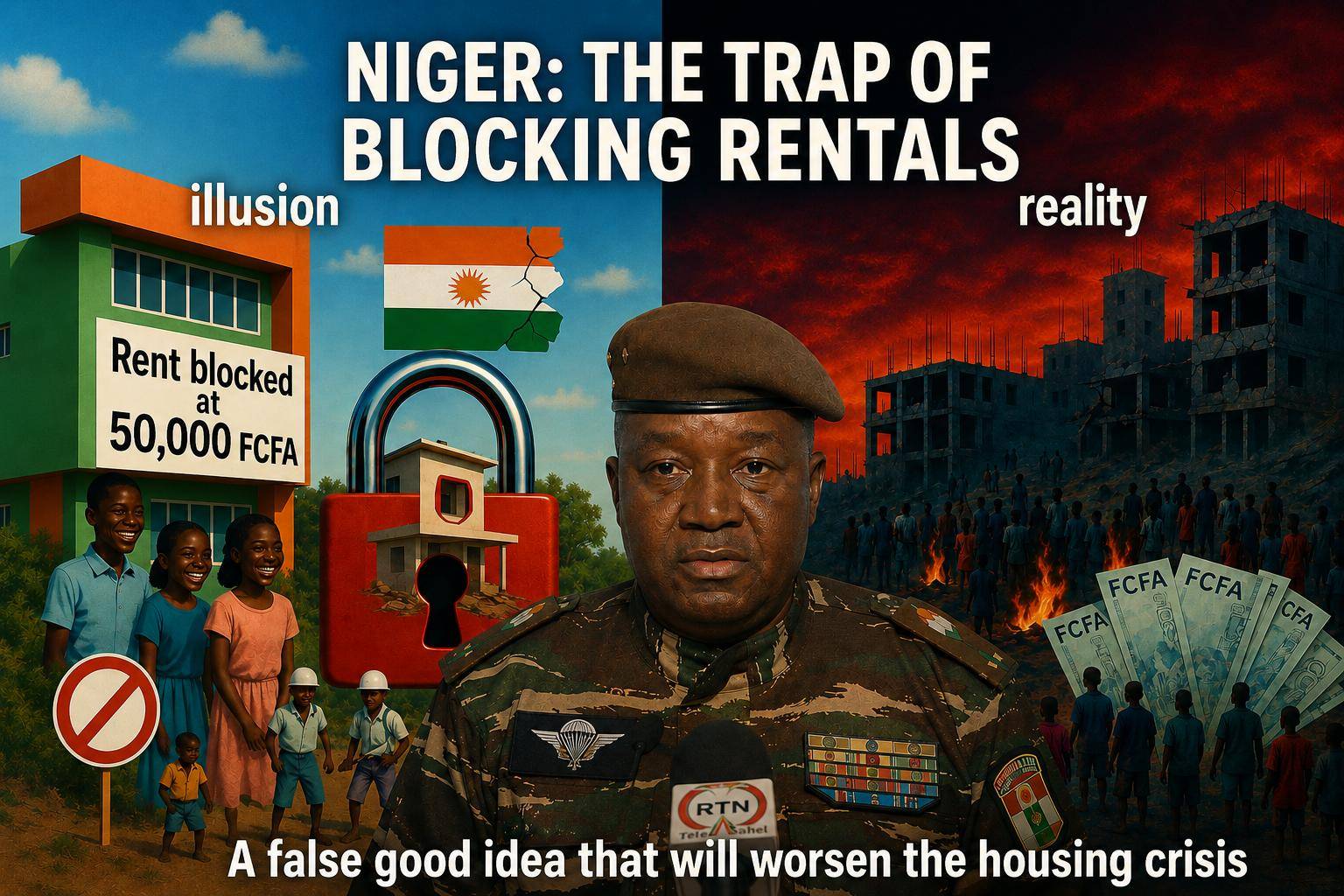
In a move aimed at winning public favor, Niger’s transitional authorities have enacted a decree capping residential rents in Niamey between 15,000 and 80,000 West African CFA francs. While the policy seeks to curb speculation and lower housing costs, economists warn it may trigger unintended consequences that could worsen an already dire situation.
why economic interventionism fails in housing markets
History has repeatedly demonstrated that price controls imposed by government decree rarely yield sustainable benefits. By attempting to shield tenants from rising costs, the regime inadvertently undermines the very foundation of the housing market. The fundamental principle of supply and demand dictates that without adequate housing stock, prices will inevitably climb, regardless of regulatory attempts to cap them.
The government’s stated goal—combating abusive rent hikes and promoting affordable housing—may align with public sentiment, but the means chosen contradict market dynamics. A closer examination reveals why this approach could backfire spectacularly.
three immediate threats to Niamey’s housing ecosystem
- Investment freeze: With capped rental yields, developers and landlords face dwindling returns. Rational economic actors will divert capital to sectors where profitability remains viable, halting new residential construction projects in Niamey.
- Neglect of existing stock: Reduced revenue streams discourage property owners from maintaining their buildings. Without financial incentives to repair roofs, plumbing, or electrical systems, the quality of available housing will deteriorate rapidly.
- Shadow market distortions: When legal pricing fails to balance supply and demand, informal arrangements emerge. Prospective tenants may resort to under-the-table payments to secure housing, exacerbating corruption and inequity.
the state’s inability to fill the void
For price controls to succeed, the government would need to compensate for the private sector’s retreat by launching a large-scale social housing program. However, Niger’s strained finances—burdened by political instability and reduced international aid—make such an endeavor unrealistic. State-led construction cannot replace the efficiency and scale of private investment.
Moreover, the decree sends a chilling signal to local banks. Reduced profitability in real estate lending discourages financial institutions from extending mortgages, thereby stifling economic activity across related industries, from construction materials suppliers to skilled labor.
a populist gamble with long-term costs
This policy reflects a short-term political calculus rather than sound economic strategy. By addressing public frustration over housing costs, the transitional regime may temporarily bolster its popularity. Yet, the long-term repercussions could be severe: a self-inflicted housing shortage that transforms Niamey’s rental market into a labyrinth of scarcity, where securing even modest accommodation becomes a protracted ordeal.
The lesson is clear: economic challenges cannot be resolved by decree alone. Without fostering an environment conducive to investment and supply expansion, regulatory interventions risk deepening the very crises they aim to alleviate.