

A steep and sudden fall in uranium production
Once hailed as a flagship of regained sovereignty, the management of the Société des mines de l’Aïr (SOMAÏR) by entirely local teams has turned into an industrial disaster. According to the economic outlook note from the Ministry of Finance, uranium production in Niger plummeted by 83.3% in the first quarter of 2026, collapsing to a meager 31.2 tonnes compared with 186.3 tonnes in the previous quarter.
The convenient cover of a logistics crisis
To explain this collapse, the government quickly points the finger at “logistical constraints on the input import corridor.” This convenient excuse avoids the real issue. While it is true that the delivery of sulfuric acid and spare parts suffers from the blockage of traditional routes, blaming the entire disaster on transport is dishonest.
In reality, an industrial chain of such complexity cannot be improvised. Managing critical stocks, anticipating reagent needs, and carrying out preventive maintenance on advanced equipment require technical rigor and managerial vision that the new leadership sorely lacks.
Amateurism and management failure
At the Arlit site, the observation is bitter. Behind patriotic speeches, the lack of specialized qualifications and technical steering errors weigh heavily on daily operations:
- Planning failures: Unable to anticipate the depletion of chemical reagent stocks, managers let the production tool run dry until it ground to a complete halt.
- Neglected maintenance: Poor management of wear parts on heavy crushers and filters led to repeated breakdowns, well before input stocks ran out.
- Loss of critical know-how: The departure or removal of experienced engineering executives gave way to political rather than technical management.
The real cost of a façade nationalism
Producing uranium is not about pushing buttons or making fiery speeches on television. The nuclear industry has little tolerance for amateurism. By entrusting high-tech facilities to a management overwhelmed by the sector’s demands, the authorities deliver a brutal demonstration of the limits of their model.
In trying to prove at all costs that it could do without outside expertise without having the real capacity to do so, the regime has simply paralyzed the country’s mining lung. And as always, the public treasury will foot the bill for this blindness.


More Stories
Niger’s military unravels: why soldiers are abandoning Tiani’s ranks
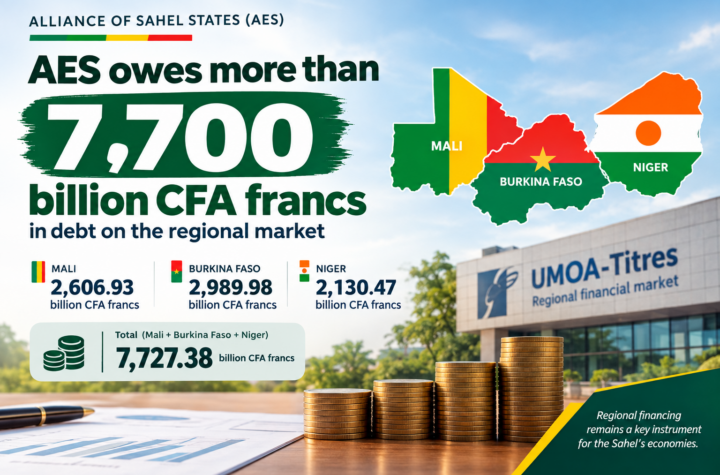
Sahel alliance’s regional debt tops 7,700 billion CFA francs
Benin’s schools reopen nationwide on 14 september 2026 as security and social gains take hold