Rising Influence of Jihadist Groups in Central Mali
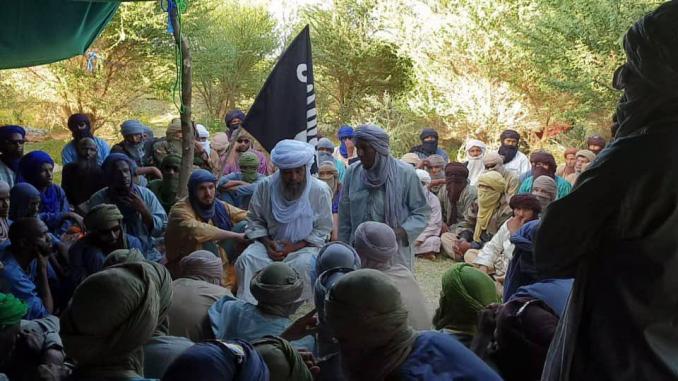
The Group for the Support of Islam and Muslims (JNIM), an Al-Qaeda-affiliated organization, continues to intensify its operations across Mali despite ongoing military campaigns by national forces and their international partners. Recent ambushes targeting military convoys, coordinated attacks on outposts, and systematic pressure on key transportation routes underscore the group’s expanding operational capacity in multiple regions.
The surge in jihadist activity is no longer confined to Mali’s borders but has begun to destabilize the broader Sahel region. This escalating threat has raised alarms among neighboring African nations, particularly those in the second-tier Sahelian zone. With governments struggling to maintain stability amid severe economic crises, the risk of further jihadist expansion remains alarmingly high.
The JNIM’s Strategy: Building Influence Through Local Control
Reports from central Mali paint a concerning picture. On May 21, 2026, five villages in the Bandiagara region fell under attack, with the JNIM claiming responsibility for the assault. While no official death toll has been released, the incident highlights the group’s growing boldness in targeting areas far from the capital.
Unlike traditional insurgent groups that rely solely on mobility and secrecy, the JNIM has adopted a long-term strategy of territorial consolidation. By exploiting local conflicts, tribal rivalries, and the absence of state authority, the group has established parallel governance structures in remote areas. In certain rural zones, it enforces its own security protocols, taxation systems, and mediation frameworks—essentially filling the void left by a weak or absent government.
This approach explains why purely military responses often prove ineffective. While operations may temporarily reclaim control of an area, they frequently fail to restore critical administrative, judicial, or economic functions necessary for sustainable peace.
Mali’s Shifting Security Landscape
Since the withdrawal of French forces and the adoption of a sovereignty-focused security partnership with Russia, Malian authorities have prioritized military assertiveness over diplomatic solutions. The transitional government frames this shift as a departure from Western dependency, yet violence persists, and armed factions retain significant operational freedom.
International organizations have documented multiple allegations of human rights abuses involving Malian troops and their allied Russian partners. Bamako has consistently denied these claims, accusing foreign entities of orchestrating destabilization campaigns. This polarization further narrows the prospects for political reconciliation.
Sahel’s Fragmentation and Geopolitical Rivalries
The Sahel crisis has become a battleground for competing international influences. Russia, Turkey, the United Arab Emirates, Western powers, and regional states all vie to expand their strategic foothold, exacerbating existing divisions.
In this fractured environment, jihadist groups exploit state weaknesses, closed borders, and weakened regional cooperation. The result is a growing normalization of chronic insecurity, where entire territories exist in a precarious balance—controlled neither by governments nor armed factions. The question remains: how far will this instability spread? With the Africa Corps mercenary support gradually withdrawing from conflict zones, the Malian junta faces an uncertain future if this military lifeline is severed.