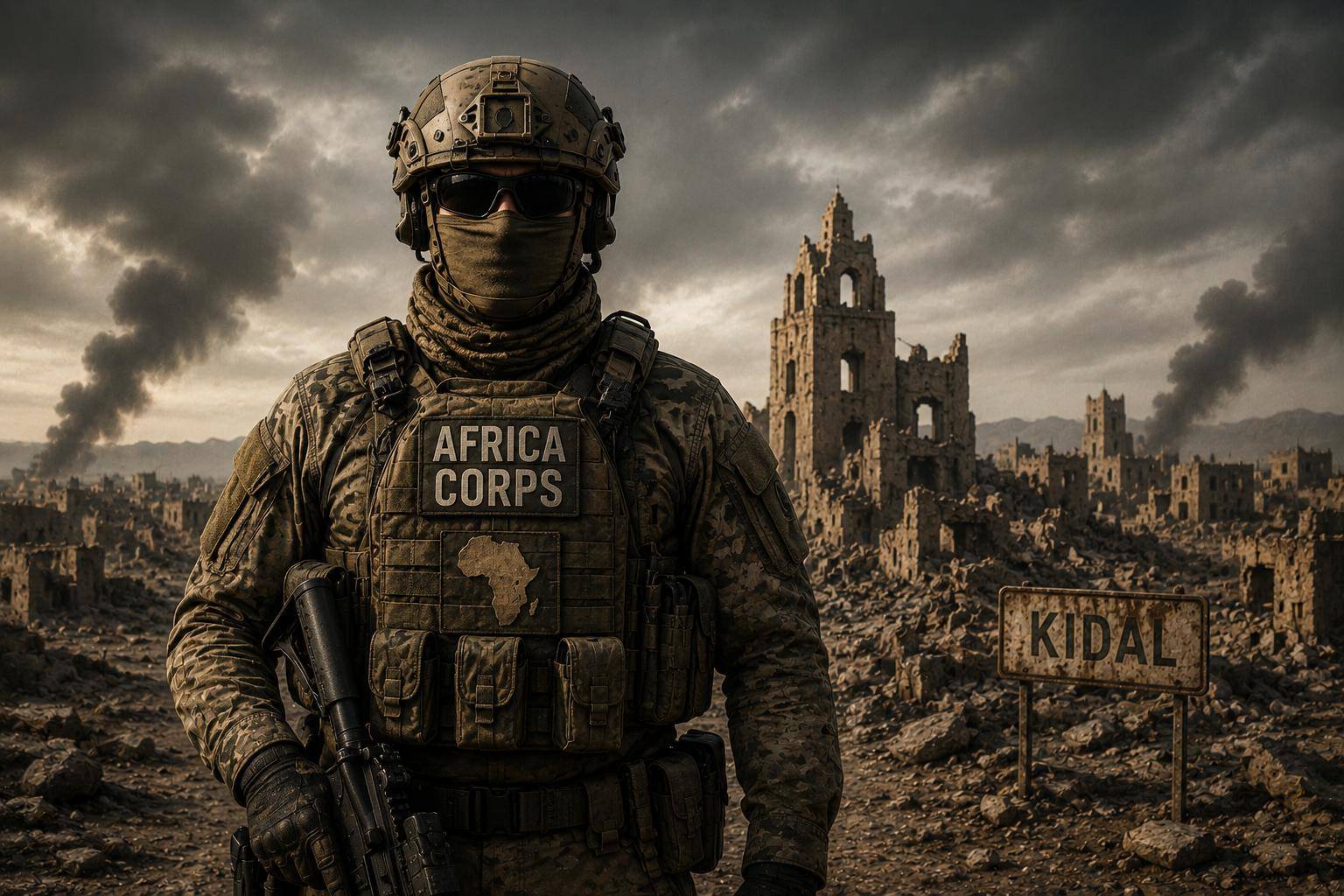
The Africa Corps, a Kremlin-linked faction, has recently issued statements that hint at a potential recalibration of Russia’s strategy regarding northern Mali. By dissecting their rhetoric, it becomes evident that Moscow’s allies are subtly preparing the groundwork for a significant geopolitical realignment in West Africa. This development has given rise to two diverging interpretations, both of which underscore the fluid nature of regional power structures.
Critical implications: is Moscow rethinking its backing for Assimi Goïta?
Since assuming power in Mali, transitional leader Assimi Goïta has staked his political credibility on a firm pledge: restoring full sovereignty to the country, starting with the liberation of Kidal. This declaration struck a chord with national sentiment and was widely echoed across African and international media, bolstering Goïta’s reputation as a resolute and unyielding leader.
The recent signals from the Africa Corps, however, suggest that Moscow might be reconsidering its unwavering support for Mali’s military administration. Their nuanced messaging implies a possible departure from the current trajectory, raising questions about the future of Mali-Russia relations and the stability of the junta’s rule.
Understanding the Africa Corps’ subtle messaging
The Africa Corps’ latest statements contain coded language that warrants close analysis. While they do not explicitly abandon their alliance with Assimi Goïta, their phrasing leans toward ambiguity, leaving room for alternative interpretations. This deliberate opacity is designed to test regional reactions while preparing the ground for a potential policy shift.
Analysts suggest that the Africa Corps’ evolving rhetoric could signal a pragmatic reassessment of Mali’s security landscape. The stalled progress in Kidal and the persistent insurgency in northern regions may be prompting Moscow to explore new avenues to secure its strategic interests in the Sahel.
Why Kidal remains at the heart of Mali’s crisis
The city of Kidal holds symbolic and strategic importance in Mali’s ongoing conflict. Controlled by armed factions for years, its recapture was presented by Goïta as a non-negotiable priority. Yet, the military junta’s inability to fully secure the region has exposed vulnerabilities in its governance and security frameworks.
Should the Africa Corps’ statements reflect a broader shift in policy, the repercussions could extend far beyond Mali. Neighboring countries like Burkina Faso and Niger, both grappling with similar insurgencies, may re-evaluate their own alliances with external powers, particularly Russia and France.