
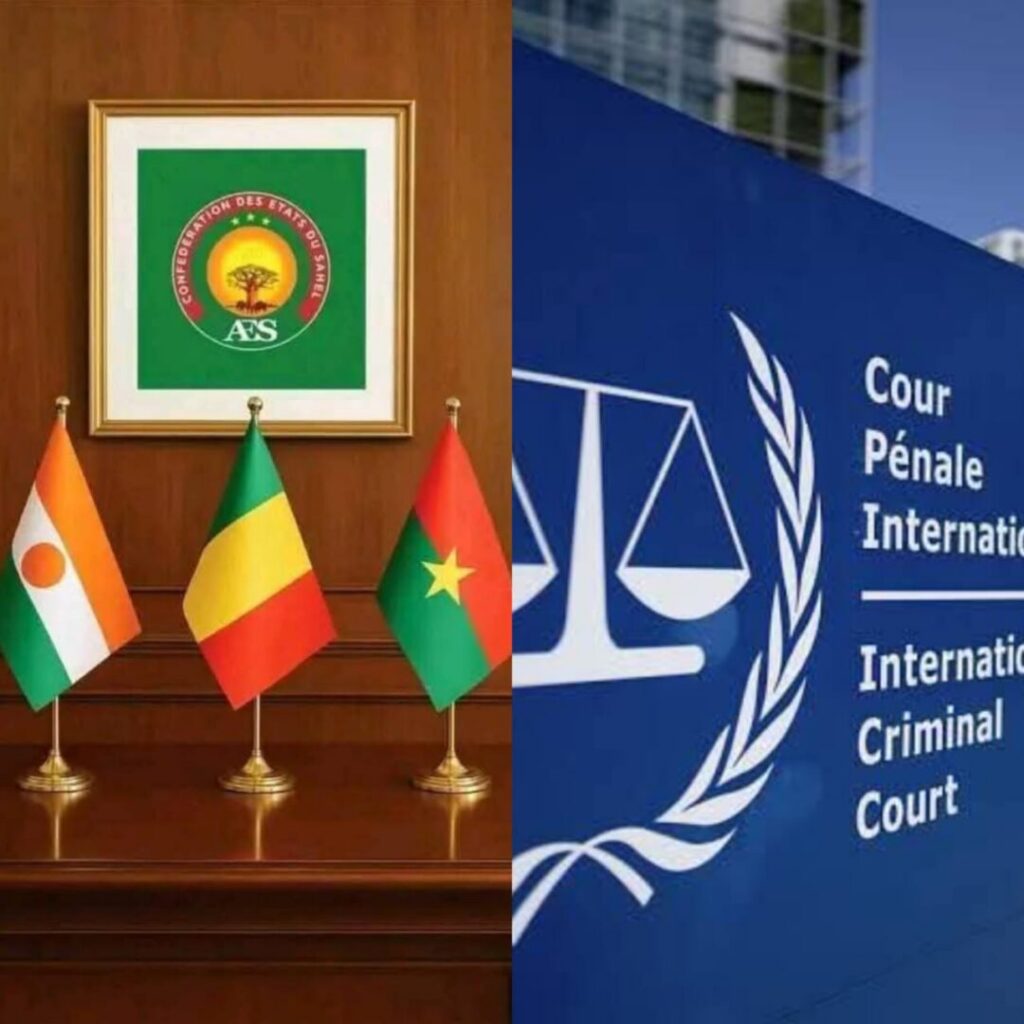
When justice loses its universal sheen: Sahel’s bold break with the ICC
The withdrawal of Burkina Faso, Mali and Niger from the International Criminal Court (ICC) is more than a diplomatic move—it is a tectonic shift in the landscape of global justice. What began as a regional alliance has now become a symbol of resistance against a justice system many perceive as deeply unequal and politically compromised. On September 22, the Alliance of Sahel States (AES) crossed a threshold from which there is no return: the collective exit from the ICC. This decision is not merely a reconfiguration of alliances; it is a direct challenge to the foundational principles of the Rome Statute and a stark indictment of the court’s ability—or inability—to deliver fairness across borders.
Sovereignty over submission: the Sahel’s uncompromising stance
For the transitional authorities in Bamako, Ouagadougou and Niamey, breaking away from the ICC represents the logical culmination of a broader campaign for sovereignty. Following the denunciation of military agreements with France and the United States, the rejection of ECOWAS, and the withdrawal from the Francophonie, the exit from the Rome Statute seals a process of institutional disengagement. The message is unambiguous: Sahelian affairs must be resolved by Sahelians, for Sahelians. This posture resonates deeply with local populations, who see it not as defiance for its own sake, but as a reclaiming of dignity and self-determination.
Yet beneath the rhetoric of national pride lie calculated strategic considerations. As the AES governments wage an asymmetric war against terror groups, their security forces face persistent allegations of civilian abuses. By severing ties with the ICC, these regimes erect a legal firewall around their command structures, seeking protection not only from Western scrutiny but also from partners like Russia—itself a vocal critic of the Hague-based court. The move signals a realignment with non-Western allies and a rejection of institutions viewed as extensions of former colonial powers.
The ICC’s credibility gap: justice for some, not for all
The Sahel’s withdrawal is fueled by widespread frustration over what many see as a two-tiered justice system. The ICC’s inability—or unwillingness—to prosecute leaders responsible for some of the 21st century’s most destructive conflicts has eroded trust in its neutrality. The 2003 invasion of Iraq, launched on demonstrably false pretenses, unleashed decades of suffering across the region. Yet neither George W. Bush nor Tony Blair faced consequences before the ICC. When the court moved to investigate alleged U.S. war crimes in Afghanistan, Washington responded with direct financial sanctions against ICC prosecutors—a clear message that powerful states remain above international law.
This pattern of impunity is further illustrated by the case of former Ivorian President Laurent Gbagbo, detained for nearly a decade in The Hague. After a post-election crisis left thousands dead, Gbagbo was surrendered to the ICC, only to be acquitted on all charges in 2019. The judges condemned the prosecution’s « exceptional weakness » of evidence, yet the damage to the court’s reputation was done. The impression that justice is meted out selectively—targeting leaders from certain countries while overlooking allies—has only deepened skepticism across Africa and the Global South.
The swift issuance of an arrest warrant for Vladimir Putin following Russia’s invasion of Ukraine, while laudable in principle, only accentuates the perception of a court that acts with urgency when Western interests are at stake, but moves sluggishly—or not at all—when they are not. This inconsistency fuels accusations that the ICC functions as a tool of geopolitical convenience rather than a genuine guardian of human rights.
Can Africa build its own credible alternative?
The withdrawal from the ICC does not signify an abandonment of justice. Africa already possesses robust regional institutions designed to protect fundamental rights: the African Court on Human and Peoples’ Rights (ACHPR) at the continental level, and the ECOWAS Court of Justice at the sub-regional level. These courts offer viable pathways to accountability—provided they are strengthened, funded, and respected by member states.
Yet a troubling paradox persists. While African leaders condemn the ICC for its perceived bias, many routinely ignore or defy rulings from their own regional courts when those decisions challenge domestic policies or threaten entrenched power. The ECOWAS Court of Justice has repeatedly condemned arbitrary detentions and political repression across West Africa, yet its judgments are often met with defiance. If leaders truly seek to dismantle the ICC’s dominance, they must first honor the institutions they themselves created. There can be no sovereignty without accountability—and no justice without enforcement.
The Sahel’s departure from the ICC is not merely a rejection of an external institution; it is a call to action. It challenges African states to build a justice system that is both independent and effective—one that commands respect not through coercion, but through fairness. The message is clear: the era of a justice system dictated from the West is over. The future of international law now depends on Africa’s ability to demonstrate that justice can be universal only if it is equitable—and that begins with compliance, not defiance.
The AES withdrawal must be seen not as a step backward, but as a turning point. It is an opportunity for Africa to reclaim its moral authority and to prove that justice is not the exclusive domain of the powerful. The path forward lies not in isolation, but in the strengthening of continental and regional courts, and in the uncompromising application of their rulings. Only then can Africa offer a true alternative to the flawed model of The Hague—and restore faith in the universality of justice.


More Stories
Is Chad truly heading towards political appeasement?
Bradley Barcola will adapt faster than Florian Wirtz at Liverpool, says Jermaine Pennant
Togo eyes nuclear power to secure future energy sovereignty