West African neighbour tightens controls as regional threats escalate
With more than 400 km of shared border with Mali and deep commercial ties to its eastern neighbour, Senegal is taking urgent steps to secure its frontier as the Sahel crisis intensifies. Officials in Dakar are prioritizing counter-terrorism measures while maintaining a low public profile to avoid provoking regional tensions.
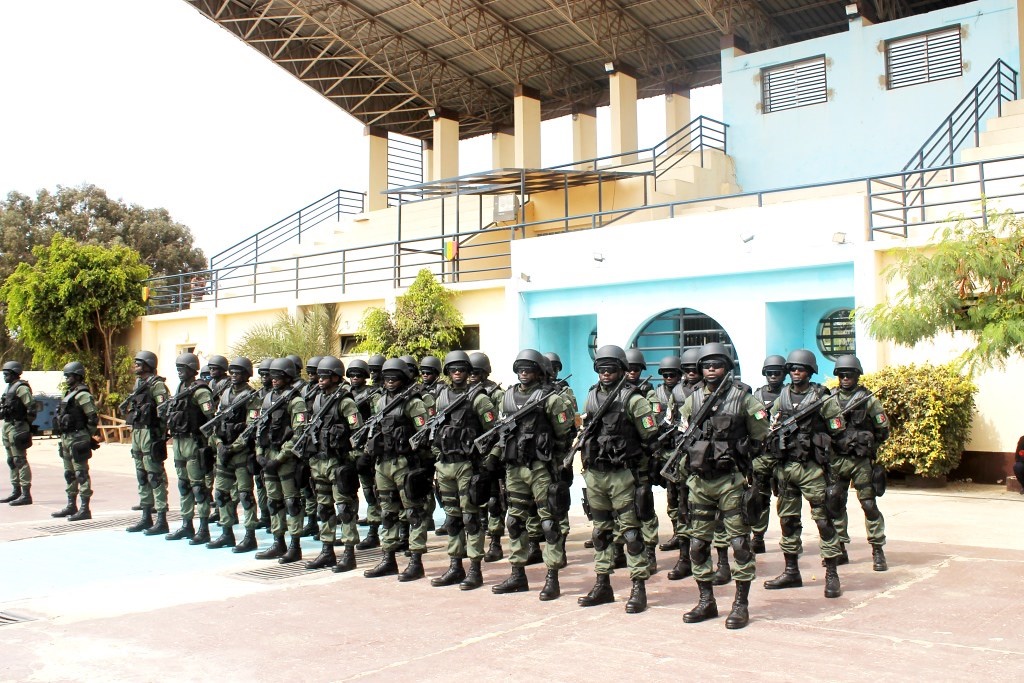
Despite the discreet approach, Senegalese authorities are acutely aware of the growing jihadist threat spreading across West Africa. Over the past few years, significant investments have been made to strengthen security along the border regions of Tambacounda and Kédougou, in southeastern Senegal. The most recent developments took place on April 8 and 9, 2026, when three new forward operating bases were inaugurated for the Garsi 2 rapid intervention unit in Saraya, funded by the European Union.
Garsi and Cico: pillars of Senegal’s security strategy
The creation of these new bases is part of a broader effort to enhance anti-terrorism operations and address transnational threats. According to national gendarmerie sources, these facilities aim to “shorten response times, improve reaction capabilities within the Garsi 2 operational zone, and foster closer ties with local communities.”
A senior military officer explained the strategic importance: “With 420 km of border to monitor, it’s impossible to station troops every kilometre. However, key crossing points exist, and we focus our surveillance there. These bases allow us to respond rapidly when needed.” The officer added that the Garsi units are “highly effective, well-equipped, and prepared to counter such threats.” Currently, Senegal operates two Garsi units—one in Kidira and another in Kédougou, specifically in Saraya—conducting joint patrols to monitor the frontier.
Inter-ministerial coordination and rapid response
Beyond the Garsi, Senegal relies on the Cadre d’Intervention et de Coordination Opérationnelle (Cico), an inter-ministerial framework designed to coordinate state responses to terrorism. This structure ensures seamless collaboration between hospitals, emergency services, police, gendarmes, and military units in the event of an attack. “Coordinating all these elements is complex, but the Cico ensures that every agency is prepared to handle a terrorist threat efficiently.”
Recent months have seen further reinforcements, including the establishment of a legion headquarters in Kédougou, the launch of a research section, and the deployment of additional technical units. While Senegal has not been directly targeted by attacks, it ranks among the top spenders on defence in West Africa. Between 2020 and 2025, the country was the second-largest arms importer in sub-Saharan Africa, accounting for 8.8% of regional purchases. Major acquisitions include the Puma M36 armoured personnel carriers, designed to withstand improvised explosive devices—a lesson drawn from Sahel conflicts. Significant defence contracts were also signed with Turkey in 2025.
Cultural resilience as a defence against extremism
While military preparedness is crucial, Senegal’s resilience against jihadist infiltration also stems from its strong social fabric. Experts highlight the country’s cohesive ethnic and religious communities, particularly in border regions like Kédougou, where groups such as the Bassari, Bédik, and Fulani coexist peacefully. “This harmony serves as a cultural shield against groups like JNIM, which often exploit communal tensions,” explains Professor Bakary Sambe of the Timbuktu Institute. Interfaith marriages and mutual respect further strengthen these bonds, creating an environment resistant to radicalization.
Religious and community leadership in preventing radicalization
Senegal’s Sufi brotherhoods and religious leaders play a pivotal role in countering extremism. Despite weaker Sufi influence in eastern border areas, their collaboration with government authorities helps prevent widespread radicalization. “Religious leaders are key actors in the national strategy to prevent radicalization,” notes a government official. High-level authorities acknowledge that while security measures are essential, regional cooperation remains vital due to porous borders and the interconnectedness of communities.
President Faye advocates for continental unity
Addressing the nation’s media on May 2, President Bassirou Diomaye Faye emphasized the need for synergized efforts to combat terrorism across Africa. “No country is immune—neither Nigeria, the largest ECOWAS nation, nor the United States, which has faced unimaginable attacks. This is a continental threat that demands collective action.” He praised the establishment of the ECOWAS standby force but stressed the importance of dialogue and collaboration among regional organizations, particularly in light of recent withdrawals by Sahel states.
“What happens in Mali affects Senegal deeply—we share a common history, motto, and destiny. The Senegalese people and government stand in solidarity with Mali and are ready to support peace efforts through dialogue.” The President acknowledged ongoing patrols and intelligence-sharing between the two nations but cautioned that not all security measures could be publicly disclosed.
Shared history and unbreakable bonds
“The Malian people can always count on the unwavering solidarity of Senegal,” stated President Faye. “We are prepared to do whatever is necessary to restore peace in Mali. However, some actions must remain discreet for strategic reasons.” He reiterated that both countries continue to exchange critical security information and conduct joint operations, reinforcing their commitment to regional stability.
As Senegal strengthens its borders and fosters resilience through cultural and military means, its proactive stance underscores the need for unified African responses to shared security challenges.