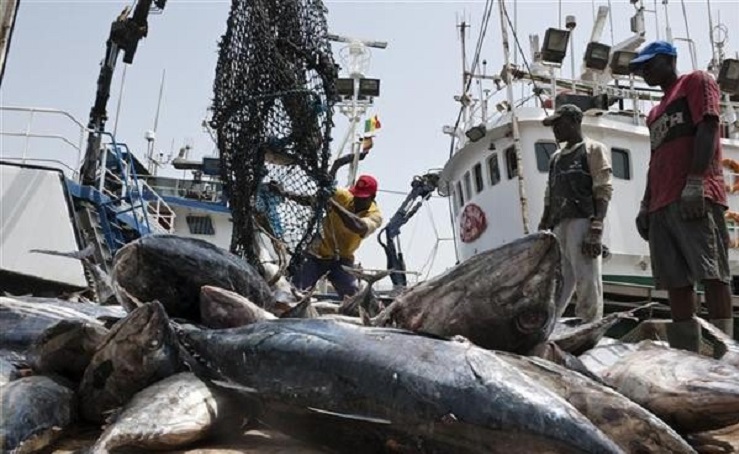
The Sénégal Ministry of Fisheries and Maritime Economy has announced the award of four coastal demersal fishing licenses to a local fishing company, marking a strategic move to strengthen the national seafood supply chain and reinforce the country’s food sovereignty.
In an official statement released on May 19, 2026, the ministry confirmed that the decision was made following the recommendations of the Consultative Commission for Fishing License Allocation (CCALP), which convened on May 12, 2026, in accordance with national fishing regulations.
The initiative aligns with the directives outlined during the November 26, 2025, Council of Ministers meeting, which focused on ensuring the availability of seafood products in domestic markets. Authorities emphasize that the licensing process was conducted with full transparency, inclusivity, and rigorous scientific backing.
According to the ministry, several fishing companies were invited in November 2025 to express their interest and outline their commitments under this public-private partnership framework. Only one company ultimately met the criteria and was selected to participate in this effort to supply the local market.
The beneficiary company has pledged to direct its entire catch to the domestic market while contributing to the development of the fisheries value chain. This includes investing in conservation and distribution infrastructure, particularly in remote regions, to improve access to high-quality, affordable seafood nationwide.
The decision was preceded by a comprehensive scientific assessment of marine resources conducted by the Dakar-Thiaroye Oceanographic Research Center. Findings indicated that the coastal demersal fishery holds potential for a limited, gradual, and strictly regulated expansion to support domestic demand without compromising sustainability.
In a context of rising seafood prices and growing concerns over dwindling fish stocks, officials describe this initiative as a pioneering step for Sénégal. The scheme introduces a formal, regulated mechanism for industrial fishing aimed at ensuring a steady supply of seafood to the local market.
The ministry reaffirms its commitment to balancing the sustainable preservation of marine resources with economic development and food security. Authorities stress their goal of promoting a sustainable, responsible, and transparent management of fisheries while boosting local consumption and reinforcing the country’s food independence.