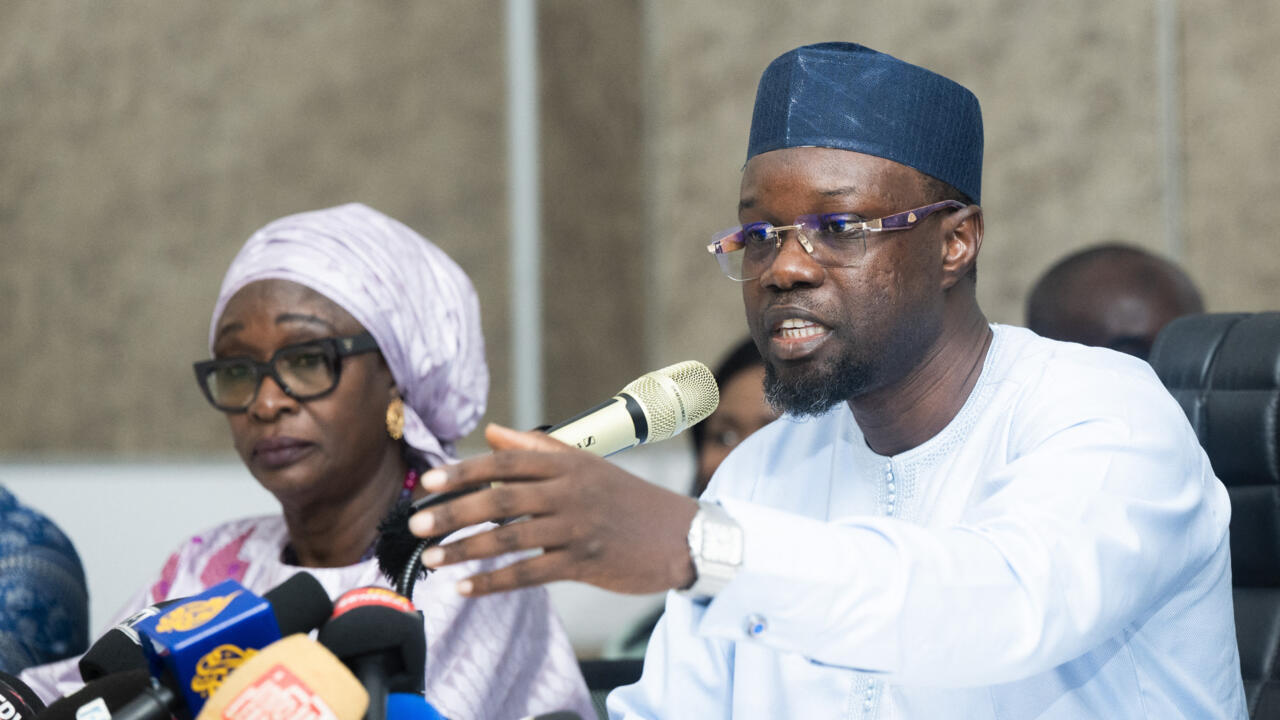
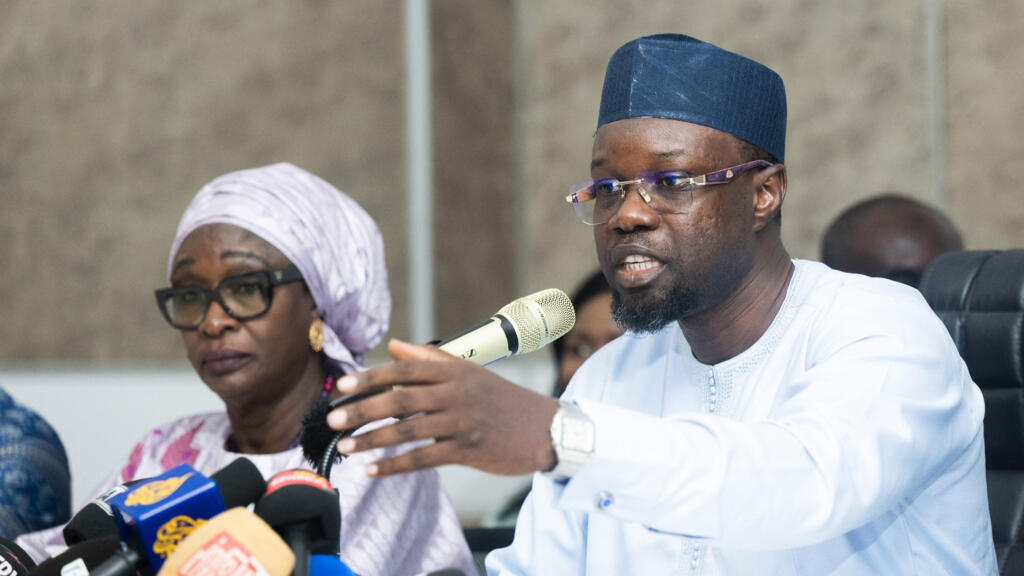
Just days after his removal from office by President Bassirou Diomaye Faye, opposition leader Ousmane Sonko has launched a sharp counterattack. Speaking at a press conference in Dakar on Tuesday, June 2, Sonko accused the government of lacking political legitimacy and warned of potential parliamentary consequences. While insisting he does not seek to destabilize state institutions, he emphasized that his party, Pastef, holds an absolute majority in the National Assembly—giving it the power to trigger a no-confidence motion against the executive.
Government legitimacy under scrutiny
In a blunt assessment of the new administration led by Prime Minister Al Amine Lô, Sonko dismissed the coalition backing the government as politically irrelevant. “We have a government with no political foundation,” he declared. “The so-called coalition they boast about means nothing. Calling it a ‘technocratic government’ is just a polite way of admitting isolation from the people.” Sonko further asserted that Pastef, as the party with the largest parliamentary representation and direct mandate from voters, holds the sole legitimate claim to governance in Senegal.
A fractured majority
The political landscape in Senegal has shifted dramatically. The absence of Pastef from the government presents a major challenge for President Faye’s camp, according to political observers. Despite constitutional authority, the president’s ability to implement reforms now hinges on maintaining trust with the 130 deputies from Pastef. Analysts warn that without direct participation from the majority party, passing legislation and advancing key initiatives will prove difficult.
Some commentators describe the current situation as a political cohabitation, though others argue it represents something far more complex—a rupture within the ruling movement. Sonko, who commands overwhelming support within the party, has positioned himself not merely as an opposition figure but as the guardian of the original political narrative that propelled the president to power.
“President Bassirou Diomaye Faye has strayed from the movement that brought him to office,” noted one analyst. “He governs today in a void—legitimate in form, but orphaned in substance. Meanwhile, Sonko remains at the National Assembly with his 130 deputies, his voice and popular mandate intact, ready to remind the nation of the movement’s roots.”
What lies ahead?
Political analysts are closely watching developments. Questions abound: Can a technocratic government function effectively without the backing of the majority party? How will legislative reforms proceed? And what role will public mobilization play in shaping the outcome?
One thing is certain—the coming weeks and months will be decisive. The streets, the institutions, and the corridors of power will all play a part in resolving this unprecedented political standoff in Senegal.