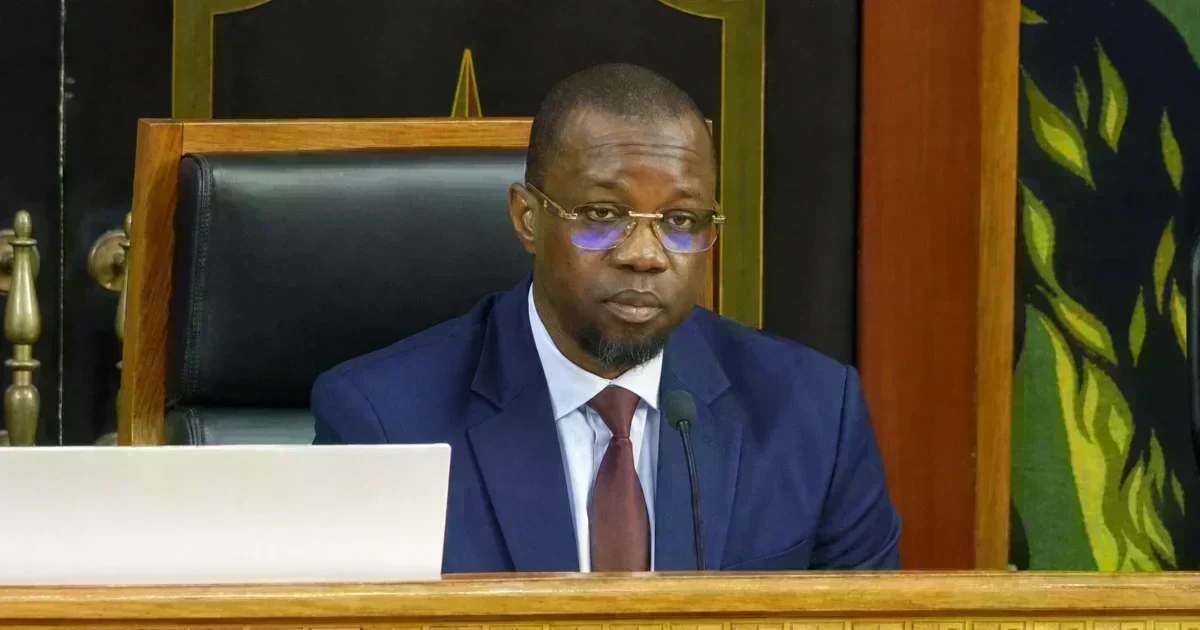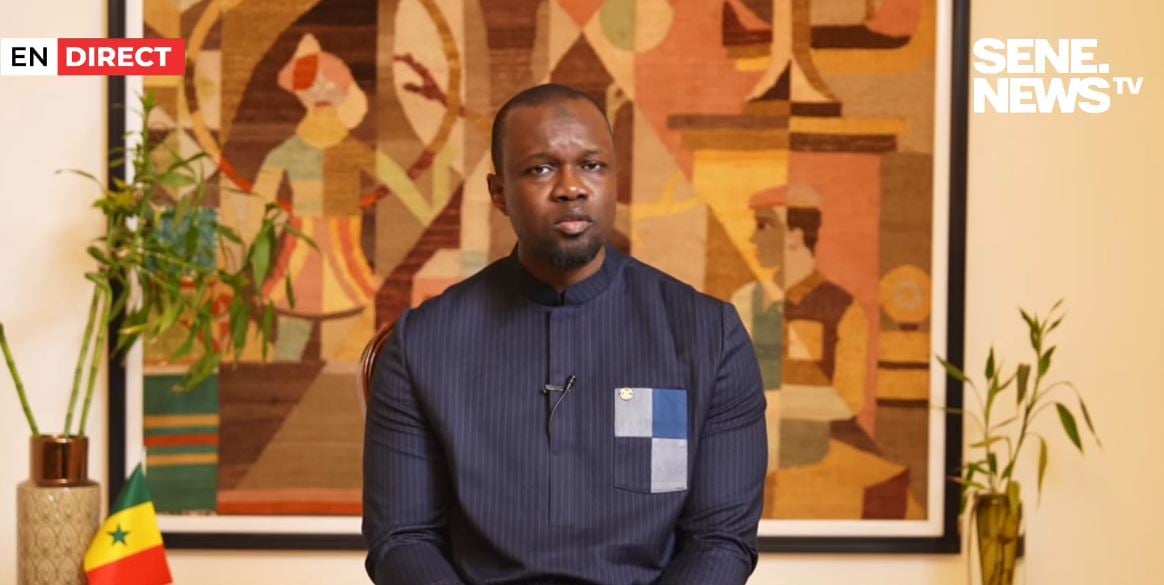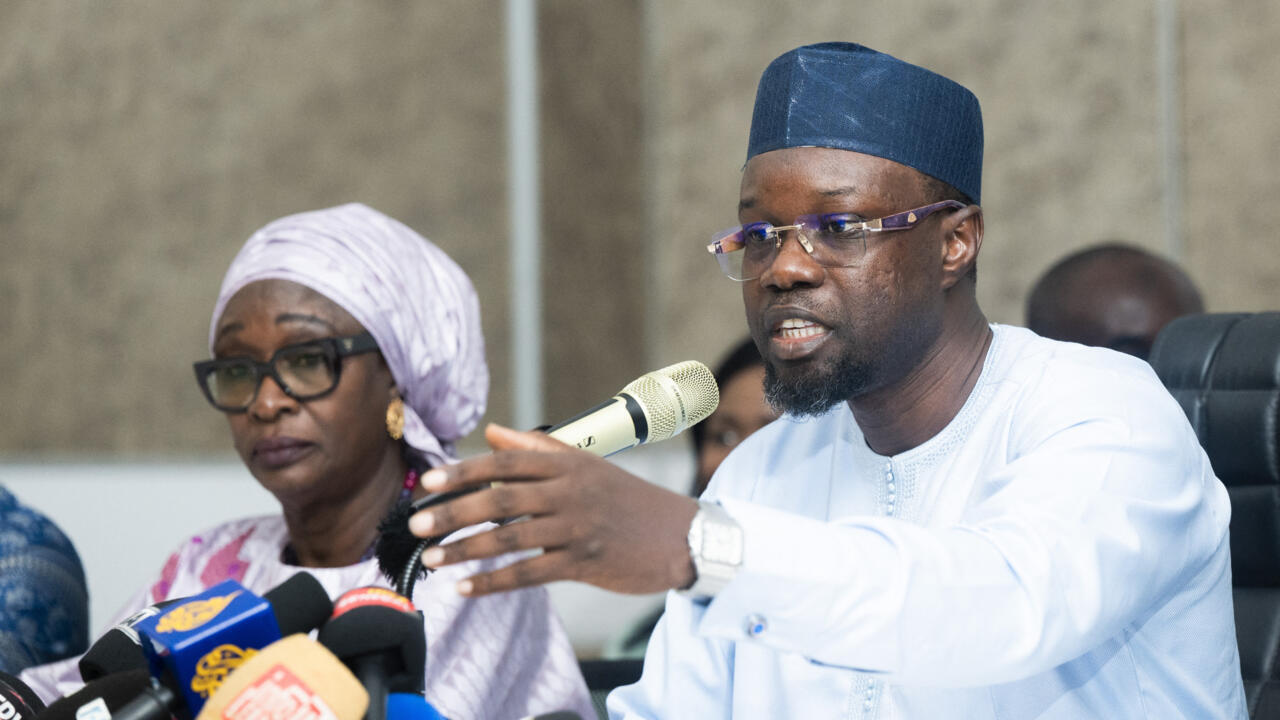
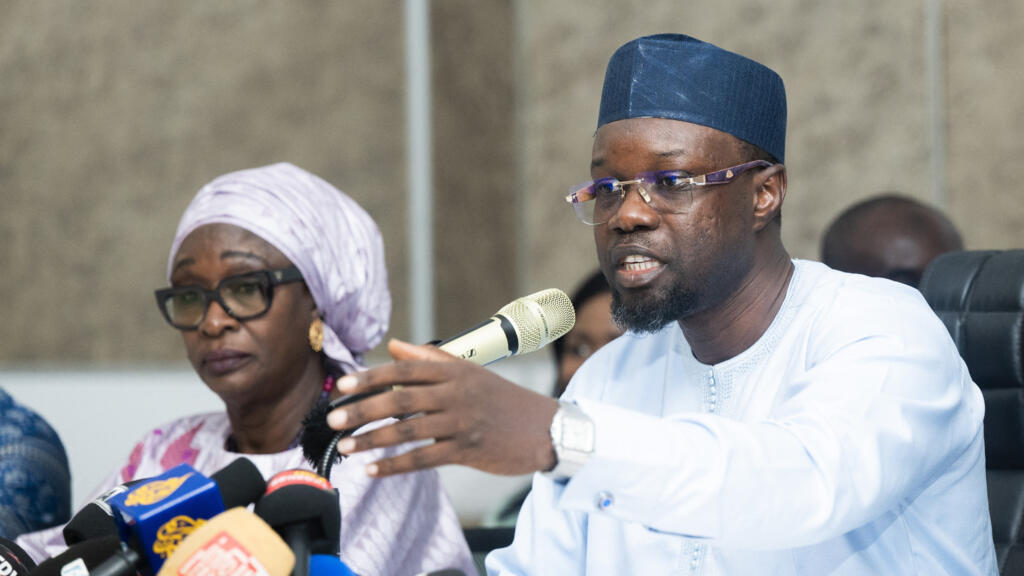
Just days after his dismissal from office, Ousmane Sonko, former Prime Minister and leader of the Pastef party, launched a sharp verbal offensive against President Bassirou Diomaye Faye. Speaking at a press conference in Dakar on Tuesday, June 2, Sonko accused the government of lacking political legitimacy and warned that his party could trigger a no-confidence motion given its overwhelming parliamentary majority.
In a pointed critique, Sonko dismissed the coalition backing the government as insignificant: “The coalition they keep mentioning represents nothing,” he declared, adding that the administration’s reliance on technocrats was an admission of political isolation. “We have a government with no political foundation,” he asserted, emphasizing that his party, which secured the most votes in the last elections, holds the true mandate of the Senegalese people.
a political earthquake for the presidency
The administration led by Bassirou Diomaye Faye now faces a critical challenge. Without the participation of the Pastef party—despite its overwhelming majority in parliament—the government’s ability to function effectively is in question. Analysts note that while the President retains constitutional powers, implementing reforms will depend heavily on securing cooperation from Sonko’s party.
As one political observer put it, “The absence of Pastef in the government creates a delicate political dynamic. The party controls 130 of the 165 parliamentary seats, making it the dominant force in the National Assembly.” Without its support, passing laws and advancing the government’s agenda becomes far more difficult.
Political analysts highlight that the situation is not a typical cohabitation—where an opposition majority opposes a president—but rather an internal rupture within the ruling coalition. Sonko, with his strong parliamentary presence and mass mobilization of supporters, is positioned as a key figure who could either block or facilitate governance.
legitimacy, history and power struggle
Observers describe the current moment as a “narrative rupture.” While President Faye’s legitimacy stems from the constitution, his administration risks losing historical and popular backing if it continues to govern without Sonko’s party. “He has abandoned the historical thread that brought him to power,” commented one analyst. “He governs in a space that is constitutionally legitimate but narratively orphaned.”
In contrast, Sonko embodies the continuity of the movement that propelled the current administration into office. With 130 deputies and a strong grassroots following, he remains a powerful voice within the majority. “We were there before, and we will be there after,” he asserted, positioning himself not just as an opponent, but as the guardian of the movement’s founding principles.
what’s next for Senegal?
Analysts warn that the coming weeks will be decisive. The government, led by Prime Minister Al Amine Lô, faces a stark reality: it must navigate a parliament dominated by a party it no longer controls, while also contending with mass mobilizations led by Sonko. The question remains: how can a technocratic government function without the support of the majority bloc in parliament?
As the political standoff continues, all eyes are on Dakar. The answer will be shaped not only in the corridors of power but also in the streets, where Sonko’s influence remains strong. The outcome will determine whether this internal rupture leads to instability—or to a new chapter in Senegalese governance.