The 11th edition of the annual review of community reforms conducted by the West African Economic and Monetary Union (UEMOA) concluded its political phase yesterday in Dakar, following a one-day postponement. The high-level gathering brought together Senegalese authorities and regional stakeholders to assess progress under the UEMOA’s structural adjustment framework.
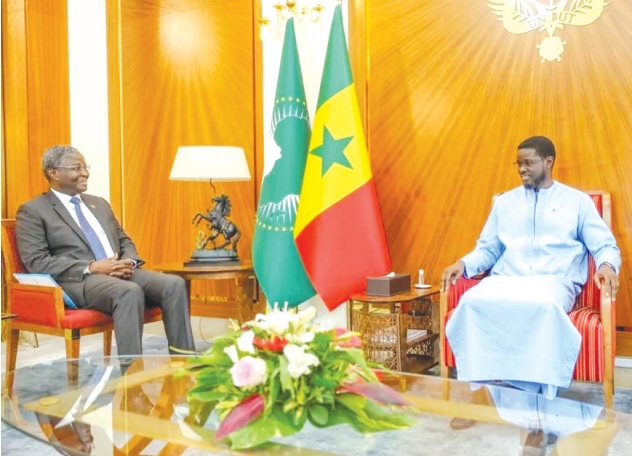
Under the watchful eye of UEMOA Commission President Abdoulaye Diop, the meeting evaluated Senegal’s performance across 145 reforms, revealing a 2.14-point decline compared to 2024. While the country still maintains an overall satisfactory score, this drop signals the need for urgent corrective action to realign with regional benchmarks.
key findings and sectoral performance
The provisional implementation rate for the 145 reforms stands at 76.45%, down from 78.59% in 2024, with critical weaknesses identified in economic governance, convergence frameworks, and structural reforms—particularly a 6.3-point regression in the latter category. Notably, Senegal failed to submit the 2024 report of the unified financial statements deposit window to the UEMOA Commission, highlighting administrative gaps in compliance.
Sectors requiring immediate attention include cultural industries, tourism, handicrafts, quality standards, and the business climate. Conversely, agriculture, livestock, fisheries, and environmental initiatives surged ahead by 12 points, while human and social development improved by 6.5 points. Energy sector reforms advanced by 3 points, and modernisation of legal, accounting, and statistical frameworks gained 5.5 points—proof of targeted progress in specific areas.
regional commitments and next steps
Senegalese Finance and Budget Minister Cheikh Diba confirmed that the findings will be presented to the Prime Minister in an upcoming audience with UEMOA’s President, underscoring the government’s commitment to accelerating reforms. This eleventh review marks the second iteration under the UEMOA’s biennial political cycle, established in July 2023 to streamline accountability and drive collective action.
Established in 2013 by an additional act of the UEMOA Heads of State Conference, the annual review aims to measure progress toward treaty objectives, identify implementation gaps, and propose actionable recommendations. Since its inception in 2014, Senegal has participated in ten such reviews, with results generally deemed positive. The current session reflects the union’s evolving approach to fostering policy alignment and sustainable development across member states.
As Dakar hosts this pivotal dialogue, the emphasis remains on translating political commitments into tangible outcomes. Authorities have pledged to fast-track compliance measures to ensure robust performance ahead of the next assessment cycle.