Senegal’s tabaski dilemma: the mounting cost of tradition and social pressure
Each year, millions of Senegalese families plunge into debt to acquire a sheep for Tabaski. From neighborhood tontines to microfinance institutions and informal lenders, a vast ecosystem of indebtedness has formed around this religious holiday, which has now evolved into a profound social crisis. While Morocco successfully implemented a solution decades ago, Senegal continues to grapple with this persistent challenge.
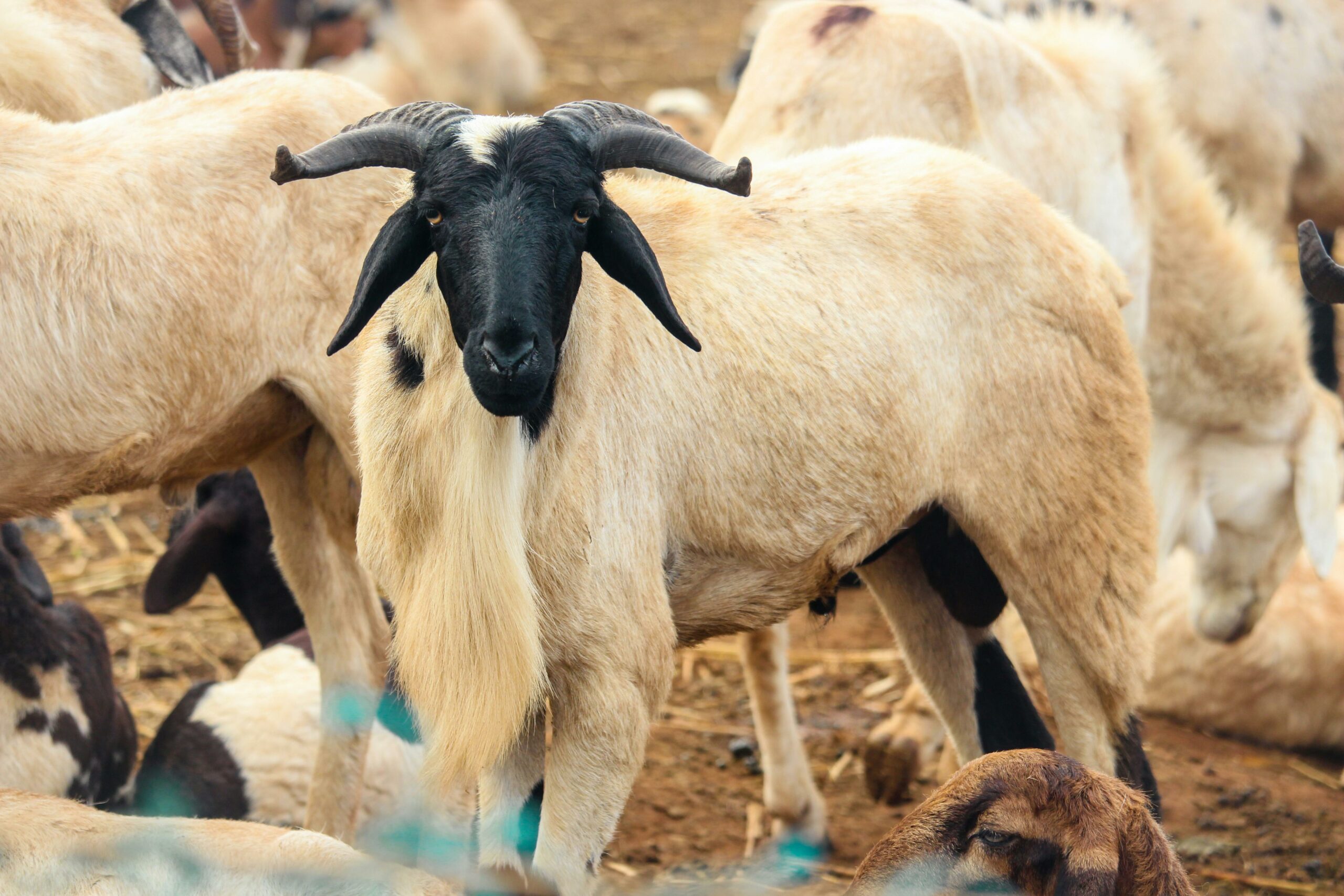
It’s two weeks before Tabaski. Across Dakar, from the bustling popular districts to the upscale Almadies, a shared anxiety grips household heads. The price of a sheep has soared yet again. Yesterday, a suitable animal might have cost 120,000 CFA francs. Today, that figure stands at 150,000, sometimes even 200,000. For the coveted “prestige” sheep—those photographed and shared widely on WhatsApp—prices can reach 300,000 CFA francs or more.
“How will I find this money?” men ponder, a question that resurfaces annually, like a preordained hardship. There is a perverse aspect to modern Tabaski: it is a religious celebration that has transformed into a mandatory display of social status.
Sheep acquisition transcends faith, becoming a financial burden
Mamadou Sall resides in the Sacré-Cœur neighborhood, earning approximately 60,000 CFA francs per month. By May, stress begins to mount. Just two months later, he needs to produce 150,000 francs—two and a half months of his salary—to purchase a sheep. Not for a week’s worth of meat, but to uphold tradition. To ensure his neighbors witness his sacrifice. To allow his family to maintain their dignity.
Mamadou cannot secure a loan from his bank; no traditional institution would extend credit for a sheep. Consequently, he turns to his neighborhood tontine, where he borrows 150,000 CFA francs. But at what cost? Interest rates within tontines during the Tabaski period can escalate to 30%, sometimes even 50% annually. On a 150,000 CFA franc loan, this translates to immediate fees ranging from 3,750 to 6,250 francs, followed by repayments spread over 12 months.
Mamadou’s situation is far from unique. Between 35% and 45% of all credits disbursed by Senegalese microfinance institutions during the Tabaski period are allocated for sheep purchases. This is a staggering statistic, meaning almost one in two credit applications during these crucial weeks is for an animal consumed within the year.
The explosive surge in prices since 2010
In 2010, a sheep typically cost between 60,000 and 80,000 CFA francs. Today, the price ranges from 150,000 to 250,000 CFA francs. This represents an increase of 87% to 275% in under 15 years. This inflation is not tied to general price inflation in Senegal; rather, it stems from speculation driven by demand concentrated over a two-month window. During Tabaski, demand is inelastic: people are compelled to purchase, regardless of cost. Breeders and intermediaries are well aware of this, raising prices without apprehension.
Senegal’s minimum wage (SMIG) stands at 60,239 CFA francs per month. To buy a sheep priced at 150,000 CFA francs, a minimum wage earner must dedicate 2.5 full months of salary. This figure excludes other Tabaski expenses such as clothing, food, and gifts. For the 60% of the population living below the poverty line, this expenditure is impossible without resorting to debt.
Who borrows for the Tabaski sheep?
For Tabaski 2024, the nation’s microfinance institutions reported a 62% surge in microcredit applications compared to regular periods, with average requested amounts oscillating between 120,000 and 200,000 CFA francs. This represents a deluge of credit applications concentrated over a two-month period.
The architecture of informal indebtedness
Given the inaccessibility of traditional bank credit, a complex informal debt structure has solidified. Tontines, microfinance organizations, and private informal lenders all thrive during the Tabaski season.
| Credit Source | Ordinary Period | Tabaski Period |
|---|---|---|
| Local Tontines | 15-30% per year | 30-50% per year |
| Formal Microfinance | 24-36% per year | 36-48% for short-term credits |
| Private Informal Lenders | 30-40% per year | 50-60%+ per year |
| Commercial Banks | Virtually inaccessible | Virtually inaccessible |
Tontines witness an acceleration in their rotation mechanisms. The interest rates applied within these informal credit circles range from 30% to 50% annually during Tabaski, transforming a 150,000 CFA franc loan into a total debt of 172,500 to 225,000 CFA francs after 12 months of repayment.
Microfinance institutions offer nominally better terms, yet still come with effective annual rates ranging from 24% to 36%, reaching up to 48% for the shortest credits (three to six months). A family incurring debt in July for an August Tabaski faces immediate financial charges of 3,000 to 6,000 CFA francs on a 150,000 CFA franc loan.
Instagram and WhatsApp exacerbate the challenge
However, the situation has worsened. Over the past decade, a significant shift has occurred: Tabaski has migrated to social media. Previously, only immediate neighbors might see one’s sheep. Now, 500 people on WhatsApp can view it, not just seeing but admiring, commenting, and comparing.
A 2023 study by Cheikh Anta Diop University revealed that 67% of young Dakar residents report experiencing social pressure regarding the purchase of a Tabaski sheep. Among them, 48% attribute this pressure primarily to what they observe on social media. Senegalese influencers highlight prestigious sheep, and Tabaski videos often feature affluent families acquiring expensive animals.
Meanwhile, less affluent families feel inadequate and incur debt to keep up. This is particularly true for men, as Senegalese culture dictates that the man purchases the sheep. If a man lacks a Tabaski sheep, many perceive it as a failure, a sign of insufficient means, or an inability to provide for his family.
The hidden toll: reduced household consumption
Households that take out loans for Tabaski reduce their food and health consumption by 18% to 25% over the subsequent three months. School-aged children may see their tuition fees neglected, and essential medications go unpurchased. The true economic cost of maintaining appearances for Tabaski thus far exceeds the mere purchase price of the sheep.
Even more concerning: some farmers divert their agricultural credits—intended for seeds and fertilizer—to buy a sheep. Between 8% and 12% of Senegalese agricultural credits are redirected for consumption during Tabaski. This means a farmer who could have increased their harvest by 30% sacrifices that potential for social prestige. When the next agricultural season arrives, they lack the means to invest.
Morocco pioneered a solution a quarter-century ago
In 1999, the King of Morocco made a pivotal decision. He decreed that every impoverished Moroccan would be entitled to a sheep for Tabaski, not as charity, but as a right. This recognized that a religious observance should not be subject to market mechanisms.
Since then, Morocco has distributed millions of sheep. In 2023, Morocco distributed over 2.8 million sheep through the Zakat Al-Fitr Fund, a royal program. The cost? Approximately 450 million Moroccan dirhams annually, equivalent to about 43 billion CFA francs. Relative to the Moroccan national budget, this amounts to less than 0.1% of its total expenditure, dedicated to ensuring all its impoverished citizens can celebrate Tabaski without incurring debt.
Morocco recognized a simple truth: a religious festival whose observance depends on personal wealth is not truly a religious festival. It is a mechanism for social distinction masquerading as tradition. Morocco decided to treat Tabaski as a public good, not a private one. This was a political decision. Senegal could follow suit.
And what about Senegal?
Senegal, in contrast, spends virtually nothing. There is no national program. A few municipalities make some efforts, and some private religious organizations offer assistance, but that is the extent of it. The rest of the country is left to the mercy of usurious market rates and the psychological burden of appearances.
Meanwhile, in Senegal, debt collection agencies report a troubling trend: the rate of household over-indebtedness peaks three months after Tabaski. Families struggle to repay their Tabaski loans while simultaneously trying to survive. They cut back on food, forgo essential healthcare, and withdraw children from school.
Then there’s the mental health aspect. The Dakar Mental Health Research Center conducted a study in 2022, revealing a disturbing finding: calls to psychological helplines dramatically increase three weeks before Tabaski. Among men aged 30 to 55, the number of calls doubles. The anxiety of not being able to afford a sheep, the shame, the fear of social judgment—all these factors weigh heavily.
How did we reach this point?
On one hand, there is the pressure to maintain appearances. Tabaski has become a demonstration of social status, a phenomenon that was not prevalent before. Religious tradition has intertwined with urban ostentatious consumption, a trend accelerated by social media. Now, Tabaski has become: “Look at my sheep. Look how wealthy I am. Look how respectable I am.”
On the other hand, there is a complete void in public policy. The Senegalese government does not treat Tabaski as a significant social issue. There is no national discussion on the matter, politicians rarely address it, and media coverage is minimal. Meanwhile, millions of households incur debt year after year.
Mamadou is already receiving calls from his tontine. Tabaski 2025 is approaching. Sheep prices are rising. Interest rates are increasing. And the cycle begins anew.