A decade after divesting its onshore assets and departing the Gabonese oil landscape, the British multinational energy corporation, Shell, is poised for a significant re-entry into the country. This major oil player has officially finalized a highly strategic agreement with Gabonese authorities, marking a pivotal moment for the nation’s energy industry.
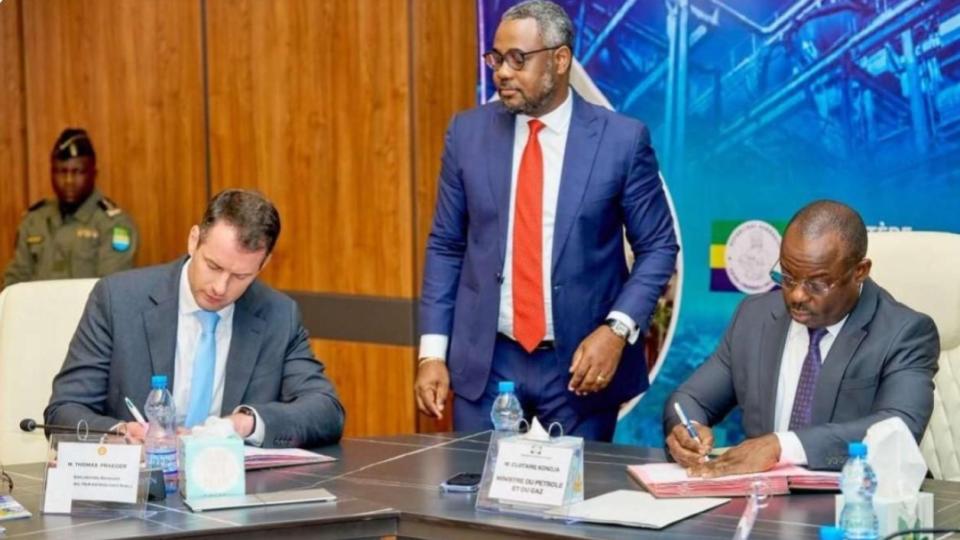
This memorandum of understanding (MoU) was formally endorsed by Thomas Praeger, Shell’s Head of Exploration and New Ventures, and Clotaire Kondja, Gabon’s Minister of Petroleum. This collaboration symbolizes a shared commitment to reinvigorate prospecting efforts within a historically rich sedimentary basin that still holds many secrets yet to be unveiled.
unlocking deep offshore potential
The newly signed agreement does not signify an immediate resumption of production but rather lays the groundwork for a meticulous evaluation phase. Shell has been tasked with assessing the hydrocarbon potential across several offshore blocks. Gabon’s maritime territories are indeed home to vast, largely unexplored resources, particularly within its deep and ultra-deep offshore segments.
For the British company, this return aligns with its global strategy to replenish its short and medium-term reserves through high-quality assets. For its part, Libreville aims to leverage Shell’s cutting-edge technical expertise and considerable financial strength to re-energize an extractive sector that, despite ongoing diversification efforts, remains the very bedrock of the country’s economy. This is significant news for African economy news observers.
gabonese basin regains its allure
By re-establishing its presence in Gabon, Shell is not venturing into uncharted territory but rather joining an increasingly vibrant circle of leading industry players. This Central African nation is successfully drawing the attention of global oil giants once more. Shell follows in the footsteps of other renowned supermajors like America’s ExxonMobil and Britain’s BP, both of whom have been attracted by Gabon’s subsea potential. This convergence of interests demonstrates that, notwithstanding global market shifts and the imperatives of energy transition, Gabon’s subsoil maintains undeniable competitiveness within the Africa news landscape.
For the government, the medium-term objective will be to convert these technical evaluation agreements into firm production sharing contracts. Should future seismic data prove conclusive, Gabon stands to gain a crucial second wind for its petroleum sector, indispensable for solidifying its strategic positioning in the Gulf of Guinea.