
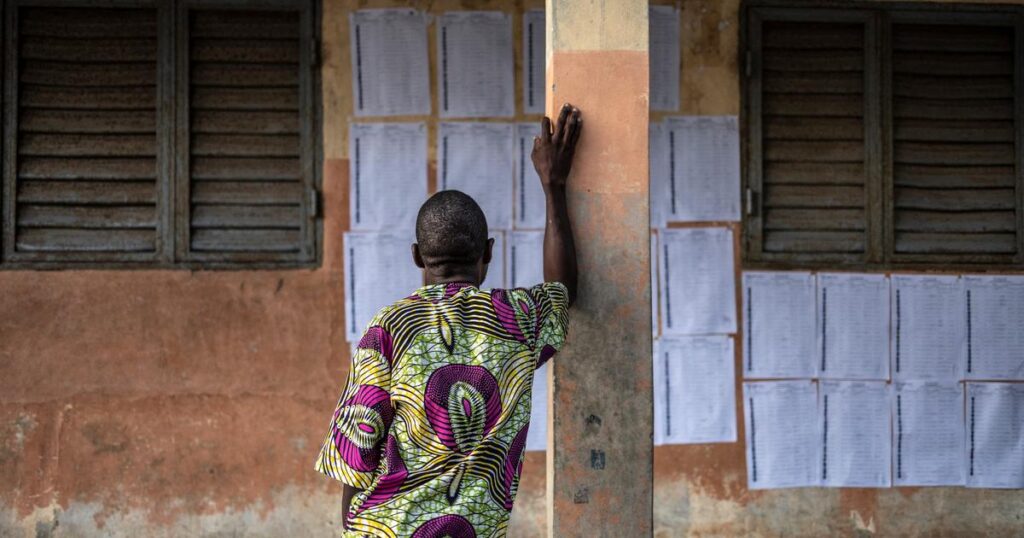
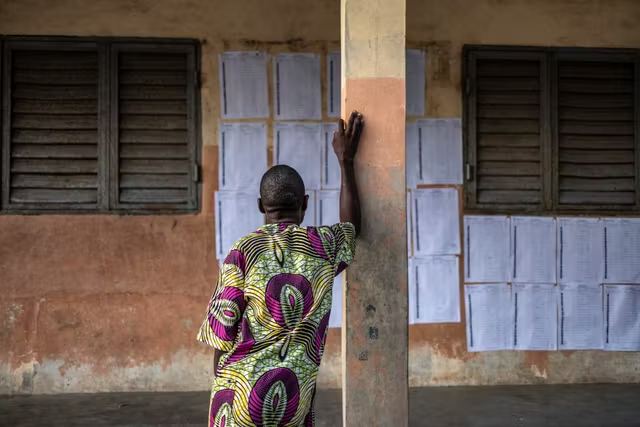
Preordained outcomes, lackluster campaigns, landslide victories for incumbents. The 2025 presidential elections across Africa revealed a disturbing pattern: opposition was systematically sidelined before campaigning even began. Two recent examples—Djibouti’s vote on April 10 and Bénin’s on April 12—epitomize this trend. In Djibouti, incumbent President Ismaïl Omar Guelleh secured a sixth term with 97.8% of votes, while in Bénin, Romuald Wadagni—handpicked successor to Patrice Talon—won 94% of ballots. These overwhelming tallies emerged from polls where opposition was effectively neutered.
The price of democracy
In Djibouti, opposition leader Alexis Mohamed withdrew his candidacy under pressure. While he cited safety concerns, the primary barrier was financial: “nomination fees became an insurmountable hurdle.” Observers labeled the election a “purely ceremonial exercise,” with the process reduced to a façade. Similar dynamics played out in Bénin, where aspiring challengers were priced out of contention long before polling day.
These exorbitant costs—ranging from administrative deposits to campaign financing rules—have become a continent-wide tool to suppress dissent. Candidates face fees that dwarf average incomes, effectively reserving elections for the wealthy elite. The result? A democratic illusion where competition is systematically erased long before ballots are cast.


More Stories
Is Chad truly heading towards political appeasement?
Bradley Barcola will adapt faster than Florian Wirtz at Liverpool, says Jermaine Pennant
Togo eyes nuclear power to secure future energy sovereignty