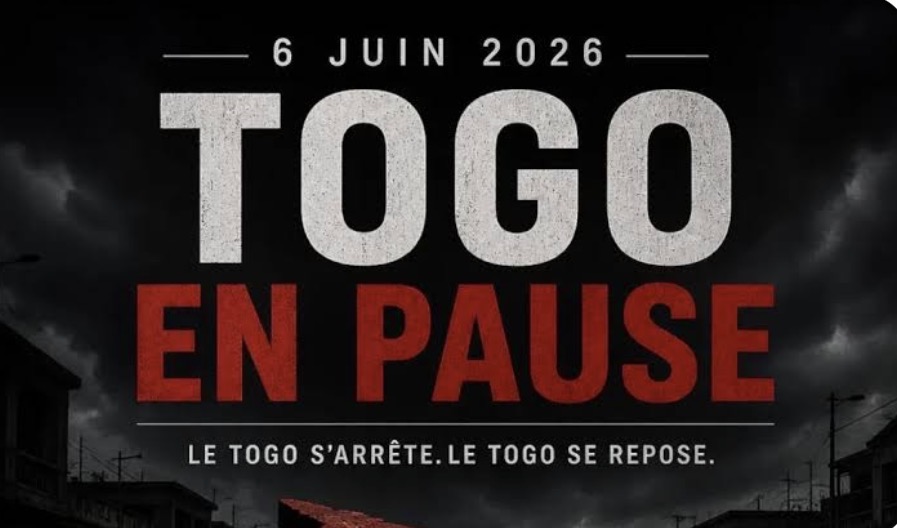
The sixth of June 2026 is not just another protest day—it’s a deliberate break. For nearly six decades, Togo has operated under a deeply rooted system of clan-based, militarized political control that perpetuates itself without reform. Through the “Togo on Pause” movement, led by the M66 coalition with backing from the entire Togolese resistance, citizens are choosing a bold path: withdrawal over compliance.
The political game in Lomé has long been predictable: elections without consequence, institutions that serve only the powerful, and speeches that ring hollow. Behind the facade of progress, the regime maintains its grip through repression, silencing dissent, and restricting freedoms. These aren’t anomalies—they’re the system’s core operating principles.
Youth leads a silent but powerful defiance
A generation raised under this unchanging order has heard promises, not solutions. They’ve watched protests crushed, voices silenced, and media muzzled. They’ve endured deep-rooted inequality, social divides, and territorial injustice. Yet they refuse to accept the status quo.
“Togo on Pause” transforms resistance into a strategic absence. By staying home, closing shops, and halting daily routines, young Togolese aren’t just withdrawing—they’re forcing the regime to confront its own emptiness. Each locked door, empty street, and quiet neighborhood becomes a statement: “If you won’t listen, feel our absence.”
A power structure built on loyalty, not merit
Control in Togo isn’t accidental—it’s engineered. The military, security forces, public administration, and state enterprises are dominated by tightly knit circles of loyalty tied to a militaro-ethnic elite. Governance isn’t about delivering progress; it’s about preserving power. The result? Persistent poverty, widening inequality, and a future that feels out of reach for most citizens.
The population—both at home and abroad—knows this all too well. Behind closed doors, the regime talks modernization and forges international partnerships, but the machinery of exclusion remains untouched. The people have reached a breaking point.
Unity in simplicity: a movement for everyone
What makes “Togo on Pause” so powerful is its inclusivity. From factory workers and street vendors to students, civil servants, and farmers, the call is clear: suspend your role in a system that refuses to change. The diaspora, too, is urged to pause their support—financial, symbolic, or otherwise.
This isn’t about grand gestures or slogans. It’s about reclaiming dignity. To participate is to reject hollow political rituals, empty promises, and cycles of false change. It’s a declaration: “We will not play supporting roles in your political theater.”
A defining test of courage
Choosing to stay home on the sixth of June carries real stakes. It means risking income, facing pressure, and stepping into the unknown—after years of being conditioned to accept less. But it’s also a test of collective will: will the nation continue to tolerate a system that benefits so few? Or will it finally demand something different?
This moment isn’t about a single organization or leader. It’s about decades of unheard frustrations, generations of muffled voices, and a shared refusal to normalize injustice. The message is clear: the people of Togo are done waiting.
The sixth of June: not an end, but a reckoning
“Togo on Pause” is a pause in name only. It’s a moment of truth. A day when the nation stops not out of weakness, but out of strength. When the streets fall silent not in defeat, but in defiance. When the regime can no longer ignore the absence of a people who refuse to be complicit any longer.
On June 6, Togo stops.
To rise stronger.