President Tshisekedi reaffirms commitment to institutional dialogue while warning against misuse
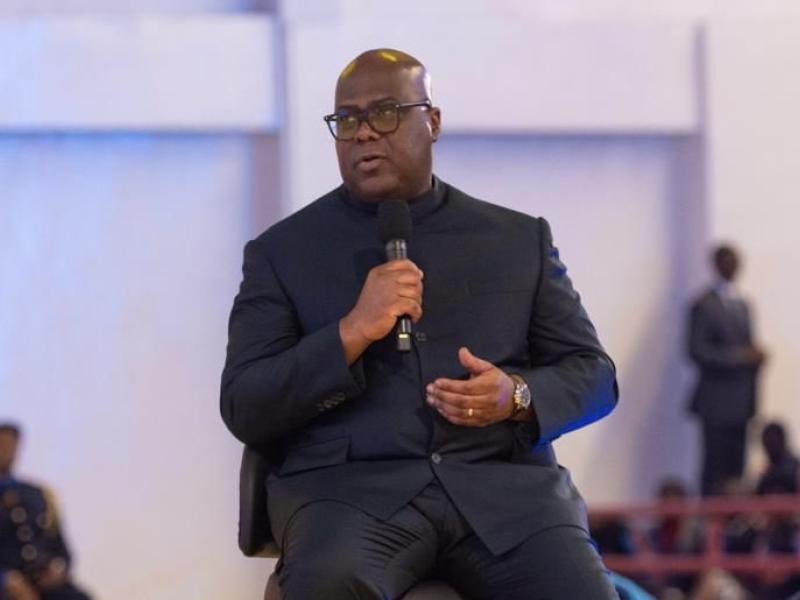
As the Democratic Republic of the Congo (DRC) prepares to mark 66 years of independence, President Félix Tshisekedi delivered a stern warning against the politicization of dialogue as a tool to pressure institutions or undermine the will of the people. In a nationally televised address on June 29, 2026, the head of state emphasized the importance of dialogue within a strict legal and constitutional framework, rejecting any attempt to use it as a means to bypass democratic institutions.
Dialogue must serve national unity, not political manipulation
The President opened his remarks by reaffirming his administration’s commitment to inclusive dialogue, provided it adheres to the principles of the Republic. He cautioned that while the doors of the Republic remain open to all citizens who embrace peace and constitutional governance, dialogue cannot be exploited to:
- Circumvent established institutions
- Undermine the sovereignty of the Congolese people
- Serve as a bargaining chip for those who reject democratic processes
« Dialogue is not a tool for pressure or subversion. It is an avenue for constructive engagement, not a mechanism to challenge the Constitution or the freely expressed will of the nation, » President Tshisekedi declared. He stressed that the Congolese people are the ultimate sovereign, and no individual or group can claim to speak for the nation against its own interests.
Condemnation of violence and calls for national cohesion
Addressing the ongoing political tensions and public protests against potential constitutional amendments, the President condemned the use of violence and armed rebellion as unacceptable modes of political expression. He made it clear that resorting to arms does not grant negotiating power or immunity from legal accountability.
« The use of violence, armed rebellion, hatred, or disinformation to undermine our sovereignty and territorial integrity is not—and will never be—a legitimate political tool, » he stated. « Such actions do not grant special rights to negotiation nor elevate those who threaten the Republic above those who uphold its laws. »
The President called on all Congolese citizens, including political leaders, religious figures, and civil society actors, to prioritize national unity in the face of existential threats to the country. He urged restraint, responsibility, and collective action to preserve stability and prevent further division.
Ongoing political divide over national dialogue
The administration continues to advocate for a dialogue process governed by state institutions, firmly rejecting any initiative that challenges constitutional order or grants impunity. This stance contrasts with opposition factions and religious leaders—particularly the National Episcopal Conference of Congo (CENCO) and the Church of Christ in Congo (ECC)—who have proposed an alternative roadmap for dialogue. Their vision includes transitional justice mechanisms and emphasizes inclusivity, though they insist it must not serve as a blanket amnesty.
Civil society groups have also echoed the call for dialogue but insist it must be transparent and accountable, warning against using it to absolve past or present wrongdoings. As of now, no formal national dialogue has been convened. Meanwhile, international mediation efforts—including the Washington and Doha processes—continue, though tangible security improvements in the North Kivu and South Kivu regions remain elusive. The Angolan-led mediation, though less visible in recent months, has yet to publicly outline its next steps.
This address comes at a critical juncture for the DRC, as the nation grapples with political divisions, security challenges, and the legacy of its hard-won independence. The President’s words reaffirm a commitment to democracy—but also signal a refusal to tolerate any attempt to weaken the Republic’s institutions.